Compare
Exercise bike vs walking pad
Two cheap machines that solve different problems. One trains you; the other replaces sitting still.
Belt & Bike earns a commission when you buy through our links, at no extra cost to you. Prices come from Amazon and change; the date beside every price is when we last verified it. Full disclosure.
Quick picks
| # | Model | Capacity | Score | Price |
|---|---|---|---|---|
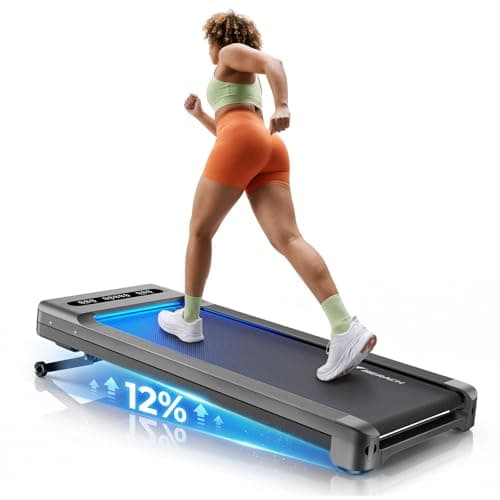
| Rank 1 | MERACH UltraWalk W60 Auto-incline on a walking pad | 400 lb (manufacturer figure) | 6.4 | $296.97Amazon |
| Rank 2 | 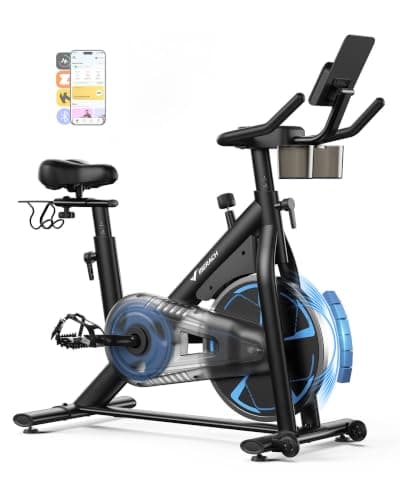 MERACH S36 Magnetic resistance and a 330 lb rating under $300 | 330 lb (manufacturer figure) | 7.2 | $279.99Amazon |
| Rank 3 | 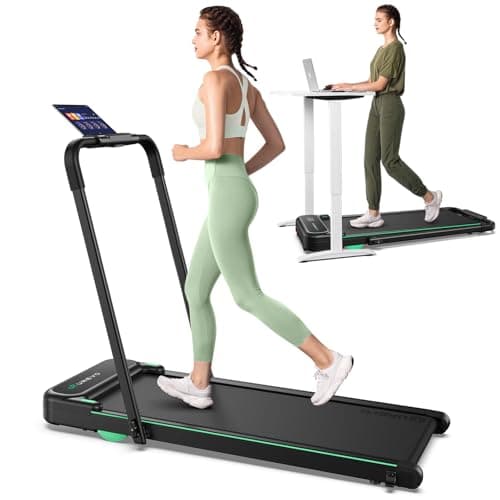 UREVO Strol 2E A 2-in-1 pad with a handle under $200 | Not published | 5.2 | $169.99Amazon |
| Rank 4 | 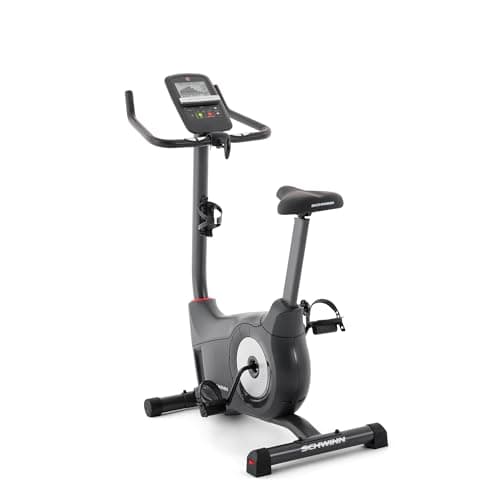 Schwinn 130 Upright Bike A compact upright from a real brand | 300 lb | 7.4 | $412.75Amazon |
#ad Prices come from Amazon and change. How this site is funded. Scores are our published editorial rubric — see our methodology.
Buy the walking pad if the goal is to stop sitting for eight hours a day and you want incline — the MERACH UltraWalk W60 with 12% powered incline is the pick, because a flat pad is a step counter. Buy the exercise bike if the goal is a training session you work hard in; a magnetic bike like the MERACH S36 gives you a resistance range a pad cannot touch. These are not competing answers to one question. They answer two different questions that happen to cost the same.
Head to head
| Exercise bike | Walking pad | |
|---|---|---|
| Effort ceiling | High — resistance scales as far as you can | Moderate, and only with powered incline |
| Weight-bearing | No | Yes — loads bone |
| Usable while working at a desk | Awkward at best | Yes, this is the whole point |
| Storage | Upright footprint, or folds | Slides under a sofa or bed |
| Noise on a shared floor | Almost none | Low — footfalls plus a small motor |
| Session length that feels normal | 20–45 minutes | 60 minutes to all day |
| Setup fuss | Seat height once, then nothing | None — plug in and step on |
| What wears out | Essentially nothing | Belt, deck and motor |
The real distinction: training versus not sitting
A bike is a training device. You get on it for 30 minutes, work at a resistance level you chose, and get off sweating. Everything about it — the seat, the resistance range, the console — is built around a discrete session.
A walking pad is an anti-sedentary device. Its value is accumulating four hours of 2 mph walking during a workday you would otherwise have spent in a chair, and that total is substantial even though no individual minute is hard. The federal physical activity guidelines count that light-to-moderate volume, and it adds up faster than people expect.
Where each one fails
- A bike fails at volume. Nobody rides a bike for four hours while answering email. The seat alone rules it out.
- A pad fails at intensity. Even at 16% incline you cannot reach the effort an air bike reaches in 30 seconds.
- A bike fails at bone. Cycling is non-weight-bearing; the NIH's bone health guidance puts walking among the activities that load bone and cycling among those that do not.
- A pad fails on durability. It has a motor, a belt and a deck, all of which wear. A magnetic bike has none of those.
- A pad fails for anyone unsteady on their feet unless it has a handle. The UREVO Strol 2E's folding safety handle exists for exactly that.
Space and storage, which is often the actual decision
A pad is the only cardio machine that genuinely disappears: it slides under furniture and leaves no trace. A bike occupies roughly six square feet permanently, or folds into a corner with the ride-quality compromises that implies. If the constraint is a one-room apartment, the pad wins on storage alone — and best exercise bike for small spaces covers the bike side of that problem properly.
Two pads and two bikes
#1 · Auto-incline on a walking pad
MERACH UltraWalk W60
MERACH12% powered incline on a 400 lb-rated walking pad — incline is what turns a walking pad from a step counter into actual training.
| Incline | 12% auto incline |
|---|---|
| Weight capacity | 400 lb (manufacturer figure) |
| Form factor | Under-desk walking pad |
| Motor | Not published by manufacturer |
| Running surface | Not published by manufacturer |
| Subscription | Subscription optional |
The pad and its remote work with no app; the MERACH app is optional tracking.
Specifications per Manufacturer figures as published on the Amazon product listing.
What it does well
- Powered 12% incline, which most walking pads do not offer at all
- High stated capacity for a flat pad
- Slides under a desk or a sofa
Where it falls short
- No handrail — incline walking without one takes getting used to
- No published CHP or deck dimensions
- Walking speeds only
Our rubric
- Motor
- 5.0
- Deck
- 5.0
- Incline
- 8.0
- Build
- 6.0
- Value
- 8.0
#2 · Magnetic resistance and a 330 lb rating under $300
MERACH S36
MERACHMagnetic resistance, a 330 lb stated capacity and a sub-$300 price — the spec sheet that made MERACH a serious budget name.
| Resistance | Magnetic |
|---|---|
| Weight capacity | 330 lb (manufacturer figure) |
| Flywheel | Not published by manufacturer |
| Console | LCD with app connectivity |
| Subscription | Subscription optional |
The MERACH app is free and optional; the bike works with no account.
Specifications per Manufacturer figures as published on the Amazon product listing.
What it does well
- 330 lb rating at a price where 265 lb is common
- Magnetic resistance with no wear pad
- App connectivity included but not required
Where it falls short
- No published flywheel weight
- Resistance knob is unnumbered
- No established parts channel
Our rubric
- Ride
- 7.0
- Fit
- 7.0
- Resistance
- 7.0
- Build
- 6.0
- Value
- 9.0
#3 · A 2-in-1 pad with a handle under $200
UREVO Strol 2E
UREVOA walking pad with a fold-up safety handle for under two hundred dollars — the handle is what makes it usable for someone slightly unsteady.
| Form factor | 2-in-1 pad with folding safety handle |
|---|---|
| Assembly | Plug and play, no assembly |
| Motor | Not published by manufacturer |
| Running surface | Not published by manufacturer |
| Weight capacity | Not published by manufacturer |
| Subscription | Subscription optional |
Remote-controlled with no app required.
Specifications per Manufacturer figures as published on the Amazon product listing.
What it does well
- The folding handle converts it between desk pad and supported walker
- Arrives assembled
- Among the cheapest machines here with a handle at all
Where it falls short
- No published motor, deck or capacity figures
- Handle is for balance, not for leaning on at speed
- Walking speeds only
Our rubric
- Motor
- 4.0
- Deck
- 4.0
- Incline
- 3.0
- Build
- 6.0
- Value
- 9.0
#4 · A compact upright from a real brand
Schwinn 130 Upright Bike
Schwinn Fitness16 magnetic levels in a 41″ × 21″ footprint — the upright to buy when the recumbent simply will not fit.
| Resistance | 16-level magnetic |
|---|---|
| Weight capacity | 300 lb |
| Footprint | 41.3″ L × 21.4″ W × 54.5″ H |
| Machine weight | 58.4 lb |
| Console | 5.5″ segmented LCD |
| Subscription | No subscription |
Self-contained console; no plan to buy.
Specifications per Schwinn Fitness published specifications.
What it does well
- A genuinely small footprint — under two feet wide
- 58 lb means one person can move it
- Numbered magnetic resistance at an entry price
Where it falls short
- Upright seating is less comfortable than recumbent for long sessions
- Segmented LCD is basic
- Lighter frame rocks more than the recumbents under hard effort
Our rubric
- Ride
- 7.0
- Fit
- 7.0
- Resistance
- 8.0
- Build
- 7.0
- Value
- 8.0
Cost of ownership over five years
A magnetic bike at $280 with nothing to service is likely to be the cheaper machine over five years than a $300 walking pad whose belt and deck are consumables and whose motor is working every minute you use it. Pads are cheap to buy and are not free to keep. That said, a pad used four hours a day is delivering far more total activity per dollar, so the comparison depends entirely on which of the two you will actually use.
How to decide
- Do you sit at a desk all day and want to stop? Walking pad, with incline.
- Do you want a hard 30-minute session? Bike.
- Is bone density a specific concern? Pad, because walking is weight-bearing.
- Do you need the machine to vanish completely between uses? Pad.
- Does a knee or hip object to walking? Bike, and read best exercise bikes for bad knees.
- Both, if the budget stretches. A $170 pad and a $280 bike together is a better home gym than either at $450.
The full-size treadmill version of this comparison is treadmill vs walking pad, and treadmill vs exercise bike covers the larger machines.
Frequently asked questions
Is a walking pad or an exercise bike better?
Can you lose weight with a walking pad?
Is an exercise bike harder than a walking pad?
Which is quieter, a bike or a walking pad?
Do walking pads break easily?
Sources
Read next
Compare
Treadmill vs walking pad
Not a small treadmill — a different machine for walking while you do something else.
Exercise Bikes
Best exercise bike for small spaces
Published footprints, the two different small-space problems, and when folding is the wrong answer.
Treadmills
Best home treadmills for incline walking
What a sustained 12% gradient at walking pace asks of a machine, and the six that deliver it.
Exercise Bikes
Best folding exercise bikes
How much rigidity a hinge costs you, and when that trade is clearly worth making.
Compare
Treadmill vs exercise bike
Six axes, four questions, and the bone-loading point that most comparisons omit.