Guides
Exercise bike buying guide
Three decisions in order: format, resistance type, fit range. Get those right and the rest is detail.
Belt & Bike earns a commission when you buy through our links, at no extra cost to you. Prices come from Amazon and change; the date beside every price is when we last verified it. Full disclosure.
Quick picks
| # | Model | Resistance | Score | Price |
|---|---|---|---|---|
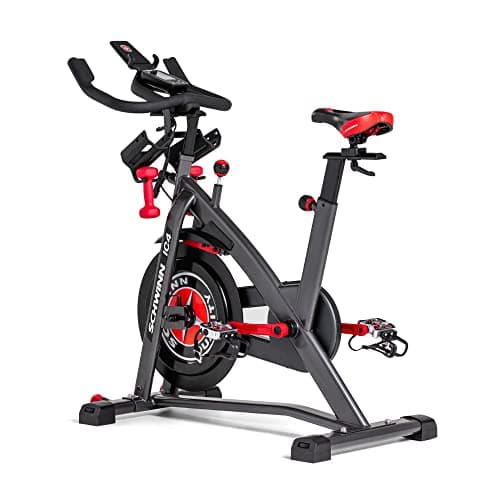
| Rank 1 | Schwinn IC4 A Peloton ride feel with no Peloton bill | 100-level magnetic | 9.0 | $795.99Amazon |
| Rank 2 | 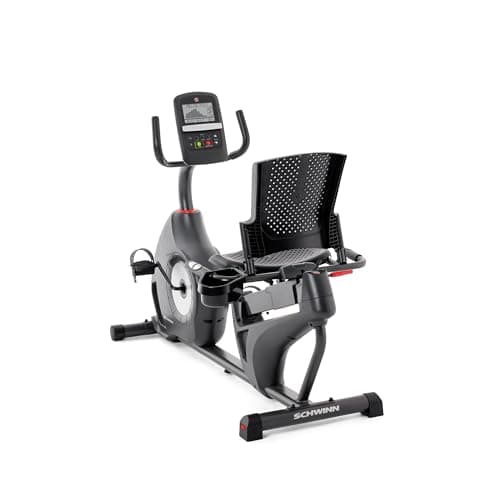 Schwinn 230 Recumbent Bike A branded recumbent under $500 | 16-level magnetic | 8.0 | $499.99Amazon |
| Rank 3 | 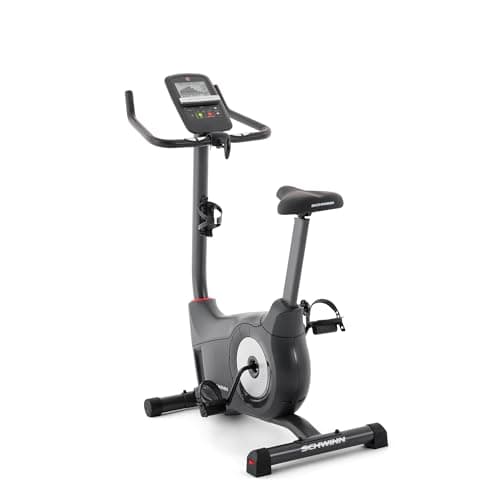 Schwinn 130 Upright Bike A compact upright from a real brand | 16-level magnetic | 7.4 | $409.47Amazon |
| Rank 4 | 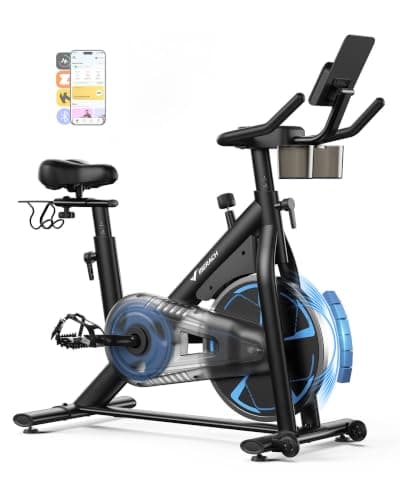 MERACH S36 Magnetic resistance and a 330 lb rating under $300 | Magnetic | 7.2 | $279.99Amazon |
#ad Prices come from Amazon and change. How this site is funded. Scores are our published editorial rubric — see our methodology.
Buying an exercise bike is easier than buying a treadmill because there are far fewer variables and far less marketing noise. Three decisions, in this order.
Decision 1: format
Pick the body position first
- RecumbentSeated with a backrest. Most comfortable, easiest to stick with, lowest ceiling. See the picks
- UprightCompact, moderate comfort, middle ceiling. Fits where nothing else does. See the picks
- Spin / indoor cycleForward-leaning, standing possible, highest ceiling, least comfortable. See the picks
- Air bikeFull-body, unlimited resistance, loud, interval-only. See the picks
This is the decision that determines whether you keep riding. Be honest about comfort over capability: an hour on a recumbent beats fifteen minutes on a spin bike you resent.
Decision 2: resistance type
| Magnetic | Friction | Air (fan) | |
|---|---|---|---|
| Wear part | None | Felt pad, cheap and replaceable | None |
| Noise | Near-silent | Audible hiss | Loud |
| Levels | Often numbered | Unmarked knob | No levels — effort sets it |
| Repeatability | High with numbered levels | Low | By time and distance only |
| Best for | Almost everyone | Long-term repairability | Short maximal intervals |
Magnetic for almost everyone. Friction if you want a machine every part of which is replaceable forever. Air if your training is short intervals. Detail in resistance types explained.
Decision 3: fit range
The spec that quietly ruins more bikes than any other. Look for:
- Four-way seat adjustment — up/down and fore/aft. Two-way bikes fit one body.
- Four-way handlebar adjustment on a spin bike.
- A published maximum rider height, or a seat post travel figure of 10 inches or more.
- A long seat rail on a recumbent — 15 inches of travel or more.
If more than one person will ride it, this is not negotiable. See exercise bikes for tall riders.
Then the secondary specs
- Flywheel weight, 30-40 lb on a spin bike. See flywheel weight explained.
- Drive system, belt or chain. See spin bike drive systems.
- Frame mass. Heavier is better and nobody lists it. Use shipping weight as the proxy.
- Bluetooth broadcast. Standard Bluetooth that any app can read is the anti-lock-in feature.
- Weight capacity with margin. See weight capacity.
Setting it up correctly
- Seat height: with the ball of your foot on the pedal at the bottom of the stroke, your knee should have roughly 25-35 degrees of bend. Too low is the most common cause of cycling knee pain.
- Seat fore/aft: with cranks horizontal, your forward knee should be roughly above the pedal axle.
- Handlebars: high enough that you are not straining your lower back. Lower is more aerodynamic and entirely irrelevant indoors.
One bike per format
#1 · A Peloton ride feel with no Peloton bill
#ad How we are funded · Price as of October 5, 2026
Schwinn IC4
Schwinn FitnessA 40 lb flywheel with 100 levels of magnetic resistance and open Bluetooth — it rides like the subscription bikes and connects to whichever app you choose, including none.
| Flywheel | 40 lb |
|---|---|
| Resistance | 100-level magnetic |
| Weight capacity | 330 lb |
| Console | Backlit color LCD: HR, speed, time, distance, calories, RPM |
| App support | JRNY, Peloton, Zwift via Bluetooth |
| Pedals | Dual-sided: toe cage and SPD |
| Subscription | No subscription |
Nothing is gated. JRNY is optional, and the bike's Bluetooth broadcast works with Peloton, Zwift or no app at all — every console metric is on the bike itself.
Specifications per Schwinn Fitness published specifications.
What it does well
- 100 discrete magnetic levels mean you can repeat a workout exactly — friction bikes cannot
- Broadcasts cadence and speed over Bluetooth to any app, so you are not locked to one ecosystem
- Dual-sided pedals work with trainers or cycling shoes out of the box
- 330 lb capacity is above the class norm
Where it falls short
- No screen — you supply a tablet, which the included holder expects
- Resistance is a knob, not an app-controlled servo, so classes cannot auto-adjust it
- The most expensive bike here that is not a studio machine
Our rubric
- Ride
- 9.0
- Fit
- 9.0
- Resistance
- 10.0
- Build
- 9.0
- Value
- 8.0
#2 · A branded recumbent under $500
Schwinn 230 Recumbent Bike
Schwinn Fitness16 magnetic resistance levels, a 300 lb rating and a proper step-through frame from a brand that still sells parts — the safe recumbent choice.
| Resistance | 16-level magnetic |
|---|---|
| Weight capacity | 300 lb |
| Footprint | 64″ L × 27.7″ W × 44″ H |
| Machine weight | 80 lb |
| Console | 5.5″ LCD with Bluetooth |
| Subscription | No subscription |
Every console function works with no account. Bluetooth is optional.
Specifications per Schwinn Fitness published specifications.
What it does well
- Numbered magnetic levels, so sessions are repeatable
- Step-through frame with a low entry height
- Bluetooth to the Schwinn and third-party apps — no plan required
Where it falls short
- 64″ long is a serious footprint for a bike
- 300 lb capacity is beaten by cheaper no-name recumbents claiming 400 lb
- Seat is comfortable but not adjustable for backrest angle
Our rubric
- Ride
- 8.0
- Fit
- 8.0
- Resistance
- 8.0
- Build
- 8.0
- Value
- 8.0
#3 · A compact upright from a real brand
Schwinn 130 Upright Bike
Schwinn Fitness16 magnetic levels in a 41″ × 21″ footprint — the upright to buy when the recumbent simply will not fit.
| Resistance | 16-level magnetic |
|---|---|
| Weight capacity | 300 lb |
| Footprint | 41.3″ L × 21.4″ W × 54.5″ H |
| Machine weight | 58.4 lb |
| Console | 5.5″ segmented LCD |
| Subscription | No subscription |
Self-contained console; no plan to buy.
Specifications per Schwinn Fitness published specifications.
What it does well
- A genuinely small footprint — under two feet wide
- 58 lb means one person can move it
- Numbered magnetic resistance at an entry price
Where it falls short
- Upright seating is less comfortable than recumbent for long sessions
- Segmented LCD is basic
- Lighter frame rocks more than the recumbents under hard effort
Our rubric
- Ride
- 7.0
- Fit
- 7.0
- Resistance
- 8.0
- Build
- 7.0
- Value
- 8.0
#4 · Magnetic resistance and a 330 lb rating under $300
MERACH S36
MERACHMagnetic resistance, a 330 lb stated capacity and a sub-$300 price — the spec sheet that made MERACH a serious budget name.
| Resistance | Magnetic |
|---|---|
| Weight capacity | 330 lb (manufacturer figure) |
| Flywheel | Not published by manufacturer |
| Console | LCD with app connectivity |
| Subscription | Subscription optional |
The MERACH app is free and optional; the bike works with no account.
Specifications per Manufacturer figures as published on the Amazon product listing.
What it does well
- 330 lb rating at a price where 265 lb is common
- Magnetic resistance with no wear pad
- App connectivity included but not required
Where it falls short
- No published flywheel weight
- Resistance knob is unnumbered
- No established parts channel
Our rubric
- Ride
- 7.0
- Fit
- 7.0
- Resistance
- 7.0
- Build
- 6.0
- Value
- 9.0
Frequently asked questions
What should I look for when buying an exercise bike?
Magnetic or friction resistance on an exercise bike?
How do I set up an exercise bike correctly?
What flywheel weight do I need on an exercise bike?
How much should I spend on an exercise bike?
Sources
Read next
Guides
Exercise bike resistance types explained
Magnetic, friction and air — three mechanisms and three completely different ownership experiences.
Guides
Exercise bike flywheel weight explained
What the flywheel actually does, where the useful range ends, and why position beats weight.
Exercise Bikes
Best exercise bikes under $500
Numbered resistance, real frame mass and brands that sell spare parts.
Exercise Bikes
Best exercise bikes for tall riders
Seat-post travel, not frame size — and the inseam calculation to check it before ordering.
Compare
Upright vs recumbent exercise bike
Smaller and harder versus bigger and far more likely to still be used next year.