Guides
Treadmill deck and belt size guide
Stride length scales with height and with speed. Here is the chart, and why 60 inches is the ceiling.
Belt & Bike earns a commission when you buy through our links, at no extra cost to you. Prices come from Amazon and change; the date beside every price is when we last verified it. Full disclosure.
Quick picks
| # | Model | Running surface | Score | Price |
|---|---|---|---|---|
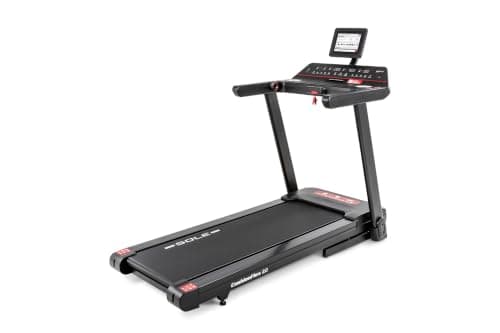
| Rank 1 | Sole F80 A 22″-wide belt without commercial-gym pricing | 22″ × 60″ | 8.8 | $1,499.99Amazon |
| Rank 2 | 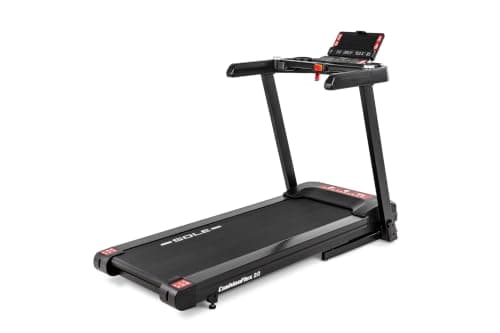 Sole F63 Running on a four-figure budget | 20″ × 60″ | 8.8 | $1,099.99Amazon |
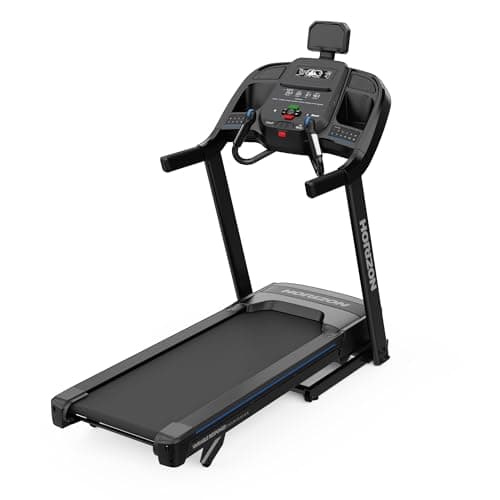
| Rank 3 | 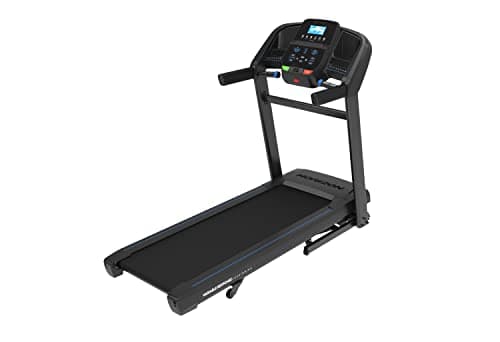 Horizon T202 The step up to a 60″ belt | 20″ × 60″ | 8.0 | $799.00Amazon |
| Rank 4 | 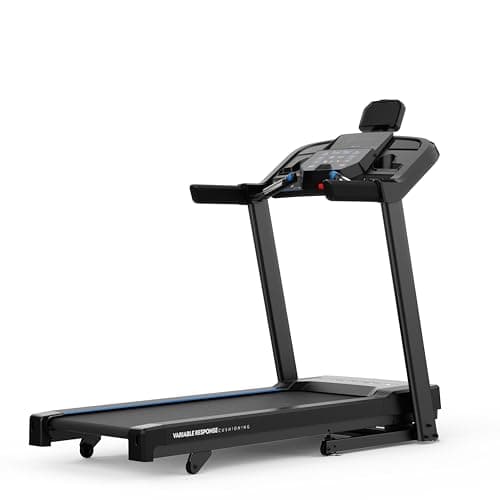 Horizon T101 Connect Walkers and light joggers who want a real brand under $700 | 20″ × 55″ | 7.0 | $699.99Amazon |
#ad Prices come from Amazon and change. How this site is funded. Scores are our published editorial rubric — see our methodology.
Deck size is the specification most likely to make a treadmill unusable for you personally, and the one most buyers skip over. It is two numbers: length and width, and length is the one that matters.
Belt length by height and pace
| Height | Walking | Jogging (5-6 mph) | Running (7 mph+) |
|---|---|---|---|
| Under 5'4″ | 45″ | 50″ | 55″ |
| 5'4″ - 5'8″ | 48″ | 55″ | 55″ |
| 5'8″ - 6'0″ | 50″ | 55″ | 60″ |
| 6'0″ - 6'4″ | 50″ | 60″ | 60″ |
| Over 6'4″ | 55″ | 60″ | 60″ (and 22″ wide) |
Why the chart works this way
Stride length grows with two things: height and speed. A taller runner covers more ground per stride at any pace, and everybody's stride lengthens as they speed up. The belt has to contain the full stride cycle with margin at both ends, because you do not land in the same spot every time.
Run on a belt that is too short and one of two things happens: you shorten your stride to fit the machine, which changes your gait and is tiring; or you drift forward and clip the motor cowl. Neither is acceptable at 8 mph.
Sixty inches is the ceiling
There is essentially no home treadmill with a belt longer than 60 inches. Beyond that the machine becomes too long for a domestic room. For runners over about 6'4″ the remaining lever is width, not length. See treadmills for tall runners.
Width: 20 versus 22 inches
Twenty inches is the standard and is adequate for the large majority of runners. Twenty-two inches matters in three situations:
- You are tall. A longer stride is also a slightly wider one.
- You are heavy. More mass means more lateral movement to absorb.
- You run long. Everybody drifts as they fatigue, and the extra inch each side is margin you will eventually use.
Measuring your own stride
If you want to be certain rather than relying on a chart: run 20 strides on a flat surface at your usual pace, measure the total distance, divide by 20, and add about 15 inches of margin. That is your minimum comfortable belt length.
Deck thickness and reversibility
Rarely published, occasionally relevant. Thicker decks flex less and some are reversible — when one side wears you flip the board and get a second life out of it. If a manufacturer mentions a reversible deck, that is a genuine durability feature rather than marketing.
Machines by deck size
#1 · A 22″-wide belt without commercial-gym pricing
Sole F80
Sole Fitness3.5 CHP behind a 22″ × 60″ deck — the widest belt on this site under two thousand dollars, and the one that stops feeling narrow at pace.
| Motor | 3.5 CHP |
|---|---|
| Running surface | 22″ × 60″ |
| Incline | 0–15% |
| Top speed | 12 mph |
| Weight capacity | 350 lb |
| Unfolded footprint | 82″ L × 38″ W × 66″ H |
| Folds | Yes |
| Subscription | No subscription |
Console functions are not gated; the SOLE+ app is free.
Specifications per Sole Fitness published specifications.
What it does well
- 22″ belt width is a genuine comfort difference for anyone who drifts under fatigue
- 3.5 CHP has headroom for daily running at the top of the capacity rating
- Touchscreen console, but the machine still runs without a signed-in account
Where it falls short
- 38″ wide unfolded — measure your doorway and your room before ordering
- Among the heaviest machines here to move into position
- The price step over the F65 buys width, not power you will notice at 7 mph
Our rubric
- Motor
- 10.0
- Deck
- 10.0
- Incline
- 8.0
- Build
- 9.0
- Value
- 7.0
#2 · Running on a four-figure budget
#ad How we are funded · Price as of October 5, 2026
Sole F63
Sole FitnessA 3.0 CHP motor and a full 20″ × 60″ deck at a price where most machines give you one or the other — and the console works forever with no account.
| Motor | 3.0 CHP |
|---|---|
| Running surface | 20″ × 60″ |
| Incline | 0–15% |
| Top speed | 12 mph |
| Weight capacity | 325 lb |
| Folds | Yes, hydraulic assist |
| Warranty | Lifetime frame + motor, 3 yr parts, 1 yr labor |
| Subscription | No subscription |
Nothing is gated. The SOLE+ app is free and entirely optional; incline, speed and every console metric work with the machine unplugged from the internet.
Specifications per Sole Fitness published specifications.
What it does well
- 3.0 CHP is genuine running-duty power, not a peak-horsepower marketing number
- Full 60″ belt — long enough for a 6-foot stride at speed
- Lifetime frame and motor warranty at well under the price where that usually starts
- The console is a plain LCD: every readout works with no app, no login, no fee
Where it falls short
- 253 lb assembled — a two-person move, and it does not go upstairs easily
- The 6.5″ LCD is basic next to touchscreen rivals at the same money
- 82″ × 35″ footprint unfolded is a real chunk of a spare room
Our rubric
- Motor
- 9.0
- Deck
- 9.0
- Incline
- 8.0
- Build
- 9.0
- Value
- 9.0
#3 · The step up to a 60″ belt
Horizon T202
Horizon Fitness2.75 CHP and a full-length 20″ × 60″ deck with three-zone cushioning — the cheapest way onto a 60-inch belt from a brand that services its machines.
| Motor | 2.75 CHP |
|---|---|
| Running surface | 20″ × 60″ |
| Incline | 0–12% |
| Top speed | 12 mph |
| Weight capacity | 325 lb |
| Cushioning | 3-Zone Variable Response |
| Assembled weight | 187 lb |
| Subscription | Subscription optional |
No required plan. Console metrics and incline work standalone.
Specifications per Horizon Fitness published specifications.
What it does well
- 60″ belt at a price most rivals reserve for 55″
- Three-zone cushioning is firmer at push-off and softer at footstrike, which is the right way round
- 187 lb assembled is light for this class — easier to get into a room
Where it falls short
- 12% maximum incline, where the better machines reach 15%
- LCD console with LED windows, not a screen
- 2.75 CHP is fine for mixed use and marginal for daily running
Our rubric
- Motor
- 7.0
- Deck
- 9.0
- Incline
- 7.0
- Build
- 8.0
- Value
- 9.0
#4 · Walkers and light joggers who want a real brand under $700
Horizon T101 Connect
Horizon FitnessA 2.5 CHP walker's treadmill with a lifetime frame warranty — the cheapest machine here we would call genuinely durable, as long as you are not running daily.
| Motor | 2.5 CHP |
|---|---|
| Running surface | 20″ × 55″ |
| Incline | 0–10% |
| Top speed | 10 mph |
| Weight capacity | 300 lb |
| Folds | Yes |
| Warranty | Lifetime frame, 1 yr parts and labor |
| Subscription | Subscription optional |
Every console readout works unsubscribed. Bluetooth lets you stream to third-party apps you already pay for (or do not) — Horizon does not sell a required plan.
Specifications per Horizon Fitness published specifications.
What it does well
- Lifetime frame warranty at a price where most frames carry one to five years
- Bluetooth speakers and an integrated fan, which the cheap competition skips
- Folds, and is light enough that one determined person can reposition it
Where it falls short
- 55″ belt is short — a tall runner will clip the motor cowl
- 2.5 CHP is a walking and light-jogging motor, not a marathon-training one
- 1-year parts cover is thin next to Sole's three
Our rubric
- Motor
- 6.0
- Deck
- 6.0
- Incline
- 6.0
- Build
- 8.0
- Value
- 9.0
Frequently asked questions
What size treadmill belt do I need?
Is a 55-inch treadmill belt long enough?
Does treadmill belt width matter?
Are there treadmills with belts longer than 60 inches?
What is a reversible treadmill deck?
Sources
Read next
Treadmills
Best treadmills for tall runners
Deck length by rider height, and why 22 inches of width matters over six feet.
Guides
Treadmill buying guide: what to look for
The eight specs that decide a treadmill, in order, with the thresholds for each.
Treadmills
Best home treadmills for running
Continuous horsepower, 60-inch decks and frame mass — the three specs running actually tests.
Guides
How much horsepower should a treadmill have?
CHP versus peak HP, the thresholds by weight and use, and why headroom beats the minimum.
Treadmills
Best treadmills under $1,500
Running-duty motors, 60-inch decks, and the point where specification stops being the problem.