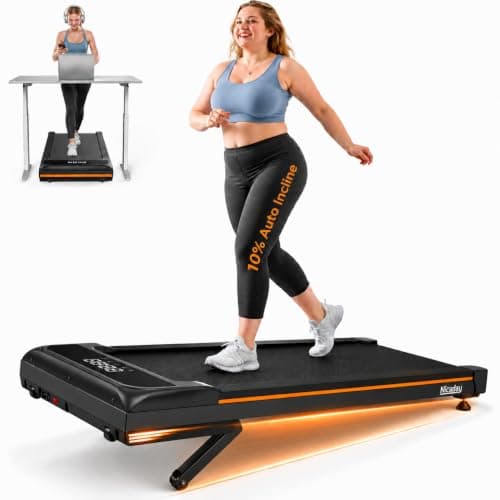
Best under $300
Best treadmills under $300
The honest limits of a sub-$300 machine, and the two specs still worth paying for.
Motor, deck, incline and warranty. Ranked on the four specs that decide whether a treadmill survives, with live prices.
Belt & Bike earns a commission when you buy through our links, at no extra cost to you. Prices come from Amazon and change; the date beside every price is when we last verified it. Full disclosure.
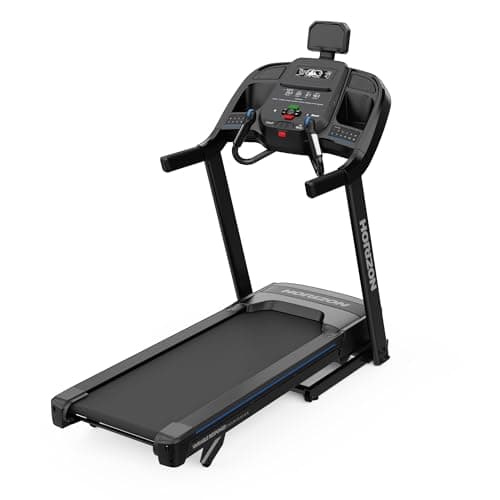
Ranked on the specifications below. Prices are live and dated; where no live price resolves, the cell reads Check price.
| # | Model | Motor | Score | Price |
|---|---|---|---|---|
| Rank 1 | Horizon 7.0 AT Interval runners who want fast incline changes | 3.0 CHP | 9.0 | $934.99Amazon |
| Rank 2 | 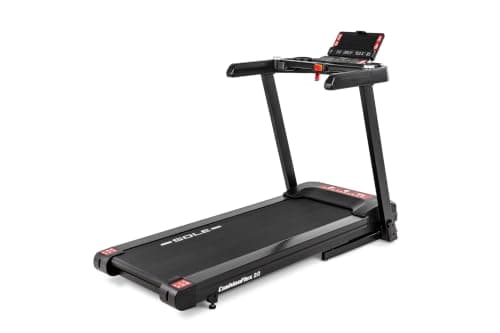 Sole F63 Running on a four-figure budget | 3.0 CHP | 8.8 | $1,099.99Amazon |
| Rank 3 | 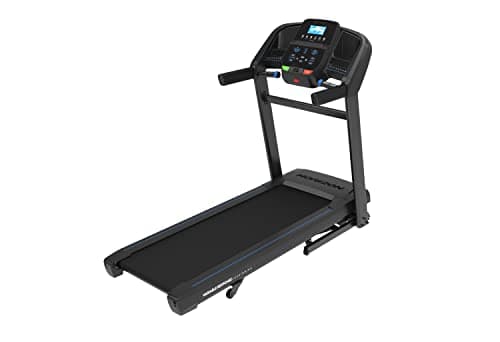 Horizon T202 The step up to a 60″ belt | 2.75 CHP | 8.0 | $799.00Amazon |
| Rank 4 | 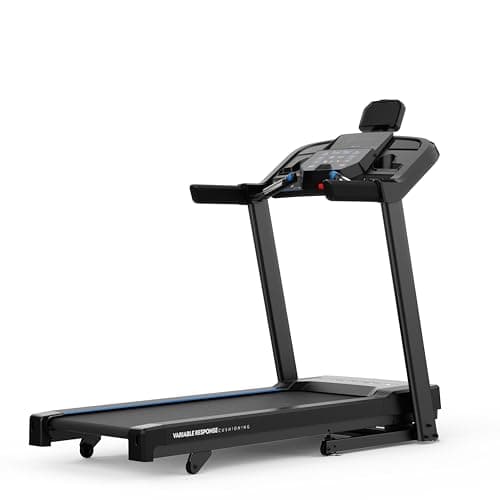 Horizon T101 Connect Walkers and light joggers who want a real brand under $700 | 2.5 CHP | 7.0 | $699.99Amazon |
| Rank 5 | Niceday Walking Pad (10% auto incline, 400 lb) Incline plus capacity under $300 | Not published | 6.6 | $259.99Amazon |
#ad Prices come from Amazon and change. How this site is funded. Scores are our published editorial rubric — see our methodology.
Almost every treadmill listing leads with a screen. We lead with the motor, because the screen is replaceable and the motor is not. Everything on this hub is ranked on four specifications — continuous horsepower, deck dimensions, incline range and warranty depth — and nothing is ranked on how impressive the console looks.
This is the one question that determines everything else, and most buyers answer it aspirationally rather than honestly. A walker who buys a running machine overpays by several hundred dollars. A runner who buys a walking machine gets a dead treadmill in eighteen months.
Pick your lane first
| Spec | Walking | Running | Why it matters |
|---|---|---|---|
| Continuous horsepower | 1.5-2.0 CHP | 3.0 CHP+ | Continuous, not peak. Heat is what kills motors. |
| Belt length | 45-50″ | 55-60″ | Stride grows with height and speed. |
| Belt width | 16-20″ | 20-22″ | Margin for drift as you fatigue. |
| Incline | 10-15% | 10-15% | The best way to make walking hard without impact. |
| Weight capacity | You + 50 lb | You + 100 lb | Ratings are static; running triples the load. |
| Warranty | Any | Lifetime frame + motor, 3 yr parts | Reads as a durability forecast. |
Continuous horsepower (CHP) is what a motor sustains indefinitely. Peak horsepower is an instantaneous startup figure and is two to three times higher on the same motor. A '4.0 HP' treadmill at $350 is advertising peak; a '3.0 CHP' treadmill at $1,100 is advertising continuous. Brands that publish CHP are telling you the harder number because they are confident in it. The full explanation is here.
Under about $700 you are buying walking machines regardless of what the top speed says — the motor, the deck and the frame cannot be built for running at that price. At around $1,000 everything changes: 3.0 CHP, a full 20″ × 60″ deck, 15% powered incline and a lifetime frame-and-motor warranty all arrive together. That is the single biggest step on the ladder, and above roughly $1,500 the curve flattens hard. What you give up at each price maps the whole thing.
A bike's resistance is a knob you turn, so a subscription on a bike sells content. A treadmill's speed and incline are controlled by the console, so a subscription-first treadmill can genuinely disable capability. Several machines at $1,000 look identical and behave completely differently unsubscribed.
The test we apply on every page: does the console show every metric with no account, and does the machine broadcast standard Bluetooth that third-party apps can read? If yes to both, you can never be locked in. See treadmills without a subscription.
A treadmill needs its own length plus at least 24 inches of clearance behind it — that is fall-off clearance, not a nicety. A 76-inch machine therefore needs a 100-inch run of floor. Folded, an upright-folding treadmill still occupies roughly 45 by 35 inches and stands six feet tall. Measure the room, the ceiling and the route in before ordering: space planning and folded footprint.
28 pages in this section. Roundup tiles carry the live price and a buy link for their top pick.
Best under $300
The honest limits of a sub-$300 machine, and the two specs still worth paying for.
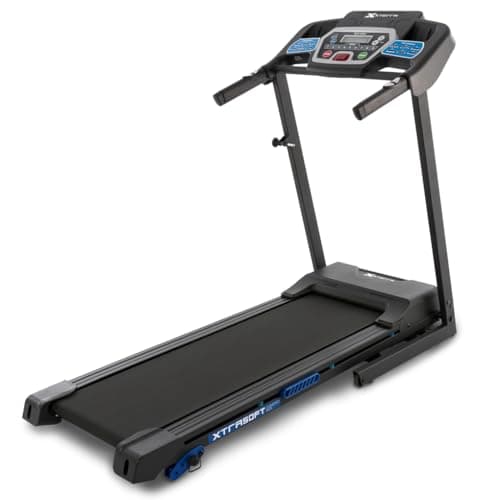
Best under $500
Where folding frames, handrails and powered incline all become affordable.
Best under $1,000
3.0 CHP, a 60-inch deck and a lifetime frame warranty — all available under four figures.
Best under $1,500
Running-duty motors, 60-inch decks, and the point where specification stops being the problem.
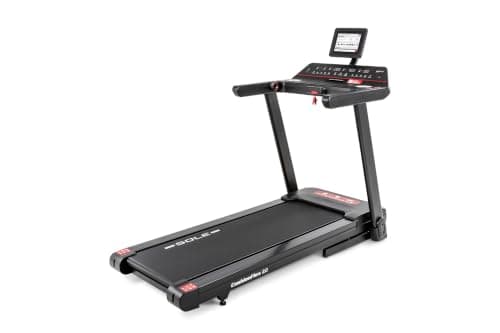
Best under $2,000
The top of the home market, and an honest account of which extras change the run.
Best folding
Three folding mechanisms, three very different amounts of floor actually cleared.
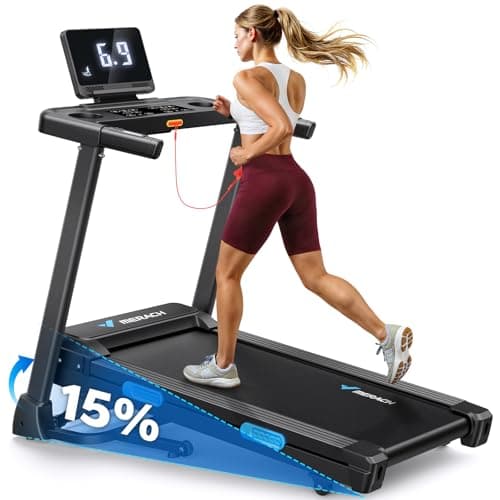
Best folding under $500
What 'foldable' means when the budget is $500, and which folds genuinely clear the floor.
Best folding under $1,000
Assisted folding, a full-length deck and a real motor, all under four figures.
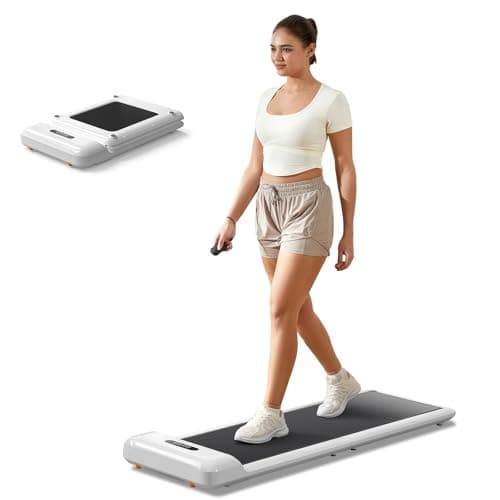
Best folding for small spaces
Ranked by where the machine goes when you are finished with it, not by how it runs.
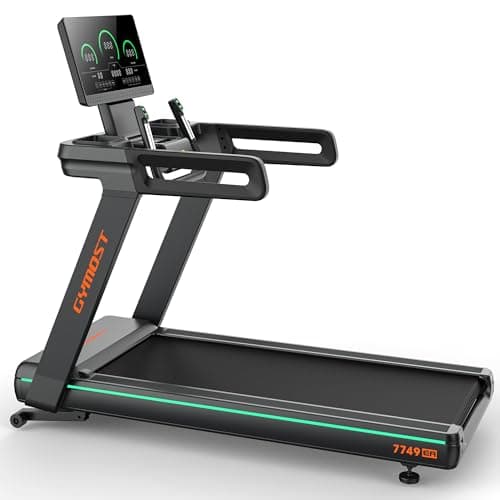
Best non-folding
No hinge means more frame for the money — if the machine has a permanent home.
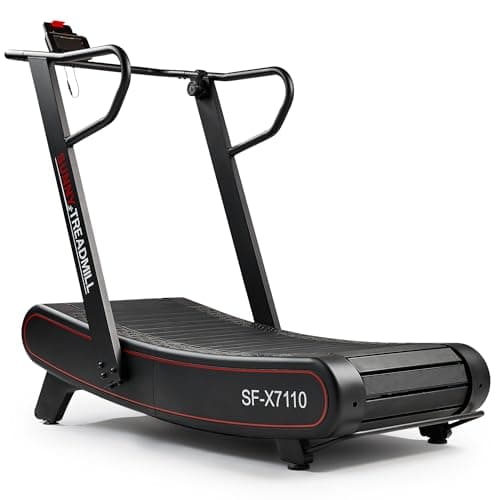
Best manual / non-motorized
Flat manual belts and curved decks share a name and nothing else. Which is which.
Best with incline
Gradient range, change speed, and what each percentage actually feels like.
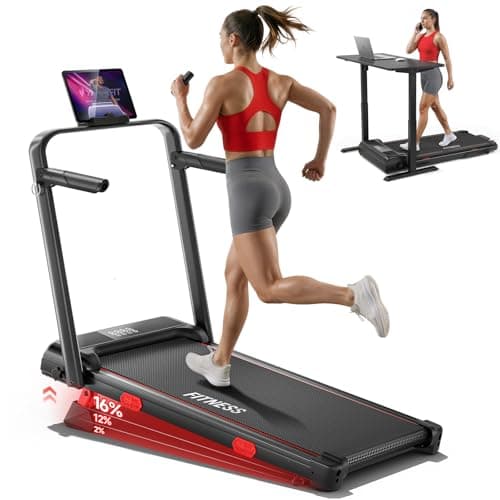
Best incline under $500
Steep powered gradients for under $500, and the stability caveats that come with them.
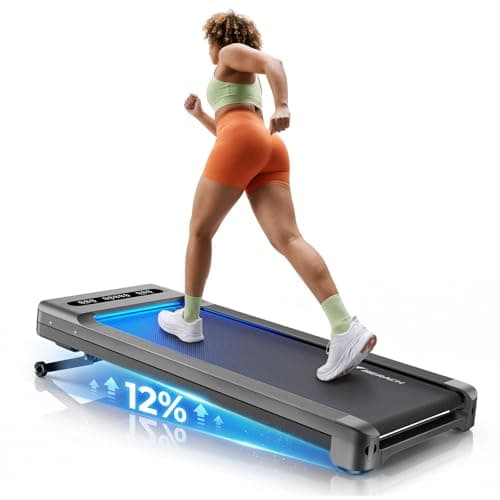
Best for walking
The specs a walker should buy, and the running specs you can safely ignore.
Best for running
Continuous horsepower, 60-inch decks and frame mass — the three specs running actually tests.
Best for walking and running
The narrow specification that genuinely serves a walker and a runner in one machine.
Best for apartments
Airborne noise versus structure-borne impact, and what actually stops the complaints.
Best for small spaces
Machine footprint plus the rear clearance nobody tells you about before you order.
Best for beginners
Why the right first treadmill is usually cheaper and smaller than you expect.
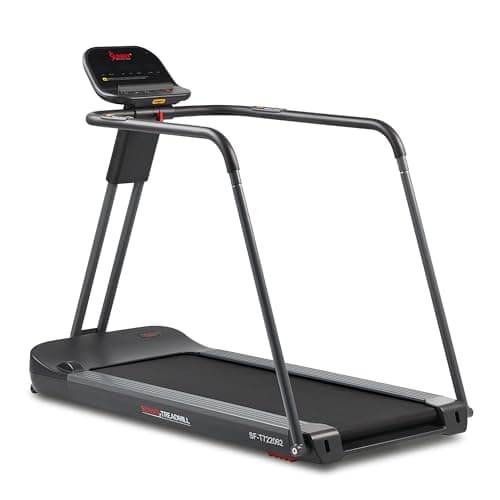
Best for seniors
Handrails, step-up height and minimum speed — and when a bike is the better answer.
Top pick: Sunny Health & Fitness Treadmill with Extended Safety Handrails
Best for tall runners
Deck length by rider height, and why 22 inches of width matters over six feet.
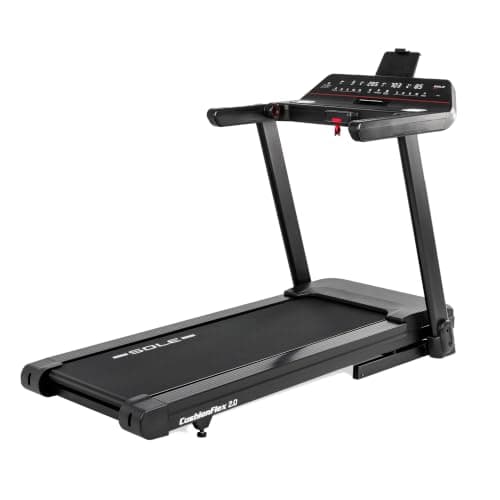
Best for heavy users
How to read a capacity rating, how much margin to leave, and which brands earn their numbers.
Index
Model-by-model write-ups, with an explicit statement of what we verified and what we did not.
Review
Running-duty motor, 60-inch deck, lifetime warranty, no subscription. The benchmark.
Review
A lifetime frame warranty and a real service network, on a machine built for walking.
Review
Spec-for-spec with the F63, plus the best interval controls at the price.
Review
A real brand badge at an import price — and what the brand chooses not to publish.
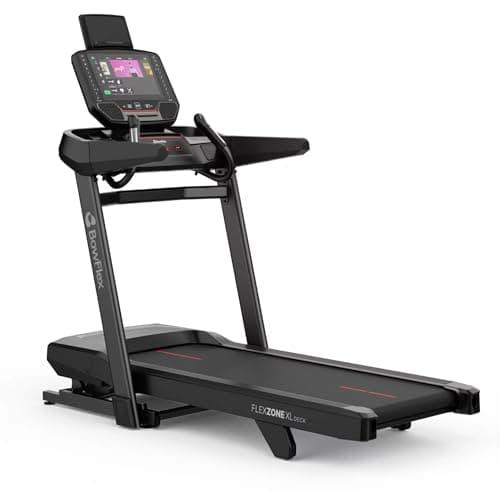
Review
What replaced the T6, and how to price JRNY before you commit $2,000.