Guides
How to set up an exercise bike properly
Three adjustments, ten minutes, once. Getting saddle height wrong is the most common reason a new bike hurts.
Belt & Bike earns a commission when you buy through our links, at no extra cost to you. Prices come from Amazon and change; the date beside every price is when we last verified it. Full disclosure.
Quick picks
| # | Model | Resistance | Score | Price |
|---|---|---|---|---|
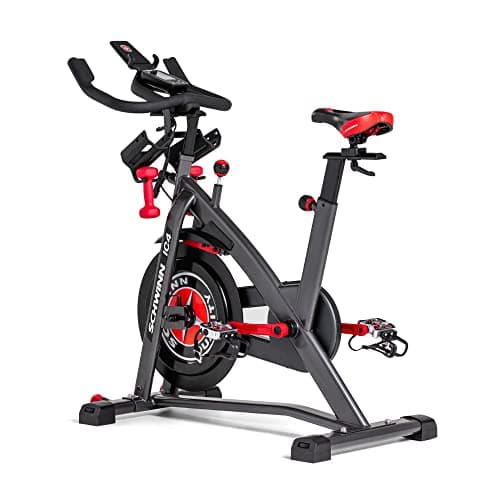
| Rank 1 | Schwinn IC4 A Peloton ride feel with no Peloton bill | 100-level magnetic | 9.0 | $795.99Amazon |
| Rank 2 | 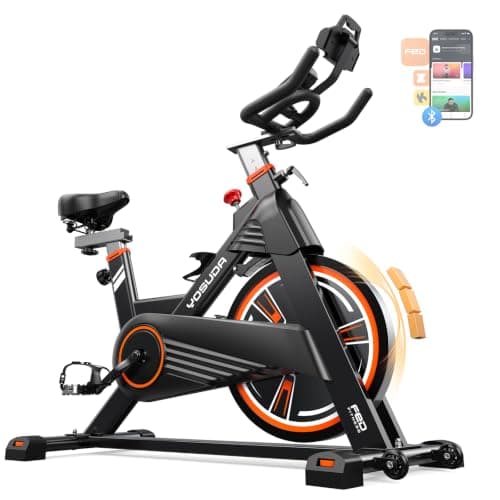 YOSUDA PRO Magnetic Exercise Bike A 350 lb rating under $350 | Magnetic | 7.8 | $329.99Amazon |
| Rank 3 | 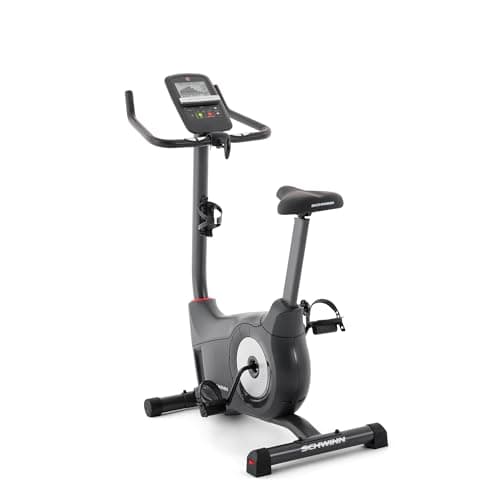 Schwinn 130 Upright Bike A compact upright from a real brand | 16-level magnetic | 7.4 | $412.75Amazon |
#ad Prices come from Amazon and change. How this site is funded. Scores are our published editorial rubric — see our methodology.
Set the saddle height so that it is level with your hip bone when you stand beside the bike, then check that your knee keeps a slight bend — roughly 25 to 35 degrees from straight — at the bottom of the pedal stroke. Then set fore-aft so your forward knee sits over the pedal axle with the cranks horizontal, and finally set the handlebars where your back is comfortable. That is the whole job, and it takes ten minutes once.
Almost every complaint about a new exercise bike — sore knees, a numb saddle, an aching neck — traces back to one of those three adjustments being wrong by an inch or two.
1. Saddle height, which matters most
- Stand beside the bike. Raise or lower the saddle until the top of it is level with your hip bone — the bony point at the top of your pelvis.
- Get on, put your heel on the pedal, and rotate to the bottom of the stroke. With your heel down your leg should be almost straight.
- Now move to the ball of your foot, where you actually pedal. That leaves a slight bend of roughly 25 to 35 degrees at the bottom, which is the target.
- Pedal for a minute. If your hips rock side to side, the saddle is too high. If your knees feel crowded at the top of the stroke, it is too low.
2. Fore-aft position
Most spin bikes and many uprights let the saddle slide forward and back. Set the cranks horizontal — three and nine o'clock — and look down: the front of your forward kneecap should sit roughly over the pedal axle. Too far forward loads the front of the knee; too far back makes you reach for the bars and pulls on the hamstrings.
Recumbents handle this differently: the whole seat slides on a rail and sets leg extension rather than knee-over-pedal position. The target there is the same slight bend at full extension — see recumbent bike buying guide.
3. Handlebar height and reach
There is no single correct answer, only a comfort one, and it depends on the bike type:
| Bike type | Starting handlebar position |
|---|---|
| Indoor cycle / spin | Level with the saddle, or 1–2 inches above |
| Indoor cycle, flexible rider | Below the saddle, for a more aggressive position |
| Upright | Well above the saddle — you should sit tall |
| Recumbent | Not adjustable on most; the backrest does this job |
If your neck or lower back aches after 20 minutes, raise the bars. If your hands go numb, you are carrying weight on them — raise the bars and sit back. Bars should support you, not hold you up.
The three mistakes almost everyone makes
- Leaving the saddle where it arrived. Factory position is for shipping, not for you, and it is usually too low.
- Blaming the saddle for a height problem. Numbness and soreness are often caused by a saddle that is too high or too far forward tipping your weight onto the nose. Fix the position before you buy a new seat.
- Changing two things at once. Move one adjustment, ride for a session, then judge. Changing height and fore-aft together means you will not know which one helped.
Saddle comfort, separately
- Expect two uncomfortable weeks. Sit bones adapt. This is normal and it ends.
- If it still hurts at week three, change the saddle. A $30 replacement fits most bikes on a standard rail and is the cheapest fix in home fitness.
- Padded shorts beat a padded seat. A very soft saddle lets the sit bones sink and puts pressure on soft tissue, which is the opposite of what you want.
- Level is the default. A saddle tipped nose-down slides you forward all session; nose-up creates pressure. Start flat.
Pedals and shoes
Toe cages and sneakers are fine for everyone and necessary for nobody to upgrade. Clipless pedals — SPD on dual-sided pedals like the Schwinn IC4's — make the stroke more efficient and stop your foot moving, which some riders find eliminates a persistent hot-spot or knee niggle. Not a beginner purchase.
Three bikes with the adjustment range to fit properly
Setup is only possible within the bike's adjustment range — these three have enough of it.
#1 · A Peloton ride feel with no Peloton bill
#ad How we are funded · Price as of October 10, 2026
Schwinn IC4
Schwinn FitnessA 40 lb flywheel with 100 levels of magnetic resistance and open Bluetooth — it rides like the subscription bikes and connects to whichever app you choose, including none.
| Flywheel | 40 lb |
|---|---|
| Resistance | 100-level magnetic |
| Weight capacity | 330 lb |
| Console | Backlit color LCD: HR, speed, time, distance, calories, RPM |
| App support | JRNY, Peloton, Zwift via Bluetooth |
| Pedals | Dual-sided: toe cage and SPD |
| Subscription | No subscription |
Nothing is gated. JRNY is optional, and the bike's Bluetooth broadcast works with Peloton, Zwift or no app at all — every console metric is on the bike itself.
Specifications per Schwinn Fitness published specifications.
What it does well
- 100 discrete magnetic levels mean you can repeat a workout exactly — friction bikes cannot
- Broadcasts cadence and speed over Bluetooth to any app, so you are not locked to one ecosystem
- Dual-sided pedals work with trainers or cycling shoes out of the box
- 330 lb capacity is above the class norm
Where it falls short
- No screen — you supply a tablet, which the included holder expects
- Resistance is a knob, not an app-controlled servo, so classes cannot auto-adjust it
- The most expensive bike here that is not a studio machine
Our rubric
- Ride
- 9.0
- Fit
- 9.0
- Resistance
- 10.0
- Build
- 9.0
- Value
- 8.0
#2 · A 350 lb rating under $350
#ad How we are funded · Price as of October 10, 2026
YOSUDA PRO Magnetic Exercise Bike
YOSUDAMagnetic resistance and a 350 lb stated capacity for around a third of the IC4's price — the value benchmark the whole budget spin category is measured against.
| Resistance | Magnetic |
|---|---|
| Weight capacity | 350 lb (manufacturer figure) |
| Flywheel | Not published by manufacturer |
| Drive | Belt |
| Console | LCD with tablet holder |
| Subscription | Subscription optional |
The YOSUDA app is free and optional; the bike needs no account to work.
Specifications per Manufacturer figures as published on the Amazon product listing.
What it does well
- 350 lb stated capacity beats bikes costing twice as much
- Magnetic resistance means no pad to wear out
- Fully adjustable four-way seat and handlebars
Where it falls short
- YOSUDA does not publish a flywheel weight for this model on the listing
- Resistance is a knob with no numbered levels
- No Bluetooth cadence broadcast, so apps cannot read the bike
Our rubric
- Ride
- 7.0
- Fit
- 8.0
- Resistance
- 7.0
- Build
- 7.0
- Value
- 10.0
#3 · A compact upright from a real brand
Schwinn 130 Upright Bike
Schwinn Fitness16 magnetic levels in a 41″ × 21″ footprint — the upright to buy when the recumbent simply will not fit.
| Resistance | 16-level magnetic |
|---|---|
| Weight capacity | 300 lb |
| Footprint | 41.3″ L × 21.4″ W × 54.5″ H |
| Machine weight | 58.4 lb |
| Console | 5.5″ segmented LCD |
| Subscription | No subscription |
Self-contained console; no plan to buy.
Specifications per Schwinn Fitness published specifications.
What it does well
- A genuinely small footprint — under two feet wide
- 58 lb means one person can move it
- Numbered magnetic resistance at an entry price
Where it falls short
- Upright seating is less comfortable than recumbent for long sessions
- Segmented LCD is basic
- Lighter frame rocks more than the recumbents under hard effort
Our rubric
- Ride
- 7.0
- Fit
- 7.0
- Resistance
- 8.0
- Build
- 7.0
- Value
- 8.0
If a knee still hurts after setup
Front-of-knee pain usually means the saddle is too low or too far forward. Back-of-knee pain usually means too high or too far back. If neither adjustment helps within two sessions, stop and get it looked at rather than riding through it — the AAOS joint-health resources are a reasonable starting point, and best exercise bikes for bad knees covers machines chosen specifically for knee comfort.
Tall and short riders
Adjustment range is a specification, and it is one of the few that genuinely constrains who can use a bike. Over about 6'1″ or under about 5'0″, check the published rider height range before you buy rather than after — see best exercise bikes for tall riders. A bike you cannot fit is not fixable with technique.
Frequently asked questions
How high should an exercise bike seat be?
Why do my knees hurt on an exercise bike?
How do I stop an exercise bike seat from hurting?
Where should the handlebars be on an exercise bike?
Should my leg be straight at the bottom of the pedal stroke?
Sources
Read next
Guides
Exercise bike buying guide
Format, then resistance, then fit — the three decisions in the order that matters.
Exercise Bikes
Best exercise bikes for tall riders
Seat-post travel, not frame size — and the inseam calculation to check it before ordering.
Exercise Bikes
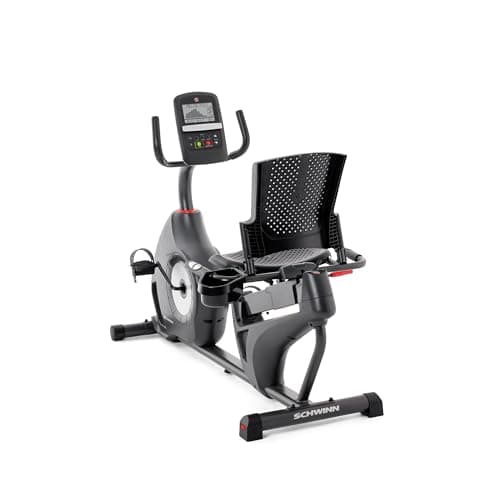
Best exercise bikes for bad knees
Seat height matters more than machine choice, and most people have theirs too low.
Guides
Recumbent bike buying guide
Seat rail, step-over height and footprint — the three specs that decide a recumbent, in order.
Exercise Bikes
Best spin bikes for home
Flywheel, drive, resistance and fit — the four specs that decide how a cycle rides.