Guides
Recumbent bike buying guide
A recumbent is bought for the seat and the step-over height. Everything else is secondary, and most guides get that backwards.
Belt & Bike earns a commission when you buy through our links, at no extra cost to you. Prices come from Amazon and change; the date beside every price is when we last verified it. Full disclosure.
Quick picks
| # | Model | Resistance | Score | Price |
|---|---|---|---|---|
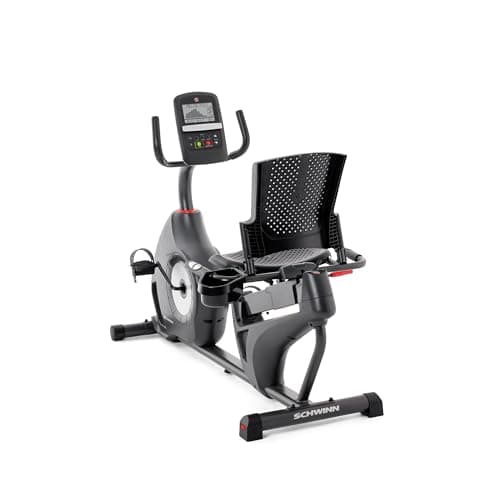
| Rank 1 | Schwinn 230 Recumbent Bike A branded recumbent under $500 | 16-level magnetic | 8.0 | $499.00Amazon |
| Rank 2 | 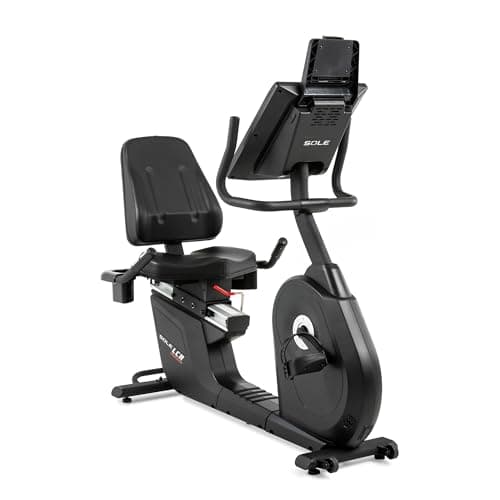 Sole LCR Recumbent A light-commercial recumbent for the home | Magnetic | 8.6 | $1,599.99Amazon |
| Rank 3 | 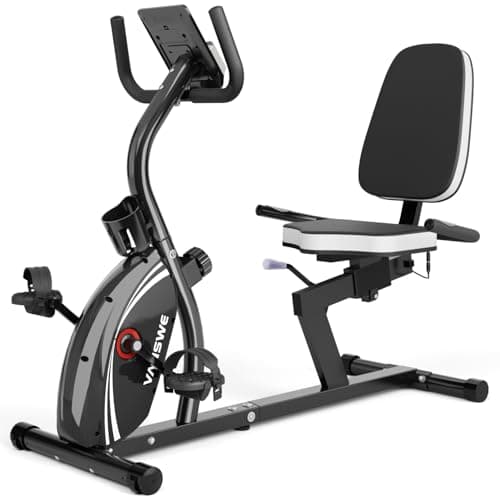 VANSWE Recumbent Bike (380 lb) A 380 lb rating under $200 | Magnetic | 7.0 | $199.98Amazon |
| Rank 4 | 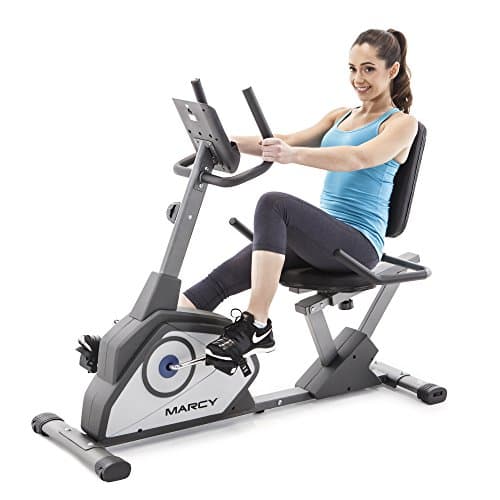 Marcy Magnetic Recumbent NS-40502R Eight simple levels and nothing to learn | 8-level magnetic | 6.6 | $259.99Amazon |
#ad Prices come from Amazon and change. How this site is funded. Scores are our published editorial rubric — see our methodology.
The six things to check on a recumbent, in order, are seat rail travel, step-through height, resistance type, weight capacity, footprint length and backrest adjustment. The Schwinn 230 is the safe default — 16 magnetic levels, a 300 lb rating, a published 64″ × 27.7″ footprint and a brand that still sells parts. Flywheel weight, console size and app support, which dominate most bike guides, barely matter on a recumbent.
Why the priorities are different on a recumbent
An upright or spin bike is bought for how it rides. A recumbent is bought for how you get on it, how long you can sit in it, and whether it fits the room. People choose recumbents because of a back, a knee, a balance concern or an age-related reason, and every one of those points at the seat and the frame rather than at the drivetrain.
1. Seat rail travel — the spec nobody lists prominently
The seat slides fore and aft on a rail to set leg extension. Two things go wrong: the rail is too short for a tall rider, so the knee never straightens enough; or the adjustment is a pin through holes rather than a lever, so there is no position between hole 4 and hole 5 and neither is right.
Check the stated inseam or height range on the listing. If none is published, that is a signal in itself. A rider over about 6'1″ should treat rail travel as the deciding spec — see best exercise bikes for tall riders.
2. Step-through height
This is the height you must lift a foot over to sit down, and it is the main reason to own a recumbent at all. A true step-through frame has a low, open channel between the seat and the console. Some bikes marketed as recumbent have a cross-member at shin height, which defeats the purpose for anyone with hip mobility limits.
3. Resistance type
Magnetic, every time. Nothing touches the flywheel, so there is nothing to wear, nothing to squeal and nothing to replace, and the levels are numbered so you can repeat and progress a session. Eight levels is enough for most recumbent riders; 16 is comfortable; more than that is marketing. Resistance types explained covers the alternatives and why they lose.
| Levels | Who it suits |
|---|---|
| 8 | Steady riding, rehabilitation, most seniors |
| 16 | Anyone who wants to progress and feel the steps clearly |
| 20+ | Rarely used above about level 14 in practice |
4. Weight capacity, read as a ceiling
Recumbents are the best-rated bikes in home cardio because the load path is simple and the frame is long. 300 lb is the mainstream figure; 380 lb and 400 lb ratings exist at surprisingly low prices. Read any rating as a limit to stay well under, and be skeptical of a 380 lb figure on a 60 lb bike — see best exercise bikes for heavy riders.
5. Footprint, which is the usual deal-breaker
A recumbent is long. The Schwinn 230's published length is 64 inches, which is more than five feet of floor before you add clearance. That is the single most common reason a recumbent gets returned, and the reason best exercise bike for small spaces recommends uprights instead.
6. Backrest adjustment
A fixed backrest angle suits most people. An adjustable one matters if you have a specific lumbar need or if two people of different heights share the bike. Mesh backs breathe better than solid padded ones on long sessions, which is a small thing that becomes a large thing in month two.
Four recumbents worth shortlisting
Picked after you have settled the frame and seat questions above.
#1 · A branded recumbent under $500
Schwinn 230 Recumbent Bike
Schwinn Fitness16 magnetic resistance levels, a 300 lb rating and a proper step-through frame from a brand that still sells parts — the safe recumbent choice.
| Resistance | 16-level magnetic |
|---|---|
| Weight capacity | 300 lb |
| Footprint | 64″ L × 27.7″ W × 44″ H |
| Machine weight | 80 lb |
| Console | 5.5″ LCD with Bluetooth |
| Subscription | No subscription |
Every console function works with no account. Bluetooth is optional.
Specifications per Schwinn Fitness published specifications.
What it does well
- Numbered magnetic levels, so sessions are repeatable
- Step-through frame with a low entry height
- Bluetooth to the Schwinn and third-party apps — no plan required
Where it falls short
- 64″ long is a serious footprint for a bike
- 300 lb capacity is beaten by cheaper no-name recumbents claiming 400 lb
- Seat is comfortable but not adjustable for backrest angle
Our rubric
- Ride
- 8.0
- Fit
- 8.0
- Resistance
- 8.0
- Build
- 8.0
- Value
- 8.0
#2 · A light-commercial recumbent for the home
Sole LCR Recumbent
Sole FitnessSole's recumbent: commercial-grade frame, touchscreen and Bluetooth, with the same no-subscription stance as its treadmills.
| Resistance | Magnetic |
|---|---|
| Console | Touchscreen with Bluetooth |
| Frame | Light-commercial step-through recumbent |
| Weight capacity | Not published by manufacturer |
| Subscription | No subscription |
No required membership; the free SOLE+ app is optional.
Specifications per Sole Fitness published specifications.
What it does well
- Built to light-commercial standards, which shows in the bearings and the seat rail
- Touchscreen without a mandatory membership behind it
- Sole's warranty and service network
Where it falls short
- Costs more than three budget recumbents put together
- Sole does not publish a capacity figure for this model on the listing
- Very heavy
Our rubric
- Ride
- 9.0
- Fit
- 9.0
- Resistance
- 9.0
- Build
- 10.0
- Value
- 6.0
#3 · A 380 lb rating under $200
VANSWE Recumbent Bike (380 lb)
VANSWEA 380 lb stated capacity on a recumbent costing less than two hundred dollars — the most capacity per dollar on this site, with the caveats that implies.
| Weight capacity | 380 lb (manufacturer figure) |
|---|---|
| Resistance | Magnetic |
| Frame | Step-through recumbent |
| Seat | Adjustable rail |
| Subscription | No subscription |
No app required for any function.
Specifications per Manufacturer figures as published on the Amazon product listing.
What it does well
- 380 lb stated rating at the lowest price here by a wide margin
- Step-through entry and a long seat rail
- Magnetic resistance
Where it falls short
- Verify the rating against your own weight with a margin — budget capacity claims are static, not dynamic
- Frame flexes more than the Schwinn equivalents
- Basic console
Our rubric
- Ride
- 6.0
- Fit
- 8.0
- Resistance
- 6.0
- Build
- 6.0
- Value
- 9.0
#4 · Eight simple levels and nothing to learn
#ad How we are funded · Price as of October 10, 2026
Marcy Magnetic Recumbent NS-40502R
MarcyEight numbered magnetic levels, a step-through frame and no app anywhere near it — a deliberately simple recumbent.
| Resistance | 8-level magnetic |
|---|---|
| Frame | Step-through recumbent |
| Weight capacity | Not published by manufacturer |
| Console | Basic LCD |
| Subscription | No subscription |
Nothing connected. Nothing to subscribe to.
Specifications per Manufacturer figures as published on the Amazon product listing.
What it does well
- Numbered levels, so sessions repeat exactly
- No app, no pairing, no account — it just works
- Established budget brand
Where it falls short
- Eight levels is a narrow range for a fit rider
- No published capacity figure
- Basic seat padding
Our rubric
- Ride
- 6.0
- Fit
- 7.0
- Resistance
- 6.0
- Build
- 6.0
- Value
- 8.0
What you can safely ignore
- Flywheel weight. Recumbent pedaling is smooth by geometry; momentum matters far less than on a spin bike.
- Console size. You are sitting 30 inches from it with a backrest. A segment LCD is fine.
- Built-in programs. Two get used.
- App integration, unless you specifically want it. Nothing on a good recumbent should be gated behind an account.
- Arm levers, unless you want the seated cross-trainer motion deliberately. They add cost and complexity.
Recumbent or upright?
Buy the recumbent if getting on and off matters, if your back needs support, or if you want to ride for 45 minutes without a sore seat. Buy the upright if floor space is tight or you want a harder effort available. Upright vs recumbent bike has the full comparison, and best recumbent bikes is the ranked roundup.
If a knee is the reason you are here, best recumbent bikes for bad knees ranks on exactly that, and the AAOS joint-health resources are a sensible place to start before any program.
A five-minute checklist before you order
- Measure 68 inches of clear floor length, minimum, plus side clearance to get in.
- Check the published rider height or inseam range against the tallest person who will use it.
- Confirm the resistance is magnetic and the levels are numbered.
- Check the capacity rating is at least 50 lb above the heaviest rider.
- Look at a side-on photo and find the step-through channel.
- Read the return window. At the budget end it is the real warranty.
Frequently asked questions
What should I look for when buying a recumbent exercise bike?
How much space does a recumbent bike need?
Are recumbent bikes good for a bad back?
How many resistance levels does a recumbent bike need?
Is a recumbent bike as good a workout as an upright?
Sources
Read next
Exercise Bikes
Best recumbent exercise bikes
The most comfortable cardio machine made, and the one most likely to still be used in month six.
Guides
Exercise bike buying guide
Format, then resistance, then fit — the three decisions in the order that matters.
Compare
Upright vs recumbent exercise bike
Smaller and harder versus bigger and far more likely to still be used next year.
Exercise Bikes
Best recumbent bikes for bad knees
The geometry that makes recumbents gentler, and the seat-rail setup that makes it true.
Exercise Bikes
Best exercise bikes for heavy riders
Why bike capacity ratings are more trustworthy, and how much margin to leave anyway.