Guides
Treadmill power and circuit requirements
A treadmill wants a dedicated grounded circuit and no extension cord. Here is why, and how to check what you have.
Belt & Bike earns a commission when you buy through our links, at no extra cost to you. Prices come from Amazon and change; the date beside every price is when we last verified it. Full disclosure.
Quick picks
| # | Model | Motor | Score | Price |
|---|---|---|---|---|
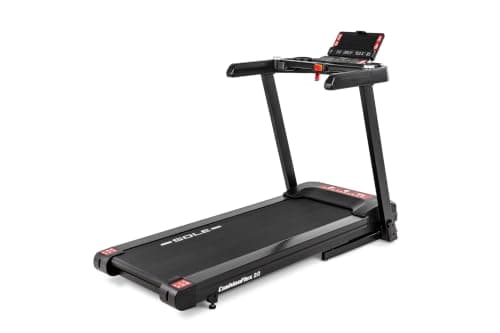
| Rank 1 | Sole F63 Running on a four-figure budget | 3.0 CHP | 8.8 | $1,099.99Amazon |
| Rank 2 | 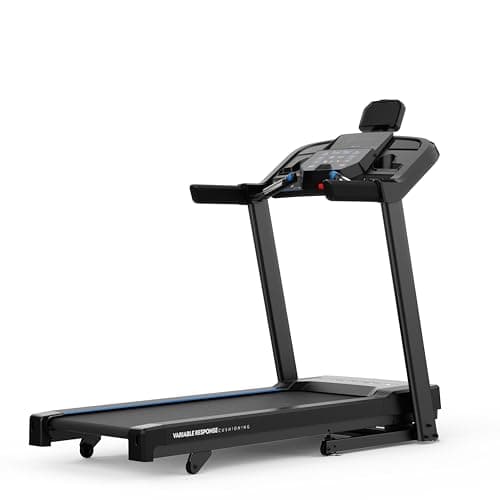 Horizon T101 Connect Walkers and light joggers who want a real brand under $700 | 2.5 CHP | 7.0 | $699.99Amazon |
| Rank 3 | 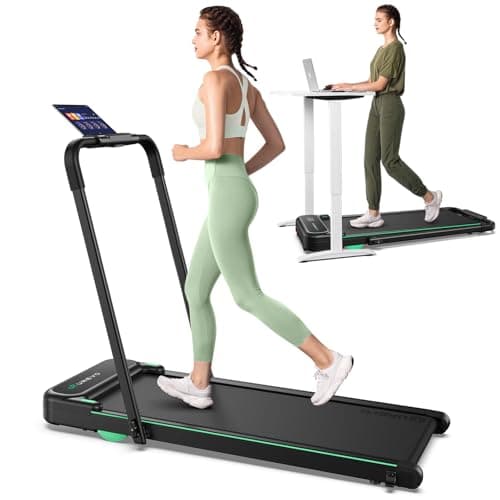 UREVO Strol 2E A 2-in-1 pad with a handle under $200 | Not published | 5.2 | $169.99Amazon |
#ad Prices come from Amazon and change. How this site is funded. Scores are our published editorial rubric — see our methodology.
A full-size home treadmill needs a grounded 120 V outlet on a dedicated 15 A or 20 A circuit, with no extension cord and no power strip. Most manufacturers state this in the manual and several make it a warranty condition. Walking pads under about 1 HP are far less demanding and will generally run on a shared household circuit, though the no-extension-cord rule still applies.
This is the question people ask the week the machine is arriving, which is a week too late. Check it before you order.
Why a treadmill is unusually hard on a circuit
- Startup draw is much higher than running draw. The motor pulls a large inrush current for a fraction of a second every time the belt starts, which is what trips a shared breaker.
- The load is variable and continuous. Every footstrike momentarily loads the motor, so the current fluctuates constantly for the whole session rather than settling.
- The controller board is sensitive to voltage sag. When another appliance on the same circuit starts — a freezer compressor, a microwave, a laser printer — the voltage dips. Repeated sags are hard on the board, and the board is one of the more expensive parts to replace.
- Incline motors add a second load. The lift motor draws current while it is moving the deck, on top of the drive motor.
What to check before delivery day
- Find the outlet you will use and confirm it is a three-prong grounded receptacle. Two-prong outlets in older homes are a problem that needs an electrician, not an adapter.
- Identify its breaker and what else is on that circuit. Switch the breaker off and walk the room: anything that dies shares the circuit.
- Read the breaker rating — 15 A or 20 A is printed on the handle. Both are usually fine; a 15 A circuit shared with a refrigerator is not.
- Check the cord reach. Treadmill cords are typically six to eight feet. Measure from the back of the machine's final position.
- Check for GFCI requirements. Garages, basements and anywhere near water generally require GFCI protection by code — see best treadmill for a garage gym.
Typical requirements by machine type
| Machine type | Typical requirement | Shared circuit? |
|---|---|---|
| Full-size treadmill, 2.5–3.5 CHP | Dedicated 15–20 A, 120 V, grounded | No |
| Budget folding treadmill, under 2.0 CHP | 15 A, 120 V, grounded | Preferably not |
| Walking pad, under 1 HP | Standard 120 V household outlet | Usually acceptable |
| Manual treadmill | None — no mains power | Not applicable |
These are general patterns, not a substitute for the manual that ships with your machine. Where a manufacturer states a dedicated circuit, treat it as a condition of the warranty rather than advice.
Machines at three power levels
A full-size runner, a walker's treadmill and a pad that runs on any outlet.
#1 · Running on a four-figure budget
#ad How we are funded · Price as of October 10, 2026
Sole F63
Sole FitnessA 3.0 CHP motor and a full 20″ × 60″ deck at a price where most machines give you one or the other — and the console works forever with no account.
| Motor | 3.0 CHP |
|---|---|
| Running surface | 20″ × 60″ |
| Incline | 0–15% |
| Top speed | 12 mph |
| Weight capacity | 325 lb |
| Folds | Yes, hydraulic assist |
| Warranty | Lifetime frame + motor, 3 yr parts, 1 yr labor |
| Subscription | No subscription |
Nothing is gated. The SOLE+ app is free and entirely optional; incline, speed and every console metric work with the machine unplugged from the internet.
Specifications per Sole Fitness published specifications.
What it does well
- 3.0 CHP is genuine running-duty power, not a peak-horsepower marketing number
- Full 60″ belt — long enough for a 6-foot stride at speed
- Lifetime frame and motor warranty at well under the price where that usually starts
- The console is a plain LCD: every readout works with no app, no login, no fee
Where it falls short
- 253 lb assembled — a two-person move, and it does not go upstairs easily
- The 6.5″ LCD is basic next to touchscreen rivals at the same money
- 82″ × 35″ footprint unfolded is a real chunk of a spare room
Our rubric
- Motor
- 9.0
- Deck
- 9.0
- Incline
- 8.0
- Build
- 9.0
- Value
- 9.0
#2 · Walkers and light joggers who want a real brand under $700
Horizon T101 Connect
Horizon FitnessA 2.5 CHP walker's treadmill with a lifetime frame warranty — the cheapest machine here we would call genuinely durable, as long as you are not running daily.
| Motor | 2.5 CHP |
|---|---|
| Running surface | 20″ × 55″ |
| Incline | 0–10% |
| Top speed | 10 mph |
| Weight capacity | 300 lb |
| Folds | Yes |
| Warranty | Lifetime frame, 1 yr parts and labor |
| Subscription | Subscription optional |
Every console readout works unsubscribed. Bluetooth lets you stream to third-party apps you already pay for (or do not) — Horizon does not sell a required plan.
Specifications per Horizon Fitness published specifications.
What it does well
- Lifetime frame warranty at a price where most frames carry one to five years
- Bluetooth speakers and an integrated fan, which the cheap competition skips
- Folds, and is light enough that one determined person can reposition it
Where it falls short
- 55″ belt is short — a tall runner will clip the motor cowl
- 2.5 CHP is a walking and light-jogging motor, not a marathon-training one
- 1-year parts cover is thin next to Sole's three
Our rubric
- Motor
- 6.0
- Deck
- 6.0
- Incline
- 6.0
- Build
- 8.0
- Value
- 9.0
#3 · A 2-in-1 pad with a handle under $200
UREVO Strol 2E
UREVOA walking pad with a fold-up safety handle for under two hundred dollars — the handle is what makes it usable for someone slightly unsteady.
| Form factor | 2-in-1 pad with folding safety handle |
|---|---|
| Assembly | Plug and play, no assembly |
| Motor | Not published by manufacturer |
| Running surface | Not published by manufacturer |
| Weight capacity | Not published by manufacturer |
| Subscription | Subscription optional |
Remote-controlled with no app required.
Specifications per Manufacturer figures as published on the Amazon product listing.
What it does well
- The folding handle converts it between desk pad and supported walker
- Arrives assembled
- Among the cheapest machines here with a handle at all
Where it falls short
- No published motor, deck or capacity figures
- Handle is for balance, not for leaning on at speed
- Walking speeds only
Our rubric
- Motor
- 4.0
- Deck
- 4.0
- Incline
- 3.0
- Build
- 6.0
- Value
- 9.0
Symptoms of an inadequate circuit
- The breaker trips when the belt starts, especially from cold. This is the classic shared-circuit symptom.
- The console flickers or resets mid-session. Voltage sag, usually from another appliance cycling on.
- Lights on the same circuit dim when the belt starts. A clear sign the circuit is loaded to its limit.
- The motor smells hot after 20 minutes at a speed it should handle easily. Possible low-voltage supply, and worth checking before you blame the motor.
- Intermittent speed changes you did not ask for. Often a controller board responding to an unstable supply — see treadmill troubleshooting.
Surge protection, and why it is not an extension cord
A surge protector is not the same thing as a power strip full of other devices, and several manufacturers permit a single-outlet surge suppressor rated for the machine's draw while forbidding cords and strips. Read your manual on this point specifically, because the two devices look similar and the warranty language usually distinguishes them.
If you need a new outlet
Adding a dedicated 20 A circuit to a room is routine electrical work, and in most places it is permitted work for a licensed electrician rather than a weekend project. The reason to do it rather than work around it: a treadmill is a four-figure machine with a controller board that does not enjoy an unstable supply, and the circuit outlives the treadmill. Electrical safety information for consumers is published by the U.S. Consumer Product Safety Commission.
Related reading: treadmill buying guide, treadmill maintenance and how long do treadmills last.
Frequently asked questions
What size breaker do I need for a treadmill?
Can you plug a treadmill into an extension cord?
Does a treadmill need a dedicated circuit?
Why does my treadmill keep tripping the breaker?
Do walking pads need a special outlet?
Sources
Read next
Guides
Treadmill buying guide: what to look for
The eight specs that decide a treadmill, in order, with the thresholds for each.
Guides
Treadmill troubleshooting
Diagnose slipping, drift, noise, smells and incline faults — and know when to stop.
Guides
Treadmill maintenance
Four tasks, a realistic schedule, and the lubrication mistake that kills motors.
Treadmills
Best treadmill for a garage gym
Condensation, lubricant drag and the warranty temperature clause — and the six machines that cope.
Guides
How long do treadmills last?
What fails, in what order, and the four things that genuinely change the odds.