Treadmills
NordicTrack Commercial 1750 review
The most hardware of any treadmill on this site, wrapped around a screen you rent. Here is the arithmetic that decides it.
Belt & Bike earns a commission when you buy through our links, at no extra cost to you. Prices come from Amazon and change; the date beside every price is when we last verified it. Full disclosure.
Quick picks
| # | Model | Motor | Score | Price |
|---|---|---|---|---|
| Rank 1 | NordicTrack Commercial 1750 The decline feature, if you specifically want it | 4.25 CHP | 8.6 | $1,999.00Amazon |
#ad Prices come from Amazon and change. How this site is funded. Scores are our published editorial rubric — see our methodology.
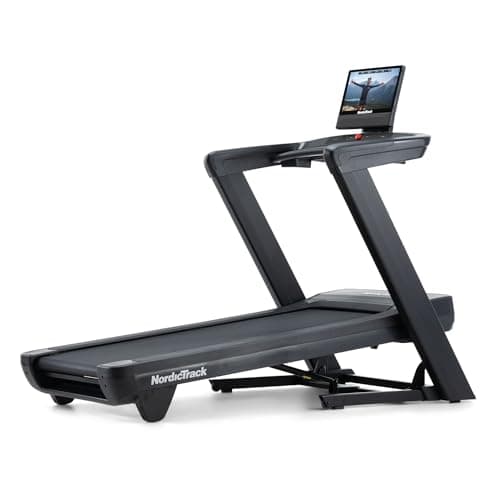
The Commercial 1750 is the treadmill that keeps winning spec-sheet comparisons and keeps making this site uncomfortable. On the hardware it is the strongest machine we cover: NordicTrack publishes a 4.25 CHP motor, a 22″ × 60″ tread belt, a 400 lb user capacity and a −3% to 12% incline range — more motor, more belt width and more capacity than anything else here. Then it attaches that hardware to a 16-inch touchscreen that is, by design, an iFIT terminal. The hardware is a buy. The screen is a lease. You have to price both.
The published specification
NordicTrack publishes a 4.25 CHP motor with a lifetime warranty, a 22″ × 60″ tread belt, a 0-12 mph speed range, a 12% incline and −3% decline range, a 16″ pivoting touchscreen, RunFlex cushioning, SpaceSaver folding and a 400 lb user capacity. The warranty is lifetime on the motor, 10 years on the frame, 2 years on parts, 1 year on the tablet and 1 year on labor. Boxed, it is 84.1″ × 35.0″ × 14.8″ and 311.5 lb — which tells you more about the delivery than any marketing line will.
- 4.25 CHP is a continuous rating, and it is the largest on this site by a wide margin. Our threshold for daily running duty is 3.0 CHP; this is 40% past it. In practice that headroom buys you quiet running at the top of the speed range and a motor that is loafing rather than straining at 7 mph — see how much horsepower a treadmill needs for where the thresholds sit.
- 22″ × 60″ is the widest belt we cover. The extra two inches over the 20-inch standard sound like a rounding error and are not: they are the margin that stops you clipping a handrail when you drift under fatigue or glance at a screen.
- −3% decline is the one thing on this machine that money cannot buy elsewhere at any price on this site. Running downhill loads the quadriceps eccentrically, which is the specific stress that wrecks people in a downhill race and that a flat belt never trains.
- 400 lb capacity leaves a 250 lb runner 150 lb of margin, which is well past the 100 lb we think running demands. Weight capacity explained covers why a static rating and a running load are different numbers.
- 12% incline is the one hardware figure where it loses. The subscription-free Sole F63 and Horizon 7.0 AT both reach 15%, and on a walking-heavy plan 15% is meaningfully harder than 12%.
The membership arithmetic, done properly
The 16-inch screen runs iFIT. Without a membership you get manual mode: you can set a speed, set an incline, and watch your own numbers. Everything the screen exists for — the trainer-led runs, the automatic incline and decline control, the route library, the saved history — is inside the membership. NordicTrack is not hiding this; the product page counts its 10,000+ iFIT workouts as a feature.
So the real question is not "is this a good treadmill" but "is this a good treadmill plus three years of iFIT". A family membership priced in the usual $39-$45 per month bracket, held for three years, is more than a thousand dollars on top of the machine. For contrast, premium machines exist that sell you nothing afterwards at all — the Keiser M3i on the bike side is the clearest example. That takes a treadmill in the two-thousand-dollar bracket into territory where you could have bought a subscription-free running deck and a good exercise bike. Subscription costs explained runs that calculation with the live price and whatever term you plan to keep it.
What the hardware does genuinely well
- It is quiet under load. A 4.25 CHP motor asked to do a 3.0 CHP job does not whine, and the frame mass means the deck does not drum. This is the practical argument for motor headroom and it is not marketing.
- It does not move. Over 300 lb of machine stays where you put it during a sprint. Lighter treadmills creep across a floor, and the ones that creep are the ones people stop using.
- Decline is real. If you are training for a race with descent in it, no other machine on this site will prepare you for it.
- The fold is usable. SpaceSaver lifts and latches the deck without a fight, which is the difference between a treadmill that gets folded daily and one that never gets folded twice.
- Capacity is honest. 400 lb is a serious rating, and it makes this one of the few running-capable machines a heavier runner can use without reading the fine print. Treadmills for heavy users ranks the whole field on that axis.
What it does not do well
- It is designed to need a subscription. Not technically crippled — you can walk and run on it forever unsubscribed — but you will have paid for a 16-inch screen that shows you three numbers. That is the single worst value proposition on this site when it happens.
- 12% incline is behind the class. For the 12-3-30 crowd specifically, this is the wrong $2,000 treadmill; treadmills for incline walking ranks machines that hold a steep sustained gradient instead.
- Two-year parts cover is short for the money. Sole gives three years at roughly half the price. Read a parts term as the manufacturer's own durability forecast for the consumable electronics, and two years on a $2,000 machine is a modest forecast.
- One year on the tablet. The most expensive, most failure-prone and most rapidly obsolete component on the machine carries the shortest warranty on the machine. That is not an accident.
- It is a two-person delivery and a permanent installation. Over 300 lb in the box, 84 inches long boxed. It will not go up a turn in a staircase with two people, and it will not be moved on a whim afterwards. Space planning and folded footprint has the measuring routine to do before you order, not after.
The verdict
#1 · The decline feature, if you specifically want it
NordicTrack Commercial 1750
NordicTrackThe enthusiast NordicTrack: a 22-inch belt, decline as well as incline, and a subscription-first design you should price in before buying.
| Motor | 4.25 CHP |
|---|---|
| Running surface | 22″ × 60″ |
| Incline / decline | −3% to 12% |
| Top speed | 12 mph |
| Weight capacity | 400 lb |
| Console | 16″ pivoting touchscreen |
| Folds | Yes, SpaceSaver |
| Warranty | Lifetime motor, 10 yr frame, 2 yr parts, 1 yr tablet, 1 yr labor |
| Subscription | Subscription required for key features |
The touchscreen is an iFIT terminal. Without a membership you get manual mode and a very expensive blank screen.
Specifications per NordicTrack published specifications.
What it does well
- Decline to −3% is genuinely rare and useful for downhill-race training
- 4.25 CHP behind a 22″ × 60″ belt — the most motor and the widest deck on this site
- 400 lb capacity, well above the class norm at this price
- Heavy, stable frame that does not walk across the floor at pace
Where it falls short
- Designed so that the screen is near-useless without iFIT — budget the membership as part of the price
- Incline tops out at 12% where subscription-free rivals reach 15%
- Very heavy and large; the fold saves less space than the marketing suggests
Our rubric
- Motor
- 9.0
- Deck
- 9.0
- Incline
- 10.0
- Build
- 9.0
- Value
- 6.0
How it compares to the subscription-free alternatives
| NordicTrack 1750 | Sole F80 | Horizon 7.4 AT | Sole F63 | |
|---|---|---|---|---|
| Motor | 4.25 CHP | 3.5 CHP | 3.5 HP | 3.0 CHP |
| Belt | 22″ × 60″ | 22″ × 60″ | 20″ × 60″ | 20″ × 60″ |
| Incline | 0–12% | 0–15% | 0–15% | 0–15% |
| Decline | −3% | None | None | None |
| Capacity | 400 lb | 350 lb | Not published | 325 lb |
| Parts warranty | 2 years | 3 years | Varies by part | 3 years |
| Subscription | Required for the screen | None | None | None |
Against the Sole F63, you are paying roughly double for 1.25 CHP of motor you will not use, two inches of belt width you might, a decline you probably will not, and a screen you will rent. Against the Sole F80 you are paying more for the same belt, less incline, and a membership — which is why the F80 leads our under-$2,000 roundup and this machine does not. Against the Horizon 7.0 AT at well under half the price, the honest answer is that most buyers who click on the 1750 should be buying the Horizon.
Who should buy it, and who should not
- Buy it if you want the iFIT experience specifically, will actually hold the membership, and value trainer-led automatic incline control enough to pay monthly for it. Bought on those terms it is excellent and nothing here matches it.
- Buy it if you race downhill. The −3% decline is unique in this field and there is no workaround.
- Buy [the Sole F63](/treadmills/reviews/sole-f63) instead if you just want to run at home. 3.0 CHP, a full 60-inch belt, 15% incline, three-year parts cover, no membership, roughly half the money.
- Buy something from [treadmills without iFIT](/no-subscription/treadmills-without-ifit) instead if the monthly fee is the thing you are trying to avoid. That page exists because this machine exists.
- Buy [the Horizon 7.0 AT](/treadmills/reviews/horizon-7-0-at) instead if you do intervals and want the dial controls without the subscription.
Frequently asked questions
Does the NordicTrack Commercial 1750 require an iFIT subscription?
What is the NordicTrack 1750 motor size?
What is the NordicTrack 1750 weight capacity?
Does the NordicTrack 1750 have decline?
NordicTrack 1750 vs Sole F63 — which is better value?
How much space does the NordicTrack 1750 need?
What is the NordicTrack 1750 warranty?
Sources
Read next
Treadmills
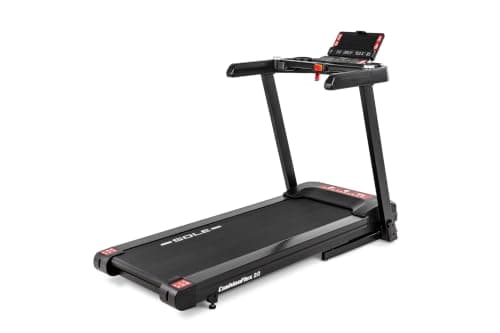
Sole F63 review
Running-duty motor, 60-inch deck, lifetime warranty, no subscription. The benchmark.
No Subscription
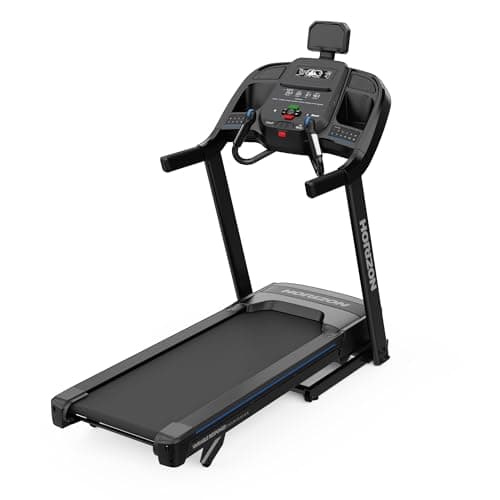
Best treadmills without iFIT
Exactly what an iFIT machine loses unsubscribed, and the better-specified machines that need nothing.
Treadmills
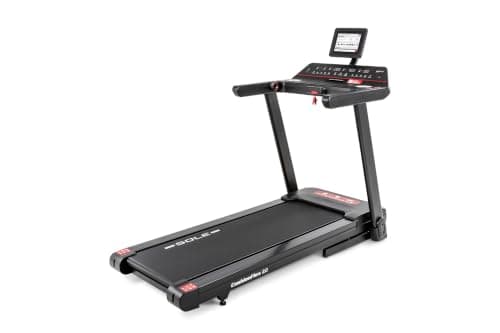
Best treadmills under $2,000
The top of the home market, and an honest account of which extras change the run.
Guides
Fitness equipment subscription costs explained
The three tiers, the TCO formula, and the four questions to ask before any connected purchase.
Treadmills
Home treadmill reviews
Model-by-model write-ups, with an explicit statement of what we verified and what we did not.