Exercise Bikes
Keiser M3i review
The bike real studios actually buy. We think most people reading this should buy something a quarter of the price — here is the honest case for both.
Belt & Bike earns a commission when you buy through our links, at no extra cost to you. Prices come from Amazon and change; the date beside every price is when we last verified it. Full disclosure.
Quick picks
| # | Model | Resistance | Score | Price |
|---|---|---|---|---|
| Rank 1 | Keiser M3i The bike commercial studios actually buy | 24-gear magnetic | 8.6 | $2,985.00Amazon |
#ad Prices come from Amazon and change. How this site is funded. Scores are our published editorial rubric — see our methodology.
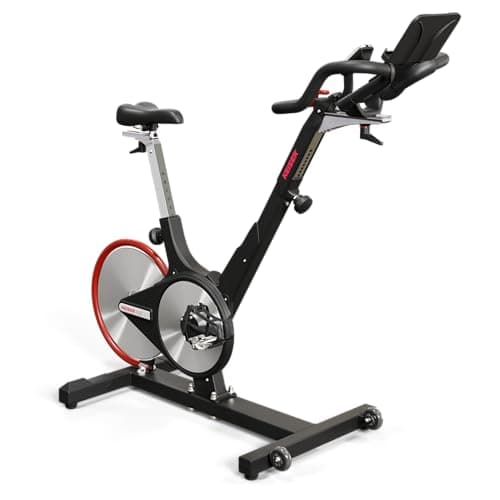
Walk into a spin studio that has been running classes five times a day for a decade and look at what is under the instructor. A large share of the time it is this bike. The Keiser M3i is not a home bike that got expensive; it is a commercial bike that happens to be sold to households, and the difference shows up in exactly one place — where the flywheel is.
The published specification
Keiser publishes magnetic resistance across 24 gears, a rear-mounted flywheel, a self-tensioning Poly-V belt drive, a 350 lb user weight capacity, a rider fit range of 4′10″ to 7′0″, a footprint of 51″ L × 26″ W × 49″ H and a product weight of 92 lb. The M Connect display reads rpm, watts, kcal, time and distance, and transmits over Bluetooth to fitness and cycling apps and to group-cycling projection systems. The pedals take standard shoes on one side or SPD cleats on the other, and Keiser states they are tested past 30 million cycles at 290 lb and 120 rpm. The warranty is three years all-inclusive excluding labor and wear items, with wear items — handles, pedal cage, pedal strap, saddle upholstery — covered 90 days.
The rear flywheel is the entire product
On nearly every indoor cycle ever sold, the flywheel sits at the front, directly under the handlebars. That position is also directly under the rider. Sweat falls off a forearm, off a chin, off a shin, and it lands on the resistance mechanism, the bearings and the frame welds. Over a few hundred hours that is what kills a spin bike: not the frame, not the pedals, corrosion in the part that has to move smoothly.
Keiser moved the flywheel behind the rider. Nothing drips on it. That single decision is why these bikes survive a decade of commercial class schedules, and it is a design choice, not a materials upgrade — which is why no amount of money spent on a front-flywheel bike buys the same outcome. Everything else on the spec sheet is good; this is the part that is different.
What 24 gears means, and what it does not
Keiser's resistance is magnetic and non-contact: a magnet assembly moves closer to or further from the flywheel, with nothing touching. There is no brake pad to glaze, wear out or replace — which is the other half of the low-maintenance story and the thing that makes a friction bike feel inconsistent after a year.
The 24-gear lever is a different control philosophy from the 100-level dials on bikes like the Schwinn IC4. A single lever under the handlebars moves through the full range in one sweep, the way a motorcycle throttle does, which is designed for an instructor shouting a gear change mid-sprint. It is faster to use and less granular. If you follow structured power targets, the thing you actually steer by is the watts figure on the display, not the gear number.
- Watts are the real control. The M Connect display shows power, and power is the only resistance measure that means the same thing on two different days. Resistance types explained covers why a knob position does not.
- 24 steps is fewer than 100, and that is fine. The useful question is whether you can repeat a session, and a numbered magnetic gear plus a watts readout answers that completely. Flywheel weight explained deals with the related myth.
- Keiser does not publish a flywheel mass. We will not estimate one. On a rear-flywheel bike with a geared belt drive the number would not be comparable to a 40 lb front-flywheel home bike anyway, so a figure would mislead more than it informed.
There is nothing to subscribe to
Keiser sells no membership, no app tier and no content library. The display is powered by the bike, the Bluetooth broadcast is open, and you point whichever app you like at it — Zwift, a free tracker, your gym's projection system, or nothing. A rider who buys this bike in 2026 and rides it in 2036 will not have paid a cent more than the purchase price.
That is the strongest financial argument for a machine this expensive, and it is worth doing the arithmetic rather than waving at it. A subscription bike at a quarter of the price plus a decade of membership costs considerably more than this bike does, and at the end of it you own a screen that no longer gets updates. Subscription costs explained does that comparison properly, and Peloton alternatives is where most people start.
Living with it
- 92 lb and a 51″ × 26″ footprint. It is lighter and smaller than a great many $400 home bikes, because it is built from aluminum and designed to be dragged around a studio floor daily. This is an underrated practical advantage.
- The fit range is unusually wide. 4′10″ to 7′0″ on one frame, with four-way adjustment, is a genuinely multi-household bike. Exercise bike setup and seat height covers getting it right.
- 350 lb capacity on a 92 lb aluminum frame tells you what commercial engineering buys. Exercise bikes for heavy riders ranks the field on that axis.
- You supply the screen. There is no entertainment display. A tablet on the bundled or aftermarket holder does the job, and never dates the bike.
What is wrong with it
- The price, as a value proposition. Nothing about the riding experience is four times better than a well-built $700 bike. What is four times better is the service life, and service life only pays you back if you ride it for years.
- Three years of parts cover, not ten. The frame is not separately warranted for a longer term in the published residential warranty, and labor is explicitly excluded. For a bike with this reputation, the paper is less impressive than the engineering.
- 90 days on wear items. Saddle upholstery, pedal cages and straps are consumables, and at this price a longer term would not be unreasonable.
- No contact heart rate, no included strap. It pairs with Bluetooth straps and watches, but you buy them.
- The gear lever is not for everyone. If you have ridden 100-level dials and like dialing in a precise number, the sweep lever will feel coarse for the first few weeks.
- Shipping is slow and often direct. At the time of writing the Amazon listing shows a multi-week dispatch window rather than next-day stock. Check the current availability on the card before you plan around it.
The verdict
#1 · The bike commercial studios actually buy
#ad How we are funded · Price as of October 14, 2026
Keiser M3i
KeiserThe rear-flywheel magnetic cycle that fills real studios — a different class of machine, priced accordingly, and included here as the ceiling the budget bikes are measured against.
| Resistance | 24-gear magnetic |
|---|---|
| Flywheel | Rear-mounted, out of the sweat zone |
| Drive | Self-tensioning Poly-V belt |
| Weight capacity | 350 lb |
| Rider height range | 4′10″ to 7′0″ |
| Footprint | 51″ L × 26″ W × 49″ H |
| Machine weight | 92 lb |
| Console | M Connect: rpm, watts, kcal, time, distance |
| Warranty | 3 yr all-inclusive (excl. labor), 90 days wear items |
| Subscription | No subscription |
Keiser sells no subscription. The bike broadcasts open Bluetooth data to any app you choose.
Specifications per Keiser published M3i specifications.
What it does well
- Rear flywheel keeps sweat off the moving parts — the single biggest reason studio bikes outlast home bikes
- Magnetic resistance with nothing in contact, so there is no pad to wear out
- Bluetooth power and cadence output that apps can actually read
- 92 lb and a 51″ × 26″ footprint — far easier to live with than its price suggests
Where it falls short
- Costs several times any other bike here
- No screen; you supply the device
- Keiser does not publish a flywheel mass, so you cannot spec-compare it to a 40 lb home bike
- Overkill for anyone riding three times a week
Our rubric
- Ride
- 10.0
- Fit
- 9.0
- Resistance
- 10.0
- Build
- 10.0
- Value
- 4.0
Keiser M3i against the bikes most people actually buy
| Keiser M3i | Schwinn IC4 | Sunny Premium Studio | YOSUDA PRO | |
|---|---|---|---|---|
| Resistance | 24-gear magnetic | 100-level magnetic | Magnetic | Magnetic |
| Flywheel position | Rear, out of sweat | Front | Front | Front |
| Drive | Poly-V belt | Belt | Belt | Belt |
| Capacity | 350 lb | 330 lb | Not published | Not published |
| Power readout | Watts on console | Estimated watts | Console metrics | Console metrics |
| Subscription | None sold | None required | Optional free tier | None |
| Price bracket | Commercial | Upper mid | Mid | Budget |
The honest reading of that table is that the IC4 gives you most of the ride for a fraction of the money, and the Keiser gives you a machine that will still be smooth when the IC4 is on its second owner. Which matters depends entirely on how many hours you are going to put through it. Our spin bikes under $1,000 roundup is where the realistic shortlist lives, and the spin bikes hub ranks the whole field.
Who should buy it, and who should not
- Buy it if you are equipping a studio, a gym floor, a physical therapy practice or a building amenity room. Multiple riders a day for years is the exact duty cycle it was engineered for, and nothing else here survives it.
- Buy it if you are a committed cyclist who rides indoors most days of the winter, trains to power, and intends to keep the bike for a decade. Amortized over that, it is not expensive.
- Buy [the Schwinn IC4](/exercise-bikes/reviews/schwinn-ic4) instead if you want the studio ride feel at home, follow classes, and ride three to five times a week. It is the bike we recommend most often and it is a fraction of this price.
- Buy [the YOSUDA PRO](/exercise-bikes/reviews/yosuda-pro) instead if you are starting out and not yet certain the habit will stick. Spending the difference on a bike you ride twice is not value.
- Buy a recumbent or upright instead if comfort rather than intensity is the point. Upright vs recumbent is the decision, not the budget.
Frequently asked questions
Does the Keiser M3i require a subscription?
Why is the Keiser M3i flywheel at the back?
What is the Keiser M3i weight limit?
How many resistance levels does the Keiser M3i have?
Is the Keiser M3i worth it for home use?
What is the Keiser M3i warranty?
Keiser M3i vs Schwinn IC4 — what is the real difference?
Sources
Read next
Exercise Bikes
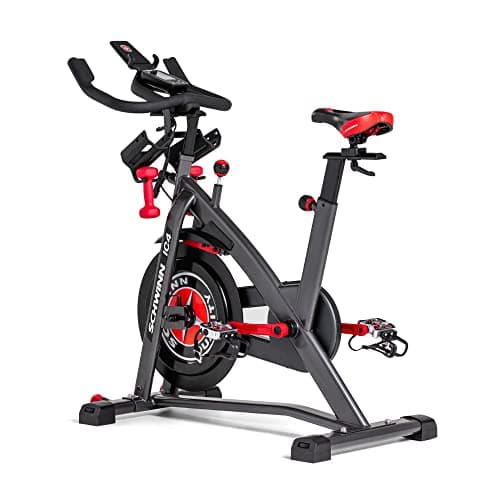
Schwinn IC4 review
40 lb flywheel, 100 magnetic levels, open Bluetooth and no membership. The benchmark.
Exercise Bikes
Best spin bikes under $1,000
Numbered levels and open Bluetooth — and why the open broadcast is the anti-lock-in feature.
Exercise Bikes
Best spin bikes for home
Flywheel, drive, resistance and fit — the four specs that decide how a cycle rides.
No Subscription
Best Peloton alternatives without a subscription
Unbundle the bike from the classes, price each separately, and the choice becomes obvious.
Exercise Bikes
Exercise bike reviews
Model-by-model write-ups, with an explicit statement of what we verified and what we did not.