Compare
Exercise bike vs running
Two ways to get the same cardiovascular work. They differ most on what they do to your skeleton.
Belt & Bike earns a commission when you buy through our links, at no extra cost to you. Prices come from Amazon and change; the date beside every price is when we last verified it. Full disclosure.
Quick picks
| # | Model | Capacity | Score | Price |
|---|---|---|---|---|
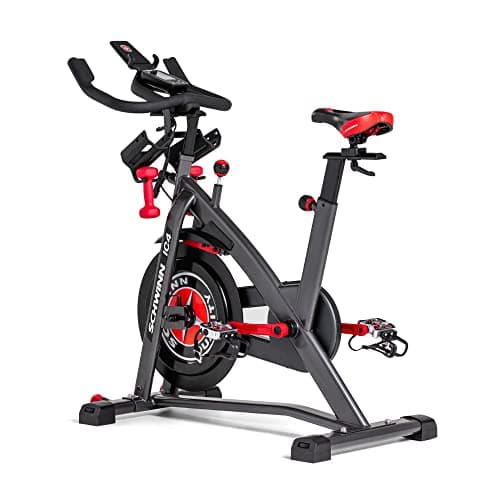
| Rank 1 | Schwinn IC4 A Peloton ride feel with no Peloton bill | 330 lb | 9.0 | $795.99Amazon |
| Rank 2 | 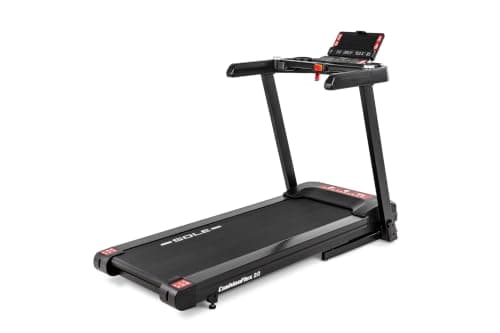 Sole F63 Running on a four-figure budget | 325 lb | 8.8 | $1,099.99Amazon |
| Rank 3 | 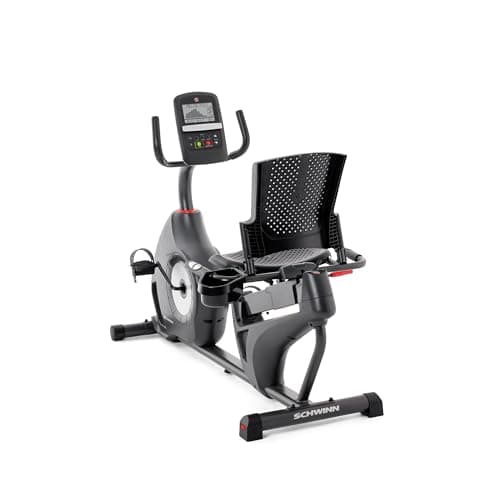 Schwinn 230 Recumbent Bike A branded recumbent under $500 | 300 lb | 8.0 | $499.00Amazon |
| Rank 4 | 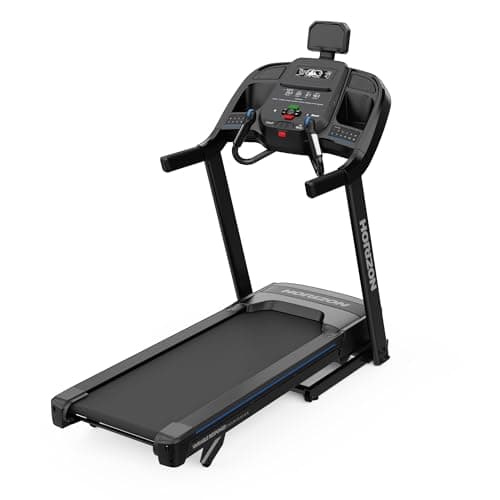 Horizon 7.0 AT Interval runners who want fast incline changes | 325 lb | 9.0 | $934.99Amazon |
#ad Prices come from Amazon and change. How this site is funded. Scores are our published editorial rubric — see our methodology.
Cycling and running deliver equivalent cardiovascular benefit at equivalent effort. The real differences are that running loads bone and cycling does not, and that running injures beginners and cycling almost never does. If you are starting from sedentary, overweight, or carrying any joint history, the bike is the better first choice — and the Schwinn IC4 is the bike we would point most people at. If you want to run, or bone density is a specific concern, nothing on a bike substitutes for it.
This page is about the activities. For the machines, see best exercise bikes for home and best home treadmills for running.
Head to head
| Stationary cycling | Running | |
|---|---|---|
| Joint impact per session | Essentially none | Two to three times bodyweight per footstrike |
| Bone loading | Non-weight-bearing | Weight-bearing — genuinely valuable |
| Injury risk for a beginner | Low, mostly setup-related | High in the first twelve weeks |
| Intensity ceiling | Very high; an air bike has none | High, limited by impact tolerance |
| Weekly volume you can sustain | 5–6 sessions | 3–4 for most people |
| Weather and daylight dependence | None | Total, outdoors |
| Cost to start | A bike, once | Shoes every 400 miles, or a treadmill |
| Noise through a shared floor | Almost none | Significant |
| Skill required | None | Pacing and progression both matter |
The bone argument, which is the strongest case for running
Weight-bearing activity stimulates bone maintenance. Cycling, because your skeleton is supported by the frame, does not. The NIH's bone health guidance lists walking and jogging among the activities that build and maintain bone, and cycling among the non-weight-bearing ones.
For a 28-year-old this rarely decides anything. For a post-menopausal woman, or anyone whose doctor has mentioned bone density, it is a genuine reason to prefer running or incline walking — or to pair cycling with walking and resistance training, which is what most cyclists should do anyway.
The injury argument, which is the strongest case for cycling
Running is a skill with a progression, and the progression is what new runners get wrong. The classic pattern is three good weeks followed by a shin, knee or Achilles problem in week four, caused by adding volume faster than tissue adapts. Six weeks off ends most plans.
Cycling has essentially none of that. The failure modes are a saddle that hurts and a seat height that irritates a knee, both of which are fixed in ten minutes — see exercise bike setup and seat height. This is why rehabilitation programs lean on stationary bikes so heavily, and why best exercise bikes for bad knees is a category that exists at all.
Intensity, where cycling quietly wins
The hardest cardio most people can do at home is not running. It is 30 seconds on an air bike. Resistance on a fan bike scales with the effort you put in, so there is no ceiling to hit — you simply run out of willingness. On a magnetic bike, 100 discrete resistance levels mean you can repeat an interval exactly and progress it by one notch, which running on feel cannot match.
Running's intensity is bounded by what your joints will tolerate at speed, which for a new runner is a lower ceiling than their lungs could reach. See best air bikes and air bike vs spin bike.
A bike and a treadmill, at two budgets
#1 · A Peloton ride feel with no Peloton bill
#ad How we are funded · Price as of October 10, 2026
Schwinn IC4
Schwinn FitnessA 40 lb flywheel with 100 levels of magnetic resistance and open Bluetooth — it rides like the subscription bikes and connects to whichever app you choose, including none.
| Flywheel | 40 lb |
|---|---|
| Resistance | 100-level magnetic |
| Weight capacity | 330 lb |
| Console | Backlit color LCD: HR, speed, time, distance, calories, RPM |
| App support | JRNY, Peloton, Zwift via Bluetooth |
| Pedals | Dual-sided: toe cage and SPD |
| Subscription | No subscription |
Nothing is gated. JRNY is optional, and the bike's Bluetooth broadcast works with Peloton, Zwift or no app at all — every console metric is on the bike itself.
Specifications per Schwinn Fitness published specifications.
What it does well
- 100 discrete magnetic levels mean you can repeat a workout exactly — friction bikes cannot
- Broadcasts cadence and speed over Bluetooth to any app, so you are not locked to one ecosystem
- Dual-sided pedals work with trainers or cycling shoes out of the box
- 330 lb capacity is above the class norm
Where it falls short
- No screen — you supply a tablet, which the included holder expects
- Resistance is a knob, not an app-controlled servo, so classes cannot auto-adjust it
- The most expensive bike here that is not a studio machine
Our rubric
- Ride
- 9.0
- Fit
- 9.0
- Resistance
- 10.0
- Build
- 9.0
- Value
- 8.0
#2 · Running on a four-figure budget
#ad How we are funded · Price as of October 10, 2026
Sole F63
Sole FitnessA 3.0 CHP motor and a full 20″ × 60″ deck at a price where most machines give you one or the other — and the console works forever with no account.
| Motor | 3.0 CHP |
|---|---|
| Running surface | 20″ × 60″ |
| Incline | 0–15% |
| Top speed | 12 mph |
| Weight capacity | 325 lb |
| Folds | Yes, hydraulic assist |
| Warranty | Lifetime frame + motor, 3 yr parts, 1 yr labor |
| Subscription | No subscription |
Nothing is gated. The SOLE+ app is free and entirely optional; incline, speed and every console metric work with the machine unplugged from the internet.
Specifications per Sole Fitness published specifications.
What it does well
- 3.0 CHP is genuine running-duty power, not a peak-horsepower marketing number
- Full 60″ belt — long enough for a 6-foot stride at speed
- Lifetime frame and motor warranty at well under the price where that usually starts
- The console is a plain LCD: every readout works with no app, no login, no fee
Where it falls short
- 253 lb assembled — a two-person move, and it does not go upstairs easily
- The 6.5″ LCD is basic next to touchscreen rivals at the same money
- 82″ × 35″ footprint unfolded is a real chunk of a spare room
Our rubric
- Motor
- 9.0
- Deck
- 9.0
- Incline
- 8.0
- Build
- 9.0
- Value
- 9.0
#3 · A branded recumbent under $500
Schwinn 230 Recumbent Bike
Schwinn Fitness16 magnetic resistance levels, a 300 lb rating and a proper step-through frame from a brand that still sells parts — the safe recumbent choice.
| Resistance | 16-level magnetic |
|---|---|
| Weight capacity | 300 lb |
| Footprint | 64″ L × 27.7″ W × 44″ H |
| Machine weight | 80 lb |
| Console | 5.5″ LCD with Bluetooth |
| Subscription | No subscription |
Every console function works with no account. Bluetooth is optional.
Specifications per Schwinn Fitness published specifications.
What it does well
- Numbered magnetic levels, so sessions are repeatable
- Step-through frame with a low entry height
- Bluetooth to the Schwinn and third-party apps — no plan required
Where it falls short
- 64″ long is a serious footprint for a bike
- 300 lb capacity is beaten by cheaper no-name recumbents claiming 400 lb
- Seat is comfortable but not adjustable for backrest angle
Our rubric
- Ride
- 8.0
- Fit
- 8.0
- Resistance
- 8.0
- Build
- 8.0
- Value
- 8.0
#4 · Interval runners who want fast incline changes
Horizon 7.0 AT
Horizon Fitness3.0 CHP, a 20″ × 60″ deck and QuickDial controls that change speed and incline in one motion — the best machine here for anyone whose workout changes every 60 seconds.
| Motor | 3.0 CHP |
|---|---|
| Running surface | 20″ × 60″ |
| Incline | 0–15% |
| Top speed | 12 mph |
| Weight capacity | 325 lb |
| Console | 7.25″ high-contrast LCD, 8 preset programs |
| Warranty | Lifetime frame + motor, 3 yr parts, 1 yr labor |
| Subscription | No subscription |
Horizon sells no subscription for this machine. The Bluetooth broadcast works with whatever third-party app you already use, and the console is fully functional with none.
Specifications per Horizon Fitness published specifications.
What it does well
- QuickDial rollers are the single best interval-training control on a sub-$1,000 treadmill
- Streams to Zwift, Peloton and Nike Run Club over Bluetooth — apps you choose, not one you are forced into
- Lifetime frame and motor cover with three years of parts
Where it falls short
- No touchscreen at a price where iFIT machines ship one
- Folding mechanism is stiffer than Sole's hydraulic assist
- Deck cushioning is firmer than the T202's three-zone system
Our rubric
- Motor
- 9.0
- Deck
- 9.0
- Incline
- 9.0
- Build
- 9.0
- Value
- 9.0
Cost over a year
- Outdoor running is the cheapest cardio there is: shoes every 300 to 500 miles and nothing else. It is also the most weather-dependent, which is why treadmills exist.
- A treadmill is the expensive option. A machine you can genuinely run on starts around $1,000, and it has a motor, a deck and a belt that all wear.
- A bike is the cheap durable option. A good magnetic bike is $300 to $800, has no motor, and can last fifteen years with essentially no maintenance.
- Neither requires a subscription. Every machine picked on this site works fully with no account — see machines that work offline.
How to decide in three questions
- Have you been sedentary for more than a year, or are you more than 40 lb over a comfortable weight? Start on the bike for 8–12 weeks. Then run if you want to.
- Has a clinician raised bone density with you? Weight-bearing work needs to be in the plan. Running, or incline walking, plus resistance training.
- Do you want to run — for a race, for the outdoors, for its own sake? Then run, and use a bike on the days your legs need a break. That is what most runners actually do.
The related comparisons: exercise bike vs walking, treadmill vs exercise bike and exercise bike vs rowing machine.
Frequently asked questions
Is an exercise bike as good as running?
Does cycling build bone density?
Is an exercise bike better than running for bad knees?
Can you get as fit on a bike as running?
Which burns more calories, cycling or running?
Sources
- NIH Osteoporosis and Related Bone Diseases National Resource Center — exercise for bone health
- U.S. Department of Health and Human Services — Physical Activity Guidelines for Americans
- American Academy of Orthopaedic Surgeons — exercise and joint health resources
- American College of Sports Medicine — physical activity guidelines
Read next
Compare
Exercise bike vs walking
Walking is free and loads bone; a bike buys controllability and weather independence. Do both.
Compare
Treadmill vs exercise bike
Six axes, four questions, and the bone-loading point that most comparisons omit.
Exercise Bikes
Best exercise bikes for bad knees
Seat height matters more than machine choice, and most people have theirs too low.
Treadmills
Best home treadmills for running
Continuous horsepower, 60-inch decks and frame mass — the three specs running actually tests.
Compare
Treadmill vs exercise bike for weight loss
Equal calories, unequal adherence — and the four questions that decide which machine you will still use.