Compare
Treadmill vs exercise bike for weight loss
Both work. The one that wins is the one you will still be on in month six, and that is a predictable thing.
Belt & Bike earns a commission when you buy through our links, at no extra cost to you. Prices come from Amazon and change; the date beside every price is when we last verified it. Full disclosure.
Quick picks
| # | Model | Capacity | Score | Price |
|---|---|---|---|---|
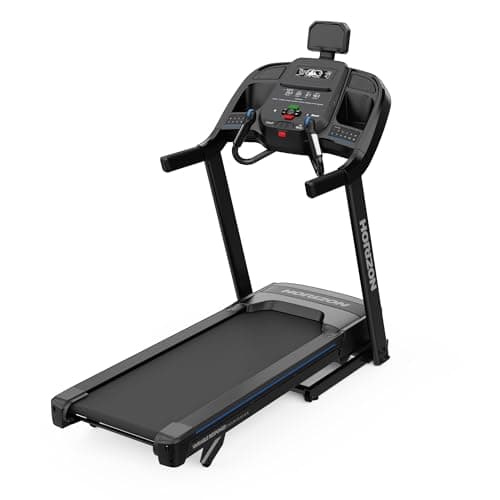
| Rank 1 | Horizon 7.0 AT Interval runners who want fast incline changes | 325 lb | 9.0 | $934.99Amazon |
| Rank 2 | 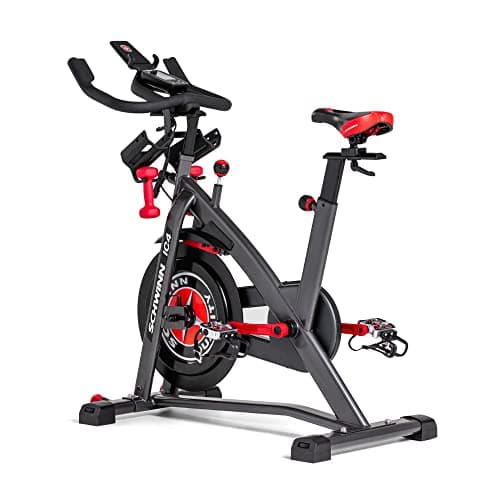 Schwinn IC4 A Peloton ride feel with no Peloton bill | 330 lb | 9.0 | $795.99Amazon |
| Rank 3 | 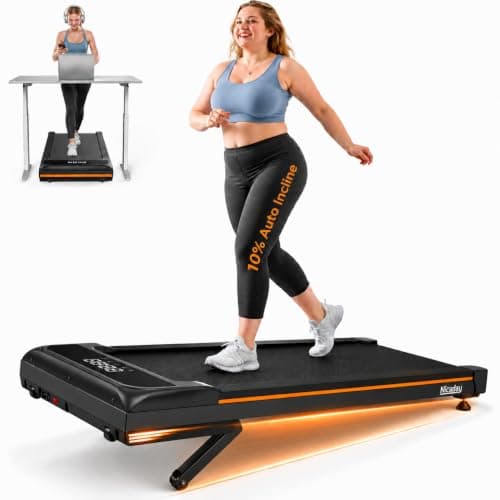 Niceday Walking Pad (10% auto incline, 400 lb) Incline plus capacity under $300 | 400 lb (manufacturer figure) | 6.6 | $259.99Amazon |
| Rank 4 | 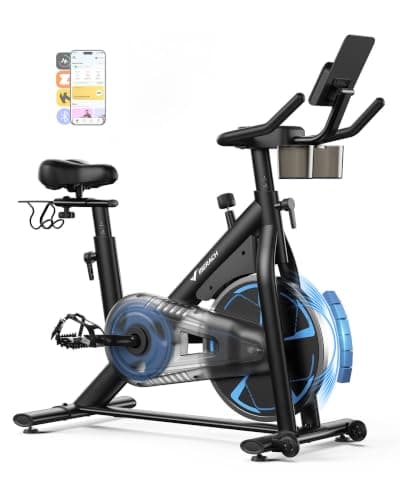 MERACH S36 Magnetic resistance and a 330 lb rating under $300 | 330 lb (manufacturer figure) | 7.2 | $279.99Amazon |
#ad Prices come from Amazon and change. How this site is funded. Scores are our published editorial rubric — see our methodology.
For weight loss specifically, buy the exercise bike if you weigh over about 250 lb, have any joint history, live above someone, or your budget is under $600 — and buy the treadmill if none of those apply and you want weight-bearing exercise. At equal effort and equal duration the two machines produce broadly comparable energy expenditure, so the decision is not about calories per minute. It is about which machine you will use for forty minutes, five days a week, in February.
That is an unsatisfying answer only until you look at the arithmetic, which is below.
The calorie arithmetic, honestly
Energy expenditure tracks effort and duration, not the machine. A hard 40-minute bike session and a hard 40-minute incline walk land in the same range; a gentle flat walk and a gentle spin also land in the same range as each other, and much lower. This is why the federal physical activity guidelines are written in minutes of moderate or vigorous activity rather than in machine types.
Where the machines genuinely differ is in the ceiling and the floor of effort each one makes easy:
| Treadmill | Exercise bike | |
|---|---|---|
| Easiest way to work hard | Raise the incline to 10–12% | Raise resistance and stand up |
| Effort ceiling | High, but gated by impact tolerance | Very high — an air bike has no ceiling at all |
| Easiest way to under-work | Flat walk at 2.5 mph holding the rails | Soft pedaling at level 2 while watching TV |
| Minutes you will tolerate per session | 30–45 walking, less running | 45–60 comfortably |
| Weight-bearing | Yes — loads bone | No |
| Joint impact | Real, even cushioned | Essentially none |
| Sessions missed to weather or noise rules | Some, if you share a floor | Almost none |
Adherence is the variable that actually decides this
A fat-loss plan is a 20-to-40-week project. Over that span the difference between 2 sessions a week and 5 dwarfs any per-minute difference between the machines. Three predictable things end home cardio habits: discomfort, noise constraints and injury.
- Discomfort. A bike seat is uncomfortable for the first two weeks and then stops being an issue. A treadmill at a weight above about 250 lb is uncomfortable in the knees and hips in month three, which is much harder to push through.
- Noise constraints. If you can only train at 9pm and you live above a neighbor, a treadmill means walking, and walking flat is the easiest way to under-work. A bike removes the constraint entirely.
- Injury. Running injuries in previously sedentary adults are common and they stop the plan dead for six weeks. Cycling injuries are mostly setup problems you fix in ten minutes — see exercise bike setup and seat height.
Money, which is not a tie
Under $600 the bike wins outright. That money buys a near-top-of-category magnetic bike with 100 resistance levels and open Bluetooth, or a treadmill that is a walking machine. At $1,000 the treadmill becomes genuinely good — 3.0 CHP, a 60-inch deck, 15% incline — and the comparison gets close. Above that the bike has already run out of things to spend money on and the treadmill has not.
Cross-category rankings by budget: home cardio under $500, under $1,000 and under $2,000.
One of each, at two budgets
#1 · Interval runners who want fast incline changes
Horizon 7.0 AT
Horizon Fitness3.0 CHP, a 20″ × 60″ deck and QuickDial controls that change speed and incline in one motion — the best machine here for anyone whose workout changes every 60 seconds.
| Motor | 3.0 CHP |
|---|---|
| Running surface | 20″ × 60″ |
| Incline | 0–15% |
| Top speed | 12 mph |
| Weight capacity | 325 lb |
| Console | 7.25″ high-contrast LCD, 8 preset programs |
| Warranty | Lifetime frame + motor, 3 yr parts, 1 yr labor |
| Subscription | No subscription |
Horizon sells no subscription for this machine. The Bluetooth broadcast works with whatever third-party app you already use, and the console is fully functional with none.
Specifications per Horizon Fitness published specifications.
What it does well
- QuickDial rollers are the single best interval-training control on a sub-$1,000 treadmill
- Streams to Zwift, Peloton and Nike Run Club over Bluetooth — apps you choose, not one you are forced into
- Lifetime frame and motor cover with three years of parts
Where it falls short
- No touchscreen at a price where iFIT machines ship one
- Folding mechanism is stiffer than Sole's hydraulic assist
- Deck cushioning is firmer than the T202's three-zone system
Our rubric
- Motor
- 9.0
- Deck
- 9.0
- Incline
- 9.0
- Build
- 9.0
- Value
- 9.0
#2 · A Peloton ride feel with no Peloton bill
#ad How we are funded · Price as of October 10, 2026
Schwinn IC4
Schwinn FitnessA 40 lb flywheel with 100 levels of magnetic resistance and open Bluetooth — it rides like the subscription bikes and connects to whichever app you choose, including none.
| Flywheel | 40 lb |
|---|---|
| Resistance | 100-level magnetic |
| Weight capacity | 330 lb |
| Console | Backlit color LCD: HR, speed, time, distance, calories, RPM |
| App support | JRNY, Peloton, Zwift via Bluetooth |
| Pedals | Dual-sided: toe cage and SPD |
| Subscription | No subscription |
Nothing is gated. JRNY is optional, and the bike's Bluetooth broadcast works with Peloton, Zwift or no app at all — every console metric is on the bike itself.
Specifications per Schwinn Fitness published specifications.
What it does well
- 100 discrete magnetic levels mean you can repeat a workout exactly — friction bikes cannot
- Broadcasts cadence and speed over Bluetooth to any app, so you are not locked to one ecosystem
- Dual-sided pedals work with trainers or cycling shoes out of the box
- 330 lb capacity is above the class norm
Where it falls short
- No screen — you supply a tablet, which the included holder expects
- Resistance is a knob, not an app-controlled servo, so classes cannot auto-adjust it
- The most expensive bike here that is not a studio machine
Our rubric
- Ride
- 9.0
- Fit
- 9.0
- Resistance
- 10.0
- Build
- 9.0
- Value
- 8.0
#3 · Incline plus capacity under $300
#ad How we are funded · Price as of October 10, 2026
Niceday Walking Pad (10% auto incline, 400 lb)
NicedayPowered incline and a 400 lb stated rating in a pad that still slides under a desk — the best spec-per-dollar in the walking-pad category.
| Incline | 10% auto incline |
|---|---|
| Weight capacity | 400 lb (manufacturer figure) |
| Form factor | Under-desk walking pad |
| Motor | Not published by manufacturer |
| Running surface | Not published by manufacturer |
| Subscription | Subscription optional |
Remote-operated; the app is optional.
Specifications per Manufacturer figures as published on the Amazon product listing.
What it does well
- Powered incline, which transforms what a walking pad can do for fitness
- High stated capacity for the category
- Fits under a standing desk
Where it falls short
- No handrail on the flat configuration
- No published CHP or deck dimensions
- Walking speeds only
Our rubric
- Motor
- 5.0
- Deck
- 5.0
- Incline
- 8.0
- Build
- 6.0
- Value
- 9.0
#4 · Magnetic resistance and a 330 lb rating under $300
MERACH S36
MERACHMagnetic resistance, a 330 lb stated capacity and a sub-$300 price — the spec sheet that made MERACH a serious budget name.
| Resistance | Magnetic |
|---|---|
| Weight capacity | 330 lb (manufacturer figure) |
| Flywheel | Not published by manufacturer |
| Console | LCD with app connectivity |
| Subscription | Subscription optional |
The MERACH app is free and optional; the bike works with no account.
Specifications per Manufacturer figures as published on the Amazon product listing.
What it does well
- 330 lb rating at a price where 265 lb is common
- Magnetic resistance with no wear pad
- App connectivity included but not required
Where it falls short
- No published flywheel weight
- Resistance knob is unnumbered
- No established parts channel
Our rubric
- Ride
- 7.0
- Fit
- 7.0
- Resistance
- 7.0
- Build
- 6.0
- Value
- 9.0
Four questions that settle it
- Do you weigh over 250 lb? Start on the bike. Move to the treadmill later if you want to.
- Do you have knee, hip, ankle or back history? Bike.
- Do you live above another household and train in the evening? Bike, or a treadmill used only for incline walking.
- Is bone density a specific medical concern, or do you want to run for its own sake? Treadmill.
If none of the four applies, pick the one you would rather do tonight, because that is the variable that matters most and you already know the answer.
The hybrid answer most people should consider
A $260 incline walking pad plus a $280 magnetic bike costs less than one $700 treadmill and covers both: weight-bearing incline walking on the days you want it, zero-impact riding on the days your knees object or the household is asleep. Two cheap machines that both get used beat one good machine that gets used twice a week. The specific picks are ranked in best treadmill for weight loss and best exercise bikes for weight loss.
For the broader machine comparison that is not about weight loss, see treadmill vs exercise bike.
Frequently asked questions
Which is better for weight loss, a treadmill or an exercise bike?
Does a treadmill burn more calories than an exercise bike?
Can you lose belly fat on an exercise bike?
Is 30 minutes on an exercise bike enough to lose weight?
Should I get both a treadmill and an exercise bike?
Sources
- U.S. Department of Health and Human Services — Physical Activity Guidelines for Americans
- NIH Osteoporosis and Related Bone Diseases National Resource Center — exercise for bone health
- American College of Sports Medicine — physical activity guidelines
- American Academy of Orthopaedic Surgeons — exercise and joint health resources
Read next
Compare
Treadmill vs exercise bike
Six axes, four questions, and the bone-loading point that most comparisons omit.
Treadmills
Best treadmill for weight loss
Incline range, deck length and capacity — the three specs that decide a fat-loss treadmill.
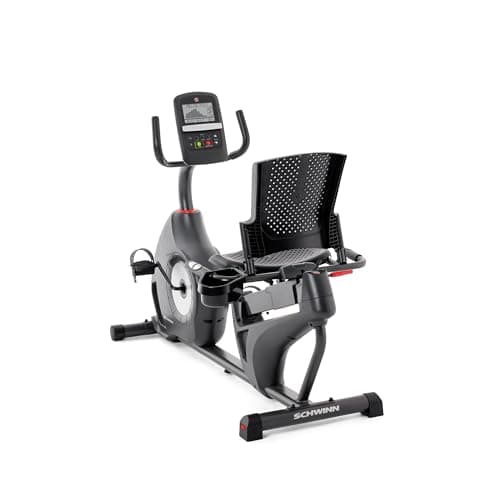
Exercise Bikes
Best exercise bikes for weight loss
The target is 45-60 minutes five days a week — which makes comfort the primary spec.
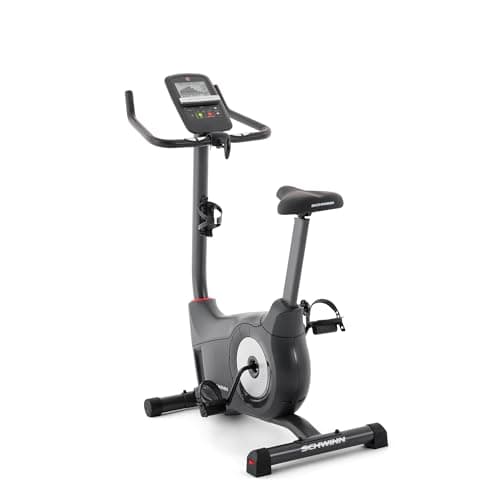
By Price
Best home cardio under $500
At $500 a bike reaches most of its category's ceiling and a treadmill reaches a quarter of its own.
Compare
Exercise bike vs running
Equal cardio, unequal skeletons — bone loading, injury risk and the intensity ceiling compared.