Guides
Treadmill speed and incline controls
Powered incline and speed control are not a given, and on some machines they are mediated by an app. Here is what to check before you buy.
Belt & Bike earns a commission when you buy through our links, at no extra cost to you. Prices come from Amazon and change; the date beside every price is when we last verified it. Full disclosure.
Quick picks
| # | Model | Top speed | Score | Price |
|---|---|---|---|---|
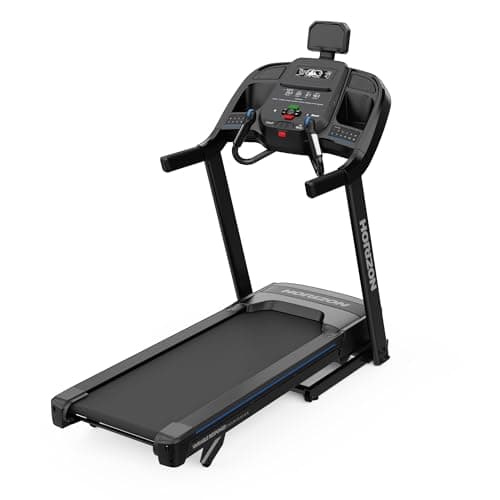
| Rank 1 | Horizon 7.0 AT Interval runners who want fast incline changes | 12 mph | 9.0 | $934.99Amazon |
| Rank 2 | 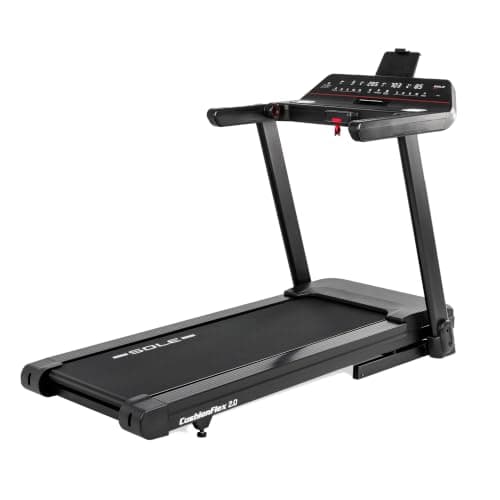 Sole F65 Heavier runners who still want a folding frame | 12 mph | 8.6 | $1,299.99Amazon |
| Rank 3 | 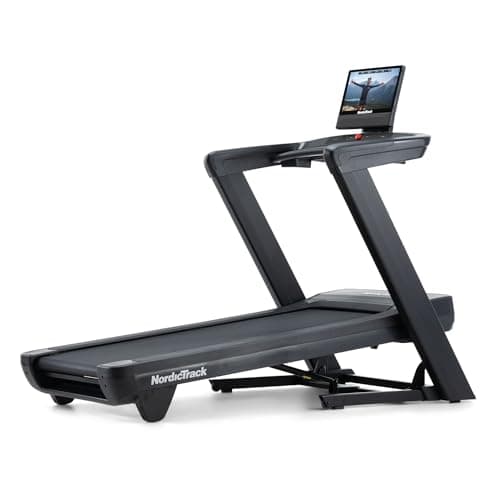 NordicTrack Commercial 1750 The decline feature, if you specifically want it | 12 mph | 8.6 | $1,999.00Amazon |
| Rank 4 | 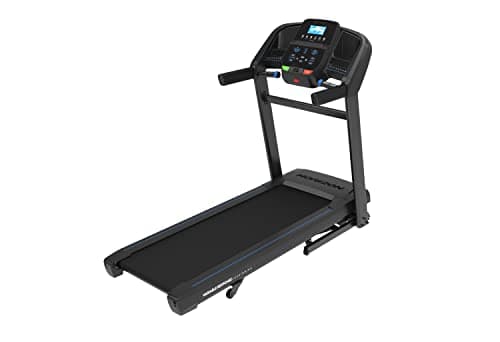 Horizon T202 The step up to a 60″ belt | 12 mph | 8.0 | $799.00Amazon |
#ad Prices come from Amazon and change. How this site is funded. Scores are our published editorial rubric — see our methodology.
If you want a treadmill where you can change both speed and incline, from the machine, with no account and no phone, the Horizon 7.0 AT is the direct answer: 0 to 15% powered incline, a 12 mph top speed, and a 7.25″ high-contrast LCD with quick keys that need nothing but a finger. The Sole F65 does the same job with quick-dial roller controls, which are the nicest implementation in this registry. Both work fully unsubscribed.
That sounds like a low bar. It is not, for two reasons: plenty of cheap treadmills have manual incline rather than powered incline, and some expensive ones route the experience through an app.
Manual incline is not incline control
On many treadmills under about $600, incline is set by getting off the machine and moving a pin or a foot into a different hole. Usually there are three positions. You cannot change it while walking, which means you cannot use incline the way incline is actually useful — ramping it up and down during a session.
Powered incline is a second motor that raises the deck while you are on it, controlled from the console. If the listing says "3-position incline" or "manual incline", it is the first kind. If it says "auto incline" or gives a percentage range with a button, it is the second. Treadmill incline explained covers what the gradient does, and treadmills with incline ranks machines on the range.
The four control styles, and how they feel
| Control style | How it works | Mid-run usability |
|---|---|---|
| Quick keys | Buttons for set speeds and gradients | Best — one press, no looking down |
| Roller dial | A thumbwheel per axis | Excellent, and fast for fine changes |
| Plus / minus only | Step up or down one increment at a time | Workable, slow across a big range |
| Touchscreen | On-glass controls, sometimes app-driven | Worst while running — you must look and aim |
A touchscreen is the most impressive console in a showroom and the hardest to use at 6 mph, because a touch target needs your eyes and your aim. Quick keys and roller dials need neither. This is worth weighing against the screen's appeal, especially if you plan to do interval work where you change the settings dozens of times a session.
Four machines with powered incline and speed control
#1 · Interval runners who want fast incline changes
Horizon 7.0 AT
Horizon Fitness3.0 CHP, a 20″ × 60″ deck and QuickDial controls that change speed and incline in one motion — the best machine here for anyone whose workout changes every 60 seconds.
| Motor | 3.0 CHP |
|---|---|
| Running surface | 20″ × 60″ |
| Incline | 0–15% |
| Top speed | 12 mph |
| Weight capacity | 325 lb |
| Console | 7.25″ high-contrast LCD, 8 preset programs |
| Warranty | Lifetime frame + motor, 3 yr parts, 1 yr labor |
| Subscription | No subscription |
Horizon sells no subscription for this machine. The Bluetooth broadcast works with whatever third-party app you already use, and the console is fully functional with none.
Specifications per Horizon Fitness published specifications.
What it does well
- QuickDial rollers are the single best interval-training control on a sub-$1,000 treadmill
- Streams to Zwift, Peloton and Nike Run Club over Bluetooth — apps you choose, not one you are forced into
- Lifetime frame and motor cover with three years of parts
Where it falls short
- No touchscreen at a price where iFIT machines ship one
- Folding mechanism is stiffer than Sole's hydraulic assist
- Deck cushioning is firmer than the T202's three-zone system
Our rubric
- Motor
- 9.0
- Deck
- 9.0
- Incline
- 9.0
- Build
- 9.0
- Value
- 9.0
#2 · Heavier runners who still want a folding frame
#ad How we are funded · Price as of October 17, 2026
Sole F65
Sole FitnessThe F63's bigger sibling: a 3.25 CHP brushless motor and a 350 lb capacity on the same 20″ × 60″ deck, for buyers who are over the F63's rating.
| Motor | 3.25 CHP brushless |
|---|---|
| Running surface | 20″ × 60″ |
| Incline | 0–15% |
| Top speed | 12 mph |
| Weight capacity | 350 lb |
| Folds | Yes |
| Console | White LED with quick-dial roller controls |
| Subscription | No subscription |
No subscription for any function. SOLE+ is free and optional.
Specifications per Sole Fitness published specifications.
What it does well
- Brushless motor — fewer wear parts than a brushed DC motor of the same rating
- 350 lb capacity covers riders the 325 lb machines technically exclude
- Quick-dial speed and incline rollers beat tapping a number repeatedly
- Free SOLE+ app, no subscription on any console function
Where it falls short
- Costs meaningfully more than the F63 for a 0.25 CHP and 25 lb capacity step
- Same deck size as the F63 — you are not buying more room to run
- Heavy and awkward to position alone
Our rubric
- Motor
- 9.0
- Deck
- 9.0
- Incline
- 8.0
- Build
- 9.0
- Value
- 8.0
#3 · The decline feature, if you specifically want it
NordicTrack Commercial 1750
NordicTrackThe enthusiast NordicTrack: a 22-inch belt, decline as well as incline, and a subscription-first design you should price in before buying.
| Motor | 4.25 CHP |
|---|---|
| Running surface | 22″ × 60″ |
| Incline / decline | −3% to 12% |
| Top speed | 12 mph |
| Weight capacity | 400 lb |
| Console | 16″ pivoting touchscreen |
| Folds | Yes, SpaceSaver |
| Warranty | Lifetime motor, 10 yr frame, 2 yr parts, 1 yr tablet, 1 yr labor |
| Subscription | Subscription required for key features |
The touchscreen is an iFIT terminal. Without a membership you get manual mode and a very expensive blank screen.
Specifications per NordicTrack published specifications.
What it does well
- Decline to −3% is genuinely rare and useful for downhill-race training
- 4.25 CHP behind a 22″ × 60″ belt — the most motor and the widest deck on this site
- 400 lb capacity, well above the class norm at this price
- Heavy, stable frame that does not walk across the floor at pace
Where it falls short
- Designed so that the screen is near-useless without iFIT — budget the membership as part of the price
- Incline tops out at 12% where subscription-free rivals reach 15%
- Very heavy and large; the fold saves less space than the marketing suggests
Our rubric
- Motor
- 9.0
- Deck
- 9.0
- Incline
- 10.0
- Build
- 9.0
- Value
- 6.0
#4 · The step up to a 60″ belt
Horizon T202
Horizon Fitness2.75 CHP and a full-length 20″ × 60″ deck with three-zone cushioning — the cheapest way onto a 60-inch belt from a brand that services its machines.
| Motor | 2.75 CHP |
|---|---|
| Running surface | 20″ × 60″ |
| Incline | 0–12% |
| Top speed | 12 mph |
| Weight capacity | 325 lb |
| Cushioning | 3-Zone Variable Response |
| Assembled weight | 187 lb |
| Subscription | Subscription optional |
No required plan. Console metrics and incline work standalone.
Specifications per Horizon Fitness published specifications.
What it does well
- 60″ belt at a price most rivals reserve for 55″
- Three-zone cushioning is firmer at push-off and softer at footstrike, which is the right way round
- 187 lb assembled is light for this class — easier to get into a room
Where it falls short
- 12% maximum incline, where the better machines reach 15%
- LCD console with LED windows, not a screen
- 2.75 CHP is fine for mixed use and marginal for daily running
Our rubric
- Motor
- 7.0
- Deck
- 9.0
- Incline
- 7.0
- Build
- 8.0
- Value
- 9.0
The published control and incline specifications
| Machine | Incline | Top speed | Console |
|---|---|---|---|
| Horizon 7.0 AT | 0–15% | 12 mph | 7.25″ high-contrast LCD, 8 preset programs |
| Sole F65 | 0–15% | 12 mph | White LED with quick-dial roller controls |
| NordicTrack Commercial 1750 | −3% to 12% | 12 mph | 16″ pivoting touchscreen |
| Horizon T202 | 0–12% | 12 mph | 3-Zone Variable Response cushioning |
Note the NordicTrack line: it is the only machine here with decline, which is a genuine capability the others do not have, and it is also the only one with a touchscreen. That is the trade on this machine in one row. The Commercial 1750 review covers it in full, and NordicTrack treadmills compared covers the lineup.
The subscription question, which is specific to treadmills
On an exercise bike the resistance is a knob or a button that moves a magnet, so no subscription can take your ride away. On a treadmill, speed and incline are controlled by the console, which means a subscription-first treadmill can genuinely change what the machine does when you do not pay.
The test we apply on every treadmill page: does manual speed and incline control work with no account, and does every readout display with no account? If both are yes, you cannot be locked out. Ask it specifically about any machine built around an app ecosystem — see treadmills without a subscription and treadmills without iFIT.
What to check on any listing
- Is incline powered or manual? A percentage range with a button means powered. "3-position" means you get off the machine.
- Is there a one-touch control for both axes? Quick keys or a roller dial. If the console only has plus and minus, crossing a 15% range mid-run takes a long time.
- Does manual control work with no account? The single most important question on any app-led machine.
- Does the console display speed, incline, time, distance and heart rate without a subscription? A console that hides its own readouts behind a login is a rental.
- Does it broadcast standard Bluetooth? A machine third-party apps can read is a machine you cannot be locked out of.
How much incline range you actually need
Incline range, by use
- Desk walkingAny incline at all is a bonus. 5-12% on a pad is plenty. See the picks
- Deliberate incline walking10-15% powered, which is the 12-3-30 requirement. See the picks
- Running10-15% powered. Above that is rarely used. See the picks
- Downhill or sport-specificDecline, which almost nothing under $1,500 offers. See the picks
A 15% range is the practical ceiling for home use, and a 10% range covers nearly everybody. What people notice far more than the top of the range is how easily they can change it mid-session, which brings it back to the controls.
Frequently asked questions
Which treadmills have both incline and speed settings?
What is the difference between auto incline and manual incline?
Are treadmill touchscreens good for changing speed and incline?
Can you change treadmill speed and incline without a subscription?
How much treadmill incline do I need?
Sources
Read next
Guides
Treadmill incline explained
What each gradient feels like, how to build to 12%, and why you must not hold the rails.
Treadmills
Best home treadmills with incline
Gradient range, change speed, and what each percentage actually feels like.
No Subscription
Best home treadmills without a subscription
Treadmills with nothing gated, and the three-year membership arithmetic nobody else publishes.
Treadmills
NordicTrack treadmills, compared
Three NordicTrack machines on published specs, one missing motor rating, and the iFIT question first.
Treadmills
Best home treadmills for incline walking
What a sustained 12% gradient at walking pace asks of a machine, and the six that deliver it.