Guides
Treadmill incline explained
Incline is the cheapest way to make a treadmill harder without making it faster — and for most people it is the better lever.
Belt & Bike earns a commission when you buy through our links, at no extra cost to you. Prices come from Amazon and change; the date beside every price is when we last verified it. Full disclosure.
Quick picks
| # | Model | Incline | Score | Price |
|---|---|---|---|---|
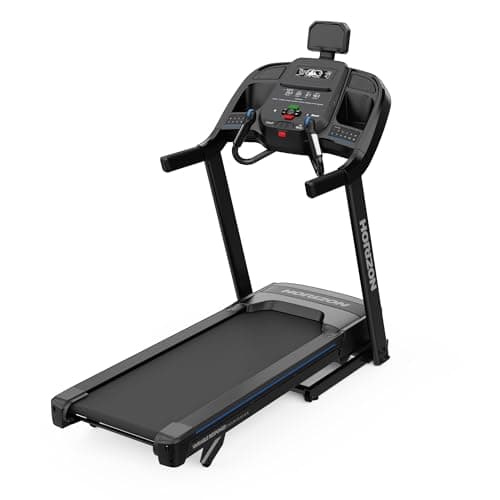
| Rank 1 | Horizon 7.0 AT Interval runners who want fast incline changes | 0–15% | 9.0 | $934.99Amazon |
| Rank 2 | 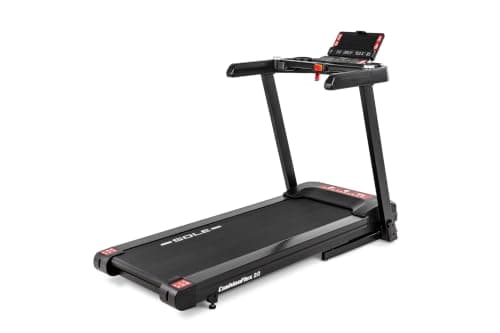 Sole F63 Running on a four-figure budget | 0–15% | 8.8 | $1,099.99Amazon |
| Rank 3 | 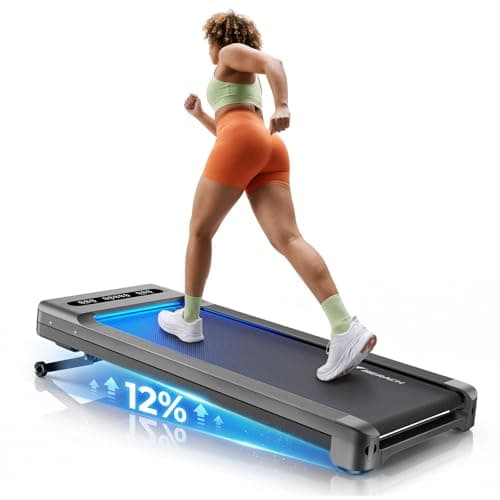 MERACH UltraWalk W60 Auto-incline on a walking pad | 12% auto incline | 6.4 | $329.99Amazon |
| Rank 4 | 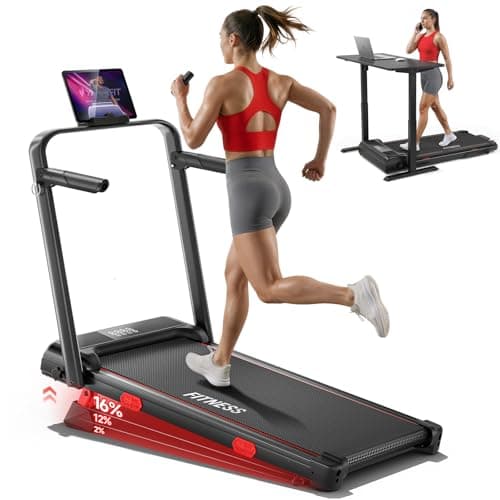 RHYTHM FUN 16% Incline Walking Pad The steepest incline under $150 | 16% | 6.2 | $139.99Amazon |
#ad Prices come from Amazon and change. How this site is funded. Scores are our published editorial rubric — see our methodology.
There are two ways to make a treadmill session harder: go faster, or go uphill. Speed increases impact loading on every footstrike. Incline does not. For anyone over forty, anyone carrying extra weight, and anyone with a joint history, incline is the better lever and it is not close.
What each gradient feels like
| Gradient | At 3 mph it feels like | Typical use |
|---|---|---|
| 0-2% | A flat walk | Recovery, treadmill desk, warm-up |
| 3-5% | A gentle hill | Everyday steady walking |
| 6-9% | A noticeable climb | Building the habit of harder walking |
| 10-12% | A steep hill, conversation gets short | The standard incline-walking workout |
| 13-15% | Very steep, sustained effort | Intervals, hiking preparation |
| −1 to −3% | Downhill | Eccentric loading for downhill racing |
Why uphill walking rivals running
Walking at 3 mph on a 10-12% gradient produces a cardiovascular demand broadly comparable to a steady jog on the flat, while your feet never leave the ground hard enough to generate running-level impact forces. That combination — high aerobic demand, low mechanical loading — is why incline walking has become the default recommendation for so many people.
It also satisfies the federal activity guidelines comfortably: brisk walking is explicitly listed as moderate-intensity activity, and uphill walking sits at the top of that band or into vigorous.
How to build up, safely
- Weeks 1-2: 3-5% at a comfortable pace, 20-30 minutes. Get used to the position.
- Weeks 3-4: 6-8%, same duration. You should be breathing noticeably.
- Weeks 5-6: 10%, reduce duration if needed and build back up.
- Weeks 7+: 12% for 30 minutes, or intervals alternating 12-15% with 2-3%.
The popular incline routine, honestly assessed
The widely-shared '12-3-30' format — 12% incline, 3 mph, 30 minutes — is a genuinely demanding session, not a beginner one. Most untrained people cannot hold it for 30 minutes in week one, and attempting it leads to the handrail-leaning problem above. Build the gradient over six weeks and it becomes achievable.
What about decline?
Running downhill loads the quadriceps eccentrically — the muscle lengthens while under tension — which is a different and more damaging stimulus than flat or uphill work. Training it deliberately reduces the soreness of a downhill race. If you do not race on hilly courses, you will set decline once out of curiosity and never use it again.
Machines ranked by incline range
#1 · Interval runners who want fast incline changes
Horizon 7.0 AT
Horizon Fitness3.0 CHP, a 20″ × 60″ deck and QuickDial controls that change speed and incline in one motion — the best machine here for anyone whose workout changes every 60 seconds.
| Motor | 3.0 CHP |
|---|---|
| Running surface | 20″ × 60″ |
| Incline | 0–15% |
| Top speed | 12 mph |
| Weight capacity | 325 lb |
| Console | 7.25″ high-contrast LCD, 8 preset programs |
| Warranty | Lifetime frame + motor, 3 yr parts, 1 yr labor |
| Subscription | No subscription |
Horizon sells no subscription for this machine. The Bluetooth broadcast works with whatever third-party app you already use, and the console is fully functional with none.
Specifications per Horizon Fitness published specifications.
What it does well
- QuickDial rollers are the single best interval-training control on a sub-$1,000 treadmill
- Streams to Zwift, Peloton and Nike Run Club over Bluetooth — apps you choose, not one you are forced into
- Lifetime frame and motor cover with three years of parts
Where it falls short
- No touchscreen at a price where iFIT machines ship one
- Folding mechanism is stiffer than Sole's hydraulic assist
- Deck cushioning is firmer than the T202's three-zone system
Our rubric
- Motor
- 9.0
- Deck
- 9.0
- Incline
- 9.0
- Build
- 9.0
- Value
- 9.0
#2 · Running on a four-figure budget
#ad How we are funded · Price as of October 5, 2026
Sole F63
Sole FitnessA 3.0 CHP motor and a full 20″ × 60″ deck at a price where most machines give you one or the other — and the console works forever with no account.
| Motor | 3.0 CHP |
|---|---|
| Running surface | 20″ × 60″ |
| Incline | 0–15% |
| Top speed | 12 mph |
| Weight capacity | 325 lb |
| Folds | Yes, hydraulic assist |
| Warranty | Lifetime frame + motor, 3 yr parts, 1 yr labor |
| Subscription | No subscription |
Nothing is gated. The SOLE+ app is free and entirely optional; incline, speed and every console metric work with the machine unplugged from the internet.
Specifications per Sole Fitness published specifications.
What it does well
- 3.0 CHP is genuine running-duty power, not a peak-horsepower marketing number
- Full 60″ belt — long enough for a 6-foot stride at speed
- Lifetime frame and motor warranty at well under the price where that usually starts
- The console is a plain LCD: every readout works with no app, no login, no fee
Where it falls short
- 253 lb assembled — a two-person move, and it does not go upstairs easily
- The 6.5″ LCD is basic next to touchscreen rivals at the same money
- 82″ × 35″ footprint unfolded is a real chunk of a spare room
Our rubric
- Motor
- 9.0
- Deck
- 9.0
- Incline
- 8.0
- Build
- 9.0
- Value
- 9.0
#3 · Auto-incline on a walking pad
MERACH UltraWalk W60
MERACH12% powered incline on a 400 lb-rated walking pad — incline is what turns a walking pad from a step counter into actual training.
| Incline | 12% auto incline |
|---|---|
| Weight capacity | 400 lb (manufacturer figure) |
| Form factor | Under-desk walking pad |
| Motor | Not published by manufacturer |
| Running surface | Not published by manufacturer |
| Subscription | Subscription optional |
The pad and its remote work with no app; the MERACH app is optional tracking.
Specifications per Manufacturer figures as published on the Amazon product listing.
What it does well
- Powered 12% incline, which most walking pads do not offer at all
- High stated capacity for a flat pad
- Slides under a desk or a sofa
Where it falls short
- No handrail — incline walking without one takes getting used to
- No published CHP or deck dimensions
- Walking speeds only
Our rubric
- Motor
- 5.0
- Deck
- 5.0
- Incline
- 8.0
- Build
- 6.0
- Value
- 8.0
#4 · The steepest incline under $150
RHYTHM FUN 16% Incline Walking Pad
RHYTHM FUN16% incline and a 6.2 mph ceiling on a handled folding pad for well under $150 — steeper than machines costing ten times as much.
| Incline | 16% |
|---|---|
| Top speed | 6.2 mph |
| Handles | Yes, folding |
| Motor | Not published by manufacturer |
| Weight capacity | Not published by manufacturer |
| Subscription | No subscription |
Remote-controlled, no app required.
Specifications per Manufacturer figures as published on the Amazon product listing.
What it does well
- 16% is a genuinely steep gradient for incline walking
- 6.2 mph is above typical walking-pad limits
- Folds with handles up or down
Where it falls short
- No published CHP, deck size or capacity
- A steep incline on a small, light frame feels less stable than on a full machine
- Unknown long-term parts support
Our rubric
- Motor
- 4.0
- Deck
- 4.0
- Incline
- 9.0
- Build
- 5.0
- Value
- 9.0
Frequently asked questions
Is incline walking as good as running?
What incline should I walk at on a treadmill?
Is 12-3-30 a good workout?
Does walking on an incline burn more calories than flat walking?
What is treadmill decline for?
Sources
Read next
Treadmills
Best home treadmills with incline
Gradient range, change speed, and what each percentage actually feels like.
Treadmills
Best treadmills with incline under $500
Steep powered gradients for under $500, and the stability caveats that come with them.
Treadmills
Best home treadmills for walking
The specs a walker should buy, and the running specs you can safely ignore.
Compare
Home treadmill vs elliptical
Both weight-bearing — and incline walking is usually the answer to why people consider an elliptical.
Guides
Treadmill buying guide: what to look for
The eight specs that decide a treadmill, in order, with the thresholds for each.