Exercise Bikes
Best belt-drive spin bikes
Belt drive is the quiet, no-maintenance transmission. It is not the same thing as magnetic resistance, and the listings constantly conflate the two.
Belt & Bike earns a commission when you buy through our links, at no extra cost to you. Prices come from Amazon and change; the date beside every price is when we last verified it. Full disclosure.
Quick picks
| # | Model | Drive | Score | Price |
|---|---|---|---|---|
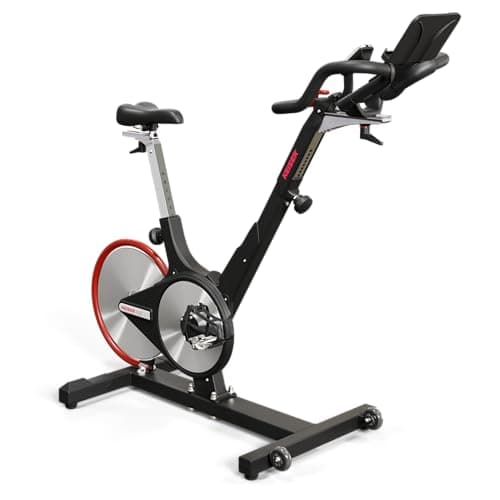
| Rank 1 | Keiser M3i The bike commercial studios actually buy | Self-tensioning Poly-V belt | 8.6 | $2,985.00Amazon |
| Rank 2 | 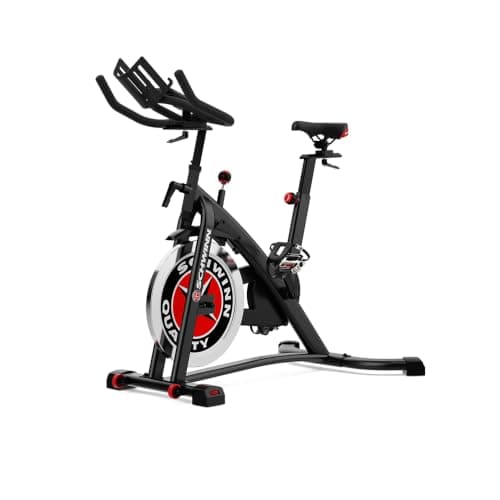 Schwinn IC3 The same flywheel, two hundred dollars cheaper | Belt | 7.8 | $599.00Amazon |
| Rank 3 | 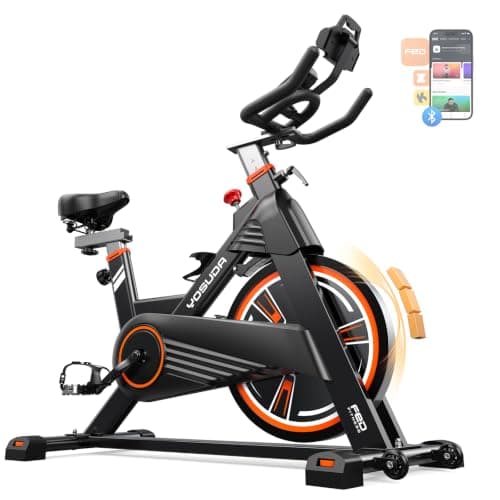 YOSUDA PRO Magnetic Exercise Bike A 350 lb rating under $350 | Belt | 7.8 | $329.99Amazon |
| Rank 4 | 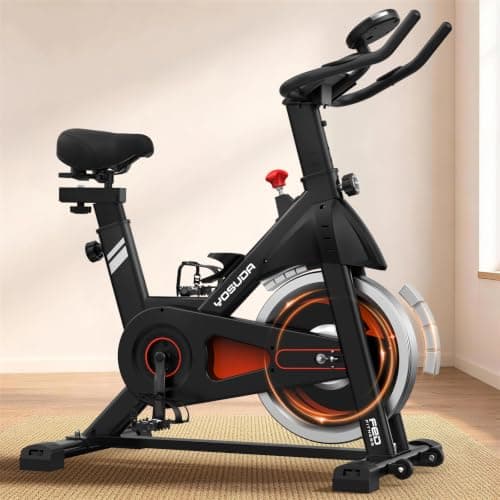 YOSUDA Magnetic Stationary Bike The cheapest magnetic spin bike worth buying | Belt | 7.2 | $289.99Amazon |
| Rank 5 | 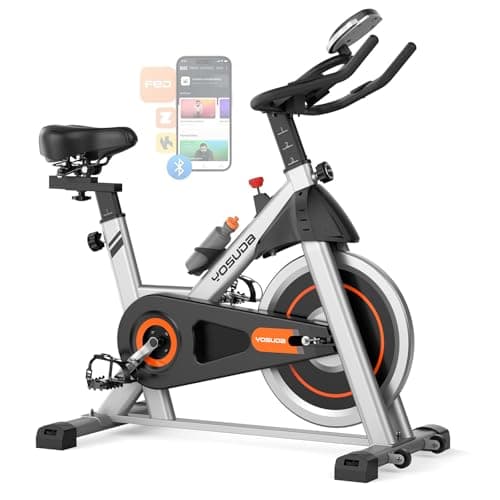 YOSUDA Brake-Pad Stationary Bike A $200 spin bike | Belt | 6.6 | $199.98Amazon |
#ad Prices come from Amazon and change. How this site is funded. Scores are our published editorial rubric — see our methodology.
The best belt-drive spin bike you can buy for a home is the Keiser M3i, which runs a self-tensioning Poly-V belt and pairs it with 24-gear magnetic resistance — the combination that needs no adjustment and makes no noise. For most budgets the honest pick is the YOSUDA PRO, which gives you the same belt transmission and magnetic resistance for a small fraction of the money. If you specifically want the heavy 40 lb flywheel feel, the Schwinn IC3 is belt-driven too, with friction resistance rather than magnetic.
Before the ranking, the distinction that the product listings blur constantly: the drive and the resistance are two different systems. The drive is how your legs turn the flywheel. The resistance is how the flywheel is slowed. A bike can be belt-drive with friction resistance, belt-drive with magnetic resistance, or chain-drive with either. "Belt drive" on a listing tells you nothing about the resistance, and "magnetic" tells you nothing about the drive.
Belt against chain, which is the easy half
| Property | Belt drive | Chain drive |
|---|---|---|
| Noise | Near silent — a soft hum | Mechanical clatter under load |
| Maintenance | None in normal home use | Periodic lubrication and tension checks |
| Lubricant | None, so nothing to stain carpet | Oil or chain lube |
| Feel | Smooth and consistent | Slight pulse you can feel at low cadence |
| Repair | Belt replacement is a parts order | Links can be replaced individually |
| Typical home price | Most bikes above roughly $250 | Mostly older or very cheap models |
There is no serious argument for a chain on a home indoor cycle any more. Belt is quieter, needs nothing from you, and cannot leave oil on the floor of a spare bedroom. Chain survives at the very bottom of the market and on some older frames. The full mechanical explanation is in spin bike drive systems.
The ranking
#1 · The bike commercial studios actually buy
#ad How we are funded · Price as of October 17, 2026
Keiser M3i
KeiserThe rear-flywheel magnetic cycle that fills real studios — a different class of machine, priced accordingly, and included here as the ceiling the budget bikes are measured against.
| Resistance | 24-gear magnetic |
|---|---|
| Flywheel | Rear-mounted, out of the sweat zone |
| Drive | Self-tensioning Poly-V belt |
| Weight capacity | 350 lb |
| Rider height range | 4′10″ to 7′0″ |
| Footprint | 51″ L × 26″ W × 49″ H |
| Machine weight | 92 lb |
| Console | M Connect: rpm, watts, kcal, time, distance |
| Warranty | 3 yr all-inclusive (excl. labor), 90 days wear items |
| Subscription | No subscription |
Keiser sells no subscription. The bike broadcasts open Bluetooth data to any app you choose.
Specifications per Keiser published M3i specifications.
What it does well
- Rear flywheel keeps sweat off the moving parts — the single biggest reason studio bikes outlast home bikes
- Magnetic resistance with nothing in contact, so there is no pad to wear out
- Bluetooth power and cadence output that apps can actually read
- 92 lb and a 51″ × 26″ footprint — far easier to live with than its price suggests
Where it falls short
- Costs several times any other bike here
- No screen; you supply the device
- Keiser does not publish a flywheel mass, so you cannot spec-compare it to a 40 lb home bike
- Overkill for anyone riding three times a week
Our rubric
- Ride
- 10.0
- Fit
- 9.0
- Resistance
- 10.0
- Build
- 10.0
- Value
- 4.0
#2 · The same flywheel, two hundred dollars cheaper
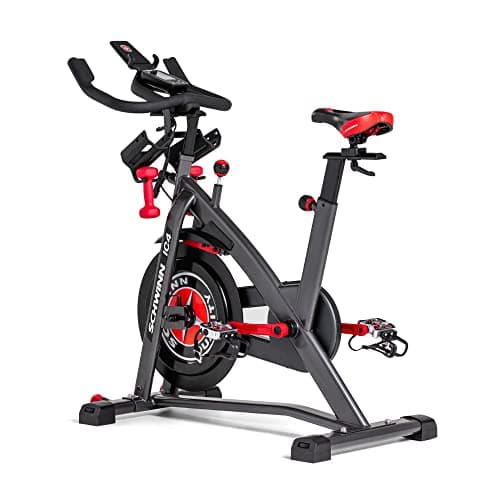
Schwinn IC3
Schwinn FitnessThe IC4's 40 lb flywheel on a friction brake instead of magnets — same ride weight, less repeatability, noticeably less money.
| Flywheel | 40 lb |
|---|---|
| Resistance | Infinite-variable friction (felt pad) |
| Weight capacity | 300 lb |
| Drive | Belt |
| Console | LCD |
| Subscription | No subscription |
There is nothing to subscribe to. The console is self-contained.
Specifications per Schwinn Fitness published specifications.
What it does well
- Identical 40 lb flywheel to the IC4 — the ride momentum is the same
- Belt drive is quiet despite the friction brake
- Significantly cheaper than the IC4
Where it falls short
- Friction pads wear and need replacing; magnets never touch anything
- No numbered levels, so you cannot repeat a workout precisely
- No Bluetooth broadcast — your app cannot see your cadence
Our rubric
- Ride
- 8.0
- Fit
- 8.0
- Resistance
- 6.0
- Build
- 8.0
- Value
- 9.0
#3 · A 350 lb rating under $350
#ad How we are funded · Price as of October 17, 2026
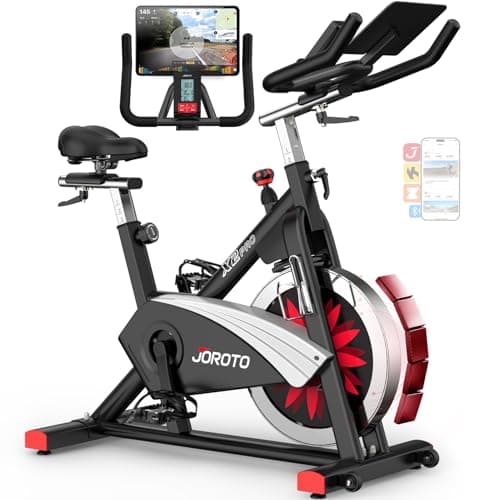
YOSUDA PRO Magnetic Exercise Bike
YOSUDAMagnetic resistance and a 350 lb stated capacity for around a third of the IC4's price — the value benchmark the whole budget spin category is measured against.
| Resistance | Magnetic |
|---|---|
| Weight capacity | 350 lb (manufacturer figure) |
| Flywheel | Not published by manufacturer |
| Drive | Belt |
| Console | LCD with tablet holder |
| Subscription | Subscription optional |
The YOSUDA app is free and optional; the bike needs no account to work.
Specifications per Manufacturer figures as published on the Amazon product listing.
What it does well
- 350 lb stated capacity beats bikes costing twice as much
- Magnetic resistance means no pad to wear out
- Fully adjustable four-way seat and handlebars
Where it falls short
- YOSUDA does not publish a flywheel weight for this model on the listing
- Resistance is a knob with no numbered levels
- No Bluetooth cadence broadcast, so apps cannot read the bike
Our rubric
- Ride
- 7.0
- Fit
- 8.0
- Resistance
- 7.0
- Build
- 7.0
- Value
- 10.0
#4 · The cheapest magnetic spin bike worth buying
YOSUDA Magnetic Stationary Bike
YOSUDAMagnetic resistance under $300 with a free companion app and no account requirement — the entry point to the category done properly.
| Resistance | Magnetic |
|---|---|
| Drive | Belt |
| Flywheel | Not published by manufacturer |
| Weight capacity | Not published by manufacturer |
| Console | LCD with device holder |
| Subscription | Subscription optional |
Free app, no required subscription.
Specifications per Manufacturer figures as published on the Amazon product listing.
What it does well
- Magnetic rather than friction at a price where friction is normal
- Quiet enough for an apartment
- Free app with no subscription
Where it falls short
- No published flywheel weight or capacity
- Unnumbered resistance knob
- Plastic shroud and basic finish
Our rubric
- Ride
- 7.0
- Fit
- 7.0
- Resistance
- 7.0
- Build
- 6.0
- Value
- 9.0
#5 · A $200 spin bike
YOSUDA Brake-Pad Stationary Bike
YOSUDAThe friction-brake YOSUDA: the cheapest way onto a weighted-flywheel spin bike, with a wear part you will eventually replace.
| Resistance | Friction brake pad |
|---|---|
| Drive | Belt |
| Flywheel | Not published by manufacturer |
| Weight capacity | Not published by manufacturer |
| Subscription | Subscription optional |
App optional and free; the bike is fully usable without it.
Specifications per Manufacturer figures as published on the Amazon product listing.
What it does well
- Around two hundred dollars for a real spin-bike frame
- Brake pads are cheap and easy to replace
- Free app, no subscription
Where it falls short
- Friction pads wear, squeak when damp and lose consistency
- No numbered resistance levels
- No published flywheel or capacity figures
Our rubric
- Ride
- 6.0
- Fit
- 7.0
- Resistance
- 5.0
- Build
- 6.0
- Value
- 9.0
The published drive and resistance, bike by bike
| Bike | Drive | Resistance | Flywheel | Capacity |
|---|---|---|---|---|
| Keiser M3i | Self-tensioning Poly-V belt | 24-gear magnetic | Rear-mounted | 350 lb |
| Schwinn IC3 | Belt | Infinite-variable friction (felt pad) | 40 lb | 300 lb |
| YOSUDA PRO | Belt | Magnetic | Not published by manufacturer | 350 lb (manufacturer figure) |
| YOSUDA Magnetic | Belt | Magnetic | Not published by manufacturer | Not published by manufacturer |
| YOSUDA Brake-Pad | Belt | Friction brake pad | Not published by manufacturer | Not published by manufacturer |
Two of the five publish a flywheel mass. That is normal in this category and it is why we do not rank on flywheel weight — most of the market simply does not disclose it. Flywheel weight explained covers what the number does and does not tell you.
The part that actually decides your purchase: friction or magnetic
Since every bike here is belt-driven, the belt is not the variable. The variable is the resistance, and it changes the bike more than anything else on the spec sheet.
- Magnetic resistance has nothing touching the flywheel. Magnets slow it from a distance. Nothing wears, nothing needs replacing, and the setting is a number you can return to next week.
- Friction resistance presses a felt pad onto the flywheel. It gives an infinitely variable range and a distinctive heavy feel, and the pad is a wear item that eventually squeaks and needs replacing.
- Magnetic is repeatable; friction is not. Level 11 is level 11 every session. Three-quarters of a turn on a friction knob is not, and it drifts further as the pad wears.
- Friction is cheaper to build. That is the whole reason it still exists at the bottom of the market.
- Friction is not louder in itself, but a glazed or worn pad is the single most common source of spin-bike squeak.
The practical rule: if you intend to track progress, buy magnetic. If you want the heaviest flywheel feel for the least money and do not care about repeatability, friction is defensible. Resistance types compared goes through the mechanics in full.
Noise, which is usually the real reason people search for this
A belt-drive magnetic bike is the quietest cardio machine you can own. There is no motor, no impact and nothing in contact with the flywheel, so the loudest thing in the room is your breathing. This is why bikes beat treadmills in apartments and upstairs rooms by a wide margin — see apartment noise and treadmill vs exercise bike.
The noises a belt-drive bike does make are all fixable: a squeak from a dry friction pad, a rattle from a pedal that was never tightened properly, and a tick from an unlevel floor. None of them come from the belt. Exercise bike maintenance has the five-minute routine that prevents all three.
Where the money goes above $600
The Keiser M3i costs several times what the YOSUDA PRO costs and both are belt-drive magnetic bikes. What the extra money buys is a published 4′10″ to 7′0″ rider fit range, a rear-mounted flywheel kept out of the sweat path, a console that reports watts rather than a generic level, and a three-year all-inclusive warranty. Those are real things, and they matter most to a household where several people of different sizes ride the same bike.
For a single rider on a budget, they are not worth the difference. Read the Keiser M3i review for the long version, and best spin bikes under $500 for the bracket most people should actually shop.
Frequently asked questions
Is a belt-drive spin bike better than a chain drive?
What is the difference between belt drive and magnetic resistance?
Do belt-drive spin bikes need maintenance?
Are belt-drive exercise bikes quiet?
Which is the best cheap belt-drive spin bike?
Sources
Read next
Guides
Spin bike drive systems: belt vs chain
A noise and maintenance decision, not a performance one — and what it does not affect.
Exercise Bikes
Best spin bikes for home
Flywheel, drive, resistance and fit — the four specs that decide how a cycle rides.
Guides
Exercise bike resistance types explained
Magnetic, friction and air — three mechanisms and three completely different ownership experiences.
Exercise Bikes
Best spin bikes under $500
Why shipping weight tells you more about the ride than the advertised flywheel does.
Exercise Bikes
Keiser M3i review
The rear-flywheel bike studios buy, reviewed honestly — including why a $300 bike is the right answer for most people.