Guides
Exercise bike maintenance
A magnetic bike needs almost nothing. What it does need takes five minutes a month, and skipping it produces every noise owners complain about.
Belt & Bike earns a commission when you buy through our links, at no extra cost to you. Prices come from Amazon and change; the date beside every price is when we last verified it. Full disclosure.
Quick picks
| # | Model | Resistance | Score | Price |
|---|---|---|---|---|
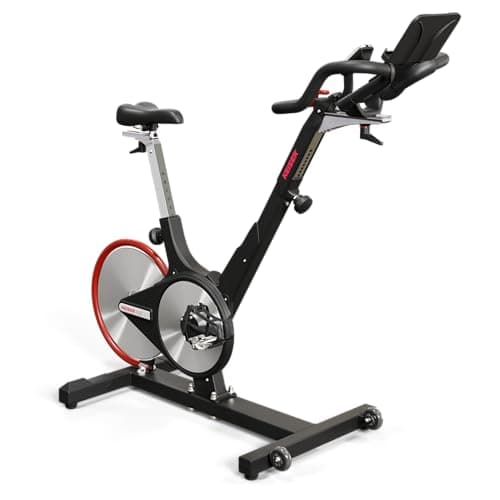
| Rank 1 | Keiser M3i The bike commercial studios actually buy | 24-gear magnetic | 8.6 | $2,985.00Amazon |
| Rank 2 | 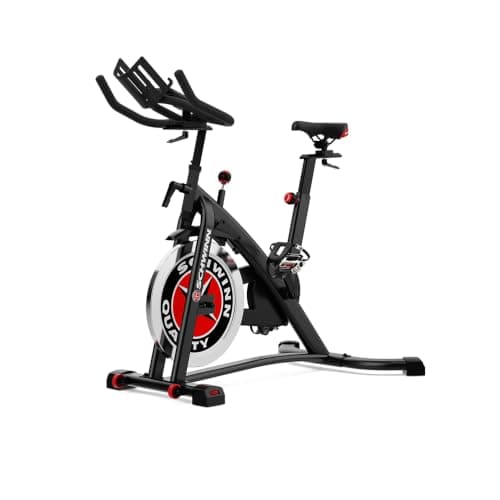 Schwinn IC3 The same flywheel, two hundred dollars cheaper | Infinite-variable friction (felt pad) | 7.8 | $599.00Amazon |
| Rank 3 | 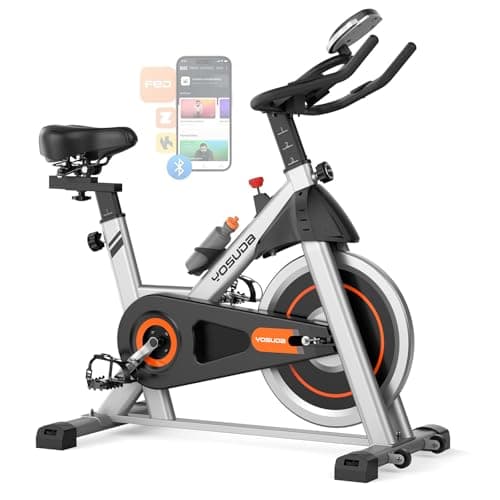 YOSUDA Brake-Pad Stationary Bike A $200 spin bike | Friction brake pad | 6.6 | $199.98Amazon |
| Rank 4 | 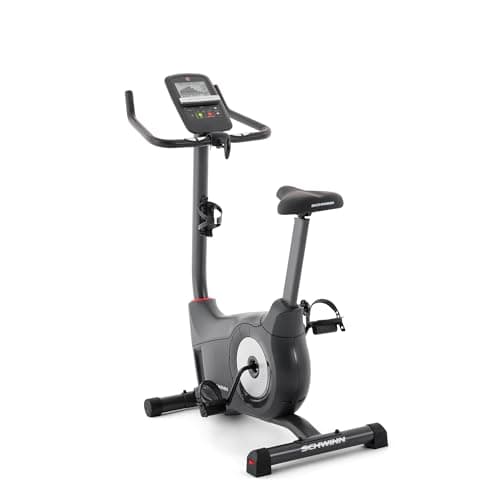 Schwinn 130 Upright Bike A compact upright from a real brand | 16-level magnetic | 7.4 | $499.99Amazon |
#ad Prices come from Amazon and change. How this site is funded. Scores are our published editorial rubric — see our methodology.
An exercise bike needs four things: wipe the sweat off after every ride, check the pedal and crank bolts monthly, check the seat and handlebar clamps monthly, and on a friction bike inspect the felt pad every few months. That is the entire maintenance schedule for a magnetic belt-drive bike. There is no lubrication, no belt tensioning in normal use, and nothing to replace on a schedule.
This is the structural advantage bikes have over treadmills, where the deck needs lubricating, the belt needs tensioning and the motor is a wear item with a heat problem. On a bike the only motor is you.
The monthly five minutes
- Pedals. Grip each pedal and try to rock it. Any play means tighten it now, and remember the left pedal is reverse-threaded. A loose pedal strips the crank thread, which turns a $25 part into a $120 one.
- Crank and flywheel bolts. Check the crank arm bolts and the flywheel nut for movement. A tick or knock once per revolution is nearly always one of these.
- Seat post and saddle clamp. The two clamps that take the most load and the most adjustment. A saddle that creeps down mid-ride is a loose clamp, not a worn seat.
- Handlebar clamp. Same check. On a bike you lean on, this one matters for safety rather than comfort.
- Stabilizer feet. Level the bike so it does not rock. A rocking bike reads as a frame fault and is almost never one.
That is it on a magnetic bike. Do it on the first of the month and you will not meet any of the faults below.
Sweat is the thing that actually destroys bikes
Sweat is salty and corrosive, and on an indoor cycle it drips exactly where you least want it: onto the handlebar stem, down the seat post, onto the frame welds, and on front-flywheel designs straight onto the flywheel and the resistance assembly.
- Wipe the frame, bars and post after every ride. A dry cloth is enough. This single habit does more for the bike's life than everything else on this page.
- Do not spray cleaner at the console. Spray the cloth, not the bike. Water behind an LCD is terminal.
- Pull the seat post out every few months and wipe inside it. This is where corrosion seizes posts, and a seized post means the bike cannot be adjusted for anyone else.
- Put a mat under the bike. It catches what misses the frame and stops sweat reaching the floor.
- Note where the flywheel sits. A rear-mounted flywheel — the Keiser M3i publishes exactly this, kept out of the sweat zone — is a design answer to the problem rather than a cleaning routine.
Three low-maintenance bikes, and the one with a wear item
#1 · The bike commercial studios actually buy
#ad How we are funded · Price as of October 17, 2026
Keiser M3i
KeiserThe rear-flywheel magnetic cycle that fills real studios — a different class of machine, priced accordingly, and included here as the ceiling the budget bikes are measured against.
| Resistance | 24-gear magnetic |
|---|---|
| Flywheel | Rear-mounted, out of the sweat zone |
| Drive | Self-tensioning Poly-V belt |
| Weight capacity | 350 lb |
| Rider height range | 4′10″ to 7′0″ |
| Footprint | 51″ L × 26″ W × 49″ H |
| Machine weight | 92 lb |
| Console | M Connect: rpm, watts, kcal, time, distance |
| Warranty | 3 yr all-inclusive (excl. labor), 90 days wear items |
| Subscription | No subscription |
Keiser sells no subscription. The bike broadcasts open Bluetooth data to any app you choose.
Specifications per Keiser published M3i specifications.
What it does well
- Rear flywheel keeps sweat off the moving parts — the single biggest reason studio bikes outlast home bikes
- Magnetic resistance with nothing in contact, so there is no pad to wear out
- Bluetooth power and cadence output that apps can actually read
- 92 lb and a 51″ × 26″ footprint — far easier to live with than its price suggests
Where it falls short
- Costs several times any other bike here
- No screen; you supply the device
- Keiser does not publish a flywheel mass, so you cannot spec-compare it to a 40 lb home bike
- Overkill for anyone riding three times a week
Our rubric
- Ride
- 10.0
- Fit
- 9.0
- Resistance
- 10.0
- Build
- 10.0
- Value
- 4.0
#2 · The same flywheel, two hundred dollars cheaper
Schwinn IC3
Schwinn FitnessThe IC4's 40 lb flywheel on a friction brake instead of magnets — same ride weight, less repeatability, noticeably less money.
| Flywheel | 40 lb |
|---|---|
| Resistance | Infinite-variable friction (felt pad) |
| Weight capacity | 300 lb |
| Drive | Belt |
| Console | LCD |
| Subscription | No subscription |
There is nothing to subscribe to. The console is self-contained.
Specifications per Schwinn Fitness published specifications.
What it does well
- Identical 40 lb flywheel to the IC4 — the ride momentum is the same
- Belt drive is quiet despite the friction brake
- Significantly cheaper than the IC4
Where it falls short
- Friction pads wear and need replacing; magnets never touch anything
- No numbered levels, so you cannot repeat a workout precisely
- No Bluetooth broadcast — your app cannot see your cadence
Our rubric
- Ride
- 8.0
- Fit
- 8.0
- Resistance
- 6.0
- Build
- 8.0
- Value
- 9.0
#3 · A $200 spin bike
YOSUDA Brake-Pad Stationary Bike
YOSUDAThe friction-brake YOSUDA: the cheapest way onto a weighted-flywheel spin bike, with a wear part you will eventually replace.
| Resistance | Friction brake pad |
|---|---|
| Drive | Belt |
| Flywheel | Not published by manufacturer |
| Weight capacity | Not published by manufacturer |
| Subscription | Subscription optional |
App optional and free; the bike is fully usable without it.
Specifications per Manufacturer figures as published on the Amazon product listing.
What it does well
- Around two hundred dollars for a real spin-bike frame
- Brake pads are cheap and easy to replace
- Free app, no subscription
Where it falls short
- Friction pads wear, squeak when damp and lose consistency
- No numbered resistance levels
- No published flywheel or capacity figures
Our rubric
- Ride
- 6.0
- Fit
- 7.0
- Resistance
- 5.0
- Build
- 6.0
- Value
- 9.0
#4 · A compact upright from a real brand
#ad How we are funded · Price as of October 17, 2026
Schwinn 130 Upright Bike
Schwinn Fitness16 magnetic levels in a 41″ × 21″ footprint — the upright to buy when the recumbent simply will not fit.
| Resistance | 16-level magnetic |
|---|---|
| Weight capacity | 300 lb |
| Footprint | 41.3″ L × 21.4″ W × 54.5″ H |
| Machine weight | 58.4 lb |
| Console | 5.5″ segmented LCD |
| Subscription | No subscription |
Self-contained console; no plan to buy.
Specifications per Schwinn Fitness published specifications.
What it does well
- A genuinely small footprint — under two feet wide
- 58 lb means one person can move it
- Numbered magnetic resistance at an entry price
Where it falls short
- Upright seating is less comfortable than recumbent for long sessions
- Segmented LCD is basic
- Lighter frame rocks more than the recumbents under hard effort
Our rubric
- Ride
- 7.0
- Fit
- 7.0
- Resistance
- 8.0
- Build
- 7.0
- Value
- 8.0
Friction pads, the only real consumable
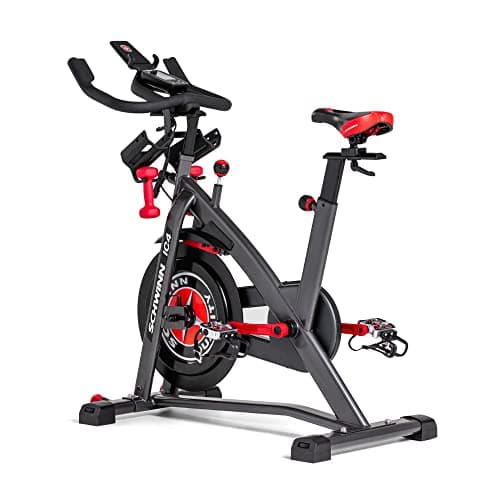
On a magnetic bike nothing touches the flywheel, so nothing wears. On a friction bike — the Schwinn IC3 with its infinite-variable felt pad, or the YOSUDA Brake-Pad model — a pad presses against the flywheel every time you add resistance, and that pad is a consumable.
| Symptom | Likely cause | Fix |
|---|---|---|
| Squeal under resistance | Pad glazed or dry | Clean the flywheel surface; replace a glazed pad |
| Resistance feels weak at full knob | Pad worn thin | Replace the pad |
| Resistance grabs unevenly | Pad worn unevenly or flywheel scored | Replace the pad; inspect the flywheel |
| Black dust around the flywheel | Normal pad wear | Wipe it; monitor pad thickness |
Pads are inexpensive and generally a single bolt. They are also the reason we recommend magnetic resistance wherever the price gap is small — see resistance types compared and belt-drive spin bikes.
Noises, and what each one is
| Noise | When it happens | Where to look first |
|---|---|---|
| Click once per pedal revolution | Under load | Pedal threads, then crank bolts |
| Creak when you push hard | Out of the saddle | Seat post clamp and handlebar clamp |
| Squeal | As resistance increases | Friction pad (magnetic bikes should not do this) |
| Rattle | At speed | Loose console, bottle cage or stabilizer |
| Rhythmic rub | Constant | Pedal strap touching the crank; chain guard contact |
The parts you may eventually replace
- The saddle. Not a fault; a preference, and the cheapest meaningful upgrade on any bike. Exercise bike seat comfort covers choosing one.
- The pedals. Standard threaded and easy to swap, usually to gain dual-sided SPD. Spin shoes and pedals covers the standards.
- The friction pad, if your bike has one. A consumable by design.
- The console battery, on bikes with a battery-powered display. A coin cell, every year or two.
- Nothing else, usually. Magnetic resistance assemblies and belts outlast the household's interest in the bike far more often than they fail.
The treadmill contrast, for context
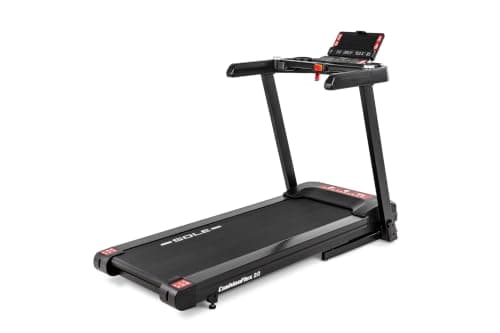
A treadmill asks for deck lubrication on a schedule, belt tension checks, belt tracking adjustment and a motor kept out of dust and cold — and several manufacturers make the lubrication interval a warranty condition. Treadmill maintenance is the equivalent page and it is much longer than this one.
That difference is a legitimate factor in choosing between the two machines, especially for anyone who knows they will not keep up a schedule. Treadmill vs exercise bike weighs the whole comparison.
Frequently asked questions
How do you maintain an exercise bike?
Do exercise bikes need oiling?
Why does my exercise bike squeak?
How long does an exercise bike last?
How often should you replace a spin bike brake pad?
Sources
Read next
Guides
Treadmill maintenance
Four tasks, a realistic schedule, and the lubrication mistake that kills motors.
Guides
Exercise bike resistance types explained
Magnetic, friction and air — three mechanisms and three completely different ownership experiences.
Guides
Why your exercise bike seat hurts
Sit bones, not padding - the three free adjustments that fix most saddle pain, and when it really is the seat.
Exercise Bikes
Best belt-drive spin bikes
Belt is the transmission, magnetic is the resistance - five belt-drive cycles ranked on published specs.
Guides
Exercise bike buying guide
Format, then resistance, then fit — the three decisions in the order that matters.