Exercise Bikes
Best gym-style upright bikes for home
What the bike in the gym actually has that a $300 home upright does not — and which home machines close most of the gap.
Belt & Bike earns a commission when you buy through our links, at no extra cost to you. Prices come from Amazon and change; the date beside every price is when we last verified it. Full disclosure.
Quick picks
| # | Model | Resistance | Score | Price |
|---|---|---|---|---|
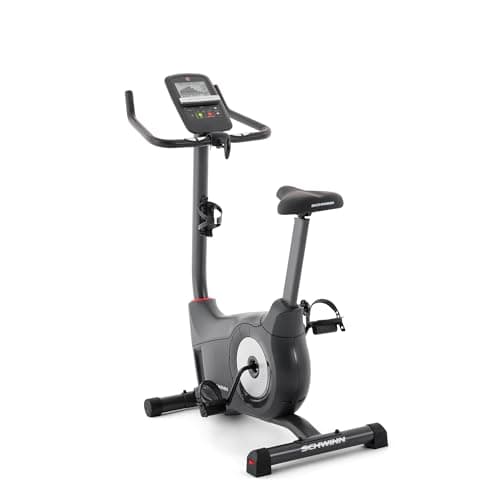
| Rank 1 | Schwinn 130 Upright Bike A compact upright from a real brand | 16-level magnetic | 7.4 | $499.99Amazon |
| Rank 2 | 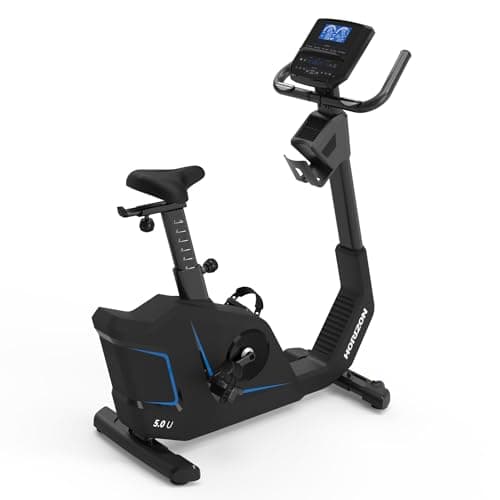 Horizon 5.0U Upright Bike An upright with Bluetooth and a real warranty | Magnetic | 7.6 | $399.99Amazon |
| Rank 3 | 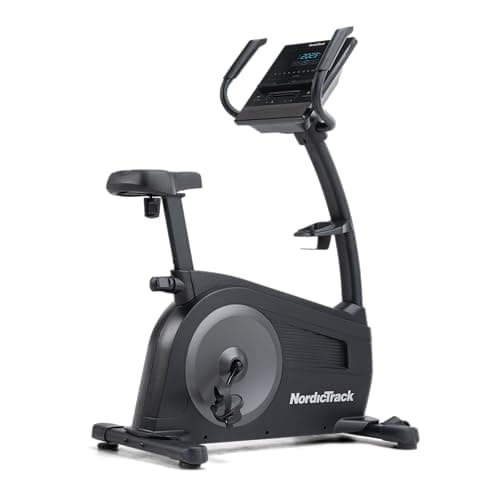 NordicTrack G LE Upright Bike An iFIT upright with adjustable arms | Magnetic | 6.8 | $699.00Amazon |
| Rank 4 | 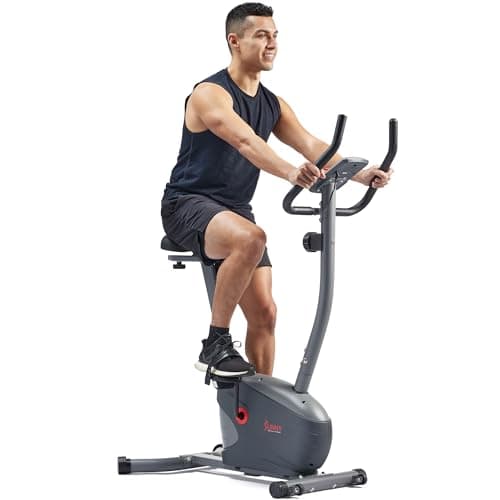 Sunny Health & Fitness Smart Upright Bike A beginner upright under $250 | Magnetic | 6.8 | $228.78Amazon |
#ad Prices come from Amazon and change. How this site is funded. Scores are our published editorial rubric — see our methodology.
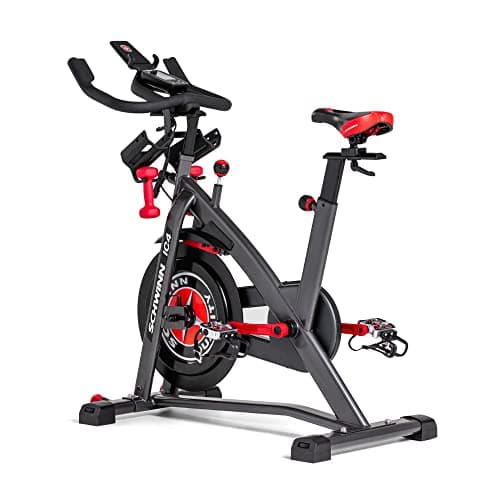
If you want the gym upright feel at home, the Schwinn 130 Upright is the pick for most people: 16 levels of magnetic resistance, a published 300 lb capacity and a published 41.3″ × 21.4″ footprint, for a fraction of what a commercial bike costs. It is the only bike on this page whose manufacturer publishes a complete frame, capacity and footprint set, which is exactly the kind of disclosure you get from a gym-grade brand and almost never get at this price.
The honest version of this page: you cannot buy a gym bike for home money. What you can do is work out which of the gym bike's properties you actually care about, then buy the cheapest home upright that has those. Most people care about three things and are willing to lose the other four.
What the gym bike has that a cheap home upright does not
- A frame rated for continuous commercial duty. A gym bike is specified for many hours a day, every day, for years. A home upright is specified for a household. This is the single biggest cost difference and the one you feel least during a 30-minute ride.
- Mass in the right places. Gym uprights are heavy, and the weight is low and wide. The bike does not shift when you push. A 58 lb home upright will move slightly if you stand on the pedals, which is one reason gym-style uprights are ridden seated.
- A wide, repeatable resistance range. Gym consoles hold a watt target. Home magnetic bikes hold a numbered level, which is repeatable session to session but is not a calibrated power figure.
- A seat and bar adjustment range that fits almost anybody. Commercial bikes are adjusted dozens of times a day by people of every size, so the ranges are generous and the clamps are built to be moved.
- Service parts on a shelf. Gym equipment is bought with a service contract. Home equipment is bought with a warranty and a phone number.
Of those five, the two that change your workout are resistance range and fit. Frame duty rating, service parts and the last few pounds of flywheel mass are almost entirely about how the machine survives a gym, not about how it rides for you.
Published specifications, side by side
| Bike | Resistance | Capacity | Footprint | Console |
|---|---|---|---|---|
| Schwinn 130 Upright | 16-level magnetic | 300 lb | 41.3″ L × 21.4″ W × 54.5″ H | 5.5″ segmented LCD |
| Horizon 5.0U Upright | Magnetic | Not published by manufacturer | Not published by manufacturer | Bluetooth |
| NordicTrack G LE | Magnetic | Not published by manufacturer | Not published by manufacturer | iFIT-enabled |
| Sunny Smart Upright | Magnetic | Not published by manufacturer | Not published by manufacturer | LCD, app-connectable |
Three of the four do not publish a weight capacity, which is a real limitation when you are shopping on frame strength. Where a figure is missing we leave it missing. If capacity is the deciding spec for you, see exercise bikes for heavier riders, where every pick is ranked on a published number.
The ranking
#1 · A compact upright from a real brand
#ad How we are funded · Price as of October 17, 2026
Schwinn 130 Upright Bike
Schwinn Fitness16 magnetic levels in a 41″ × 21″ footprint — the upright to buy when the recumbent simply will not fit.
| Resistance | 16-level magnetic |
|---|---|
| Weight capacity | 300 lb |
| Footprint | 41.3″ L × 21.4″ W × 54.5″ H |
| Machine weight | 58.4 lb |
| Console | 5.5″ segmented LCD |
| Subscription | No subscription |
Self-contained console; no plan to buy.
Specifications per Schwinn Fitness published specifications.
What it does well
- A genuinely small footprint — under two feet wide
- 58 lb means one person can move it
- Numbered magnetic resistance at an entry price
Where it falls short
- Upright seating is less comfortable than recumbent for long sessions
- Segmented LCD is basic
- Lighter frame rocks more than the recumbents under hard effort
Our rubric
- Ride
- 7.0
- Fit
- 7.0
- Resistance
- 8.0
- Build
- 7.0
- Value
- 8.0
#2 · An upright with Bluetooth and a real warranty
Horizon 5.0U Upright Bike
Horizon FitnessA magnetic-resistance upright with Bluetooth from a brand that publishes its figures and services its machines.
| Resistance | Magnetic |
|---|---|
| Connectivity | Bluetooth |
| Weight capacity | Not published by manufacturer |
| Form | Upright |
| Subscription | No subscription |
No required plan; Bluetooth connects to apps you already use.
Specifications per Horizon Fitness published specifications.
What it does well
- Horizon's support and parts network behind an upright bike
- Bluetooth to third-party apps, no proprietary plan
- Quiet magnetic resistance
Where it falls short
- Horizon does not publish a capacity figure for this model on the listing
- Costs more than the Schwinn 130 for similar function
- No screen
Our rubric
- Ride
- 8.0
- Fit
- 7.0
- Resistance
- 8.0
- Build
- 8.0
- Value
- 7.0
#3 · An iFIT upright with adjustable arms
NordicTrack G LE Upright Bike
NordicTrackAn upright bike built around iFIT, with moving arm handles — worth it only if the membership is already in your budget.
| Resistance | Magnetic |
|---|---|
| Form | Upright with moving arm handles |
| Weight capacity | Not published by manufacturer |
| Console | iFIT-enabled |
| Subscription | Subscription required for key features |
Guided content and auto-resistance require a paid iFIT membership.
Specifications per NordicTrack published specifications.
What it does well
- Arm handles add upper-body involvement
- Brand support and parts availability
- Sturdier than most budget uprights
Where it falls short
- Designed around a paid iFIT membership
- NordicTrack does not publish a capacity figure on this listing
- Costs more than a Schwinn 130 that needs nothing
Our rubric
- Ride
- 7.0
- Fit
- 7.0
- Resistance
- 7.0
- Build
- 7.0
- Value
- 6.0
#4 · A beginner upright under $250
#ad How we are funded · Price as of October 17, 2026
Sunny Health & Fitness Smart Upright Bike
Sunny Health & FitnessA small, quiet magnetic upright aimed squarely at people starting out — enough bike to build a habit on, and no more.
| Resistance | Magnetic |
|---|---|
| Form | Upright |
| Weight capacity | Not published by manufacturer |
| Console | LCD, app-connectable |
| Subscription | Subscription optional |
SunnyFit optional and free at the base tier.
Specifications per Manufacturer figures as published on the Amazon product listing.
What it does well
- Compact and light; fits in a bedroom corner
- Magnetic resistance is quiet enough for shared walls
- Sunny parts support at a budget price
Where it falls short
- No published capacity figure
- Light frame moves under hard pedaling
- Limited resistance ceiling for strong riders
Our rubric
- Ride
- 6.0
- Fit
- 7.0
- Resistance
- 6.0
- Build
- 6.0
- Value
- 9.0
Why an upright and not a spin bike
The bike in the cardio room of a commercial gym is almost always an upright with a backswept handlebar and a wide padded seat, not a forward-leaning indoor cycle. The riding position is close to upright, the hands rest rather than carry weight, and you can hold a conversation. That is why gyms buy them — they suit everybody who walks in.
An indoor cycle is a different machine for a different job: a narrow saddle, a long reach to the bars and a weighted flywheel designed for out-of-the-saddle efforts. It is the better buy if you want hard interval work, and the worse buy if you want 45 comfortable minutes. The full comparison is in spin bike vs upright bike, and best spin bikes covers that category on its own terms.
The gym-feel checklist, in order
- Seat adjusts up, down, forward and back. Fore-aft adjustment is the one budget bikes drop, and it is the one that fixes knee pain. Setting the bike up explains why.
- Magnetic resistance with numbered levels. Numbered levels are repeatable. A friction knob is not, which makes progress impossible to track.
- A console that shows RPM. Cadence is the number gym classes are run on. A console without it leaves you guessing.
- A step-over height you can clear comfortably. Uprights are easier to mount than indoor cycles and harder than recumbents.
- A published weight capacity with headroom over your weight. Treat the rating as a design figure, not a limit to ride at.
What the subscription does on these bikes
A bike's resistance is mechanical — a knob or a button that moves a magnet. That means no subscription can take away your ability to ride, which is the structural reason bikes are safer than treadmills on this point. What a subscription buys on a bike is classes and a leaderboard.
Two of the picks here lean on an app. The NordicTrack G LE is built around iFIT, and the Sunny console connects to an app for its guided sessions; both still show their own readouts with no account. The Schwinn 130 and Horizon 5.0U are plain machines that do their job unsubscribed. If this is the deciding factor, exercise bikes without a subscription ranks the whole category on it.
What it costs to get close
How close you can get, by budget
- Under $250A working magnetic upright with a basic LCD. Fit range is the compromise. See the picks
- $250-$450Published capacity, published footprint, 16 numbered levels. This is the sweet spot. See the picks
- $450-$800Smarter consoles and app integration, not a meaningfully better frame. See the picks
- Above $800Studio cycles and light-commercial frames, not better uprights. See the picks
The curve bends early on uprights. Past roughly $500 the extra money goes into screens and app ecosystems rather than into the frame, the seat or the resistance unit, which is the opposite of how treadmills behave. What you give up at each price maps both.
Frequently asked questions
What is a gym upright bike?
Can you buy a gym-quality exercise bike for home?
What is the difference between a gym upright bike and a spin bike?
How much should I spend on an upright exercise bike?
Is a used commercial upright bike a good idea?
Sources
Read next
Exercise Bikes
Best upright exercise bikes
Smaller than a recumbent, gentler than a spin bike, and the only one that fits in a corner.
Compare
Spin bike vs upright bike
Position decides it, not price - what each bike is genuinely better at, and the one that gets abandoned.
Exercise Bikes
Best exercise bikes under $500
Numbered resistance, real frame mass and brands that sell spare parts.
Guides
How to set up an exercise bike properly
Hip-bone height, knee over pedal axle, bars for comfort — and the three mistakes everyone makes.
No Subscription
Best exercise bikes without a subscription
On a bike a subscription sells content, not function — so buy the one that broadcasts open data.