Compare
Spin bike vs upright bike
Both are bikes you pedal in one place. Everything else about them — position, seat, resistance feel, who can ride them — is different.
Belt & Bike earns a commission when you buy through our links, at no extra cost to you. Prices come from Amazon and change; the date beside every price is when we last verified it. Full disclosure.
Quick picks
| # | Model | Resistance | Score | Price |
|---|---|---|---|---|
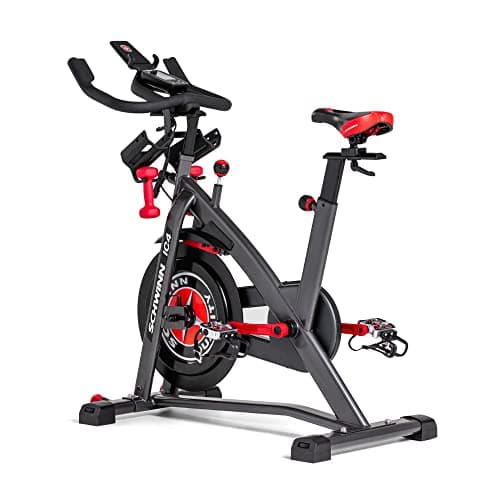
| Rank 1 | Schwinn IC4 A Peloton ride feel with no Peloton bill | 100-level magnetic | 9.0 | $795.99Amazon |
| Rank 2 | 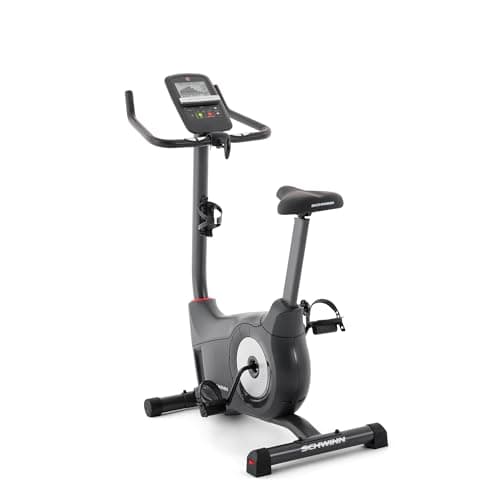 Schwinn 130 Upright Bike A compact upright from a real brand | 16-level magnetic | 7.4 | $499.99Amazon |
| Rank 3 | 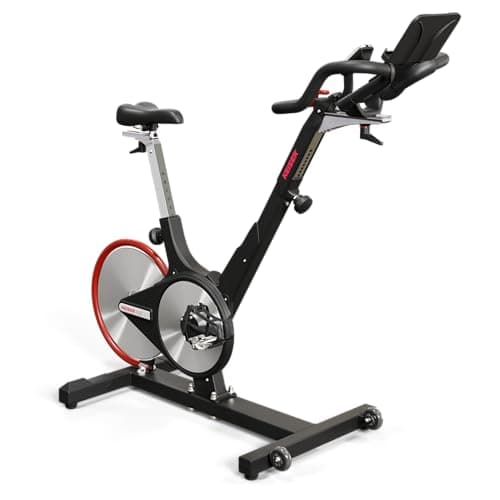 Keiser M3i The bike commercial studios actually buy | 24-gear magnetic | 8.6 | $2,985.00Amazon |
| Rank 4 | 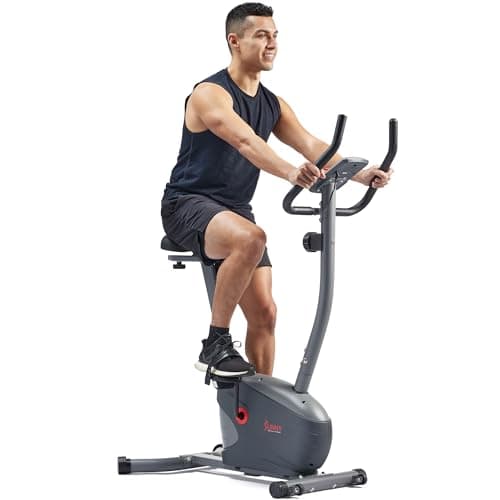 Sunny Health & Fitness Smart Upright Bike A beginner upright under $250 | Magnetic | 6.8 | $228.78Amazon |
#ad Prices come from Amazon and change. How this site is funded. Scores are our published editorial rubric — see our methodology.
Buy an upright bike if you want to ride comfortably for 30 to 60 minutes, watch something, and not think about bike fit. Buy a spin bike if you want hard, short, out-of-the-saddle efforts and you are willing to spend ten minutes setting the thing up properly. For most people shopping a first home bike, the upright is the right machine and the spin bike is the one that looks more serious in photographs.
The difference is not quality and it is not price — the two categories overlap heavily on both. It is geometry, and geometry decides what you can do on the bike and how long you will want to.
The two bikes, side by side
| Spin bike (indoor cycle) | Upright bike | |
|---|---|---|
| Riding position | Forward, weight on the bars | Near vertical, hands resting |
| Saddle | Narrow road-style wedge | Wide and padded |
| Handlebars | Long reach, multiple hand positions | Close, backswept, often adjustable |
| Flywheel | Heavy, usually front-mounted | Light, enclosed |
| Resistance feel | Continuous road-like load | Stepped levels, lighter at the top |
| Out-of-the-saddle riding | Designed for it | Not designed for it |
| Setup needed | Saddle height, fore-aft, bar height | Saddle height, sometimes fore-aft |
| Comfortable first 45 minutes | Unlikely without a cycling background | Yes, for most people |
| Typical footprint | Compact — mass sits vertically | Compact — about six square feet |
Read that table as a single sentence: the spin bike trades comfort for the ability to work hard, and the upright trades the ability to work hard for comfort. Neither trade is wrong. They are answers to different questions.
Two of each, ranked
#1 · A Peloton ride feel with no Peloton bill
#ad How we are funded · Price as of October 17, 2026
Schwinn IC4
Schwinn FitnessA 40 lb flywheel with 100 levels of magnetic resistance and open Bluetooth — it rides like the subscription bikes and connects to whichever app you choose, including none.
| Flywheel | 40 lb |
|---|---|
| Resistance | 100-level magnetic |
| Weight capacity | 330 lb |
| Console | Backlit color LCD: HR, speed, time, distance, calories, RPM |
| App support | JRNY, Peloton, Zwift via Bluetooth |
| Pedals | Dual-sided: toe cage and SPD |
| Subscription | No subscription |
Nothing is gated. JRNY is optional, and the bike's Bluetooth broadcast works with Peloton, Zwift or no app at all — every console metric is on the bike itself.
Specifications per Schwinn Fitness published specifications.
What it does well
- 100 discrete magnetic levels mean you can repeat a workout exactly — friction bikes cannot
- Broadcasts cadence and speed over Bluetooth to any app, so you are not locked to one ecosystem
- Dual-sided pedals work with trainers or cycling shoes out of the box
- 330 lb capacity is above the class norm
Where it falls short
- No screen — you supply a tablet, which the included holder expects
- Resistance is a knob, not an app-controlled servo, so classes cannot auto-adjust it
- The most expensive bike here that is not a studio machine
Our rubric
- Ride
- 9.0
- Fit
- 9.0
- Resistance
- 10.0
- Build
- 9.0
- Value
- 8.0
#2 · A compact upright from a real brand
#ad How we are funded · Price as of October 17, 2026
Schwinn 130 Upright Bike
Schwinn Fitness16 magnetic levels in a 41″ × 21″ footprint — the upright to buy when the recumbent simply will not fit.
| Resistance | 16-level magnetic |
|---|---|
| Weight capacity | 300 lb |
| Footprint | 41.3″ L × 21.4″ W × 54.5″ H |
| Machine weight | 58.4 lb |
| Console | 5.5″ segmented LCD |
| Subscription | No subscription |
Self-contained console; no plan to buy.
Specifications per Schwinn Fitness published specifications.
What it does well
- A genuinely small footprint — under two feet wide
- 58 lb means one person can move it
- Numbered magnetic resistance at an entry price
Where it falls short
- Upright seating is less comfortable than recumbent for long sessions
- Segmented LCD is basic
- Lighter frame rocks more than the recumbents under hard effort
Our rubric
- Ride
- 7.0
- Fit
- 7.0
- Resistance
- 8.0
- Build
- 7.0
- Value
- 8.0
#3 · The bike commercial studios actually buy
#ad How we are funded · Price as of October 17, 2026
Keiser M3i
KeiserThe rear-flywheel magnetic cycle that fills real studios — a different class of machine, priced accordingly, and included here as the ceiling the budget bikes are measured against.
| Resistance | 24-gear magnetic |
|---|---|
| Flywheel | Rear-mounted, out of the sweat zone |
| Drive | Self-tensioning Poly-V belt |
| Weight capacity | 350 lb |
| Rider height range | 4′10″ to 7′0″ |
| Footprint | 51″ L × 26″ W × 49″ H |
| Machine weight | 92 lb |
| Console | M Connect: rpm, watts, kcal, time, distance |
| Warranty | 3 yr all-inclusive (excl. labor), 90 days wear items |
| Subscription | No subscription |
Keiser sells no subscription. The bike broadcasts open Bluetooth data to any app you choose.
Specifications per Keiser published M3i specifications.
What it does well
- Rear flywheel keeps sweat off the moving parts — the single biggest reason studio bikes outlast home bikes
- Magnetic resistance with nothing in contact, so there is no pad to wear out
- Bluetooth power and cadence output that apps can actually read
- 92 lb and a 51″ × 26″ footprint — far easier to live with than its price suggests
Where it falls short
- Costs several times any other bike here
- No screen; you supply the device
- Keiser does not publish a flywheel mass, so you cannot spec-compare it to a 40 lb home bike
- Overkill for anyone riding three times a week
Our rubric
- Ride
- 10.0
- Fit
- 9.0
- Resistance
- 10.0
- Build
- 10.0
- Value
- 4.0
#4 · A beginner upright under $250
#ad How we are funded · Price as of October 17, 2026
Sunny Health & Fitness Smart Upright Bike
Sunny Health & FitnessA small, quiet magnetic upright aimed squarely at people starting out — enough bike to build a habit on, and no more.
| Resistance | Magnetic |
|---|---|
| Form | Upright |
| Weight capacity | Not published by manufacturer |
| Console | LCD, app-connectable |
| Subscription | Subscription optional |
SunnyFit optional and free at the base tier.
Specifications per Manufacturer figures as published on the Amazon product listing.
What it does well
- Compact and light; fits in a bedroom corner
- Magnetic resistance is quiet enough for shared walls
- Sunny parts support at a budget price
Where it falls short
- No published capacity figure
- Light frame moves under hard pedaling
- Limited resistance ceiling for strong riders
Our rubric
- Ride
- 6.0
- Fit
- 7.0
- Resistance
- 6.0
- Build
- 6.0
- Value
- 9.0
What the spin bike is genuinely better at
- Intensity. A heavy flywheel with real resistance lets you push against something, and standing up on the pedals multiplies what you can put in. An upright tops out well below that ceiling.
- Interval work. Short, hard efforts with short recoveries are what the category was built for, and the resistance range supports it.
- Class-style riding. Every studio class is written for this position and this bike. On an upright the choreography does not translate.
- Replicating outdoor cycling. If you ride a road bike and want to train indoors, this is the position your body already knows.
- Feeling like exercise. Not a specification, but it matters. Some people need the machine to feel serious to keep using it.
What the upright bike is genuinely better at
- Being used. The best cardio machine is the one you get on tomorrow, and comfort is the strongest predictor of that. The upright wins this by a wide margin and it is the only metric that compounds.
- Long steady sessions. Zone-two style riding for 45 minutes is pleasant on an upright and a grind on a narrow saddle.
- Fitting more than one person. The riding position is forgiving, so two people of different heights can share it with a quick seat change.
- Backs, necks and wrists. No weight on your hands and no forward lean means none of the three complaints that end spin-bike ownership.
- Doing something else at the same time. Upright and hands-free means you can read, work or watch a screen without the bike fighting you.
Resistance, which behaves differently on the two
Both categories use magnetic resistance at anything above the very bottom of the market, and the mechanism is the same: magnets slow the flywheel without touching it, so nothing wears. What differs is the range and the granularity.
The Schwinn IC4 offers 100 levels against a published 40 lb flywheel; the Schwinn 130 upright offers 16 levels against a lighter enclosed one. The spin bike's top end is far higher and its steps are finer, which is what makes hard interval work possible. The upright's range is adequate for steady riding and runs out if you want to push. Resistance types compared and flywheel weight explained cover the mechanics.
Fit, which is where the real difference bites
An upright bike needs the saddle at roughly the right height and tolerates being a little off. A spin bike needs saddle height, saddle fore-aft and handlebar height all set, and is unforgiving when any of the three is wrong, because you are carrying weight on your hands and pushing through a longer reach.
That also means spin bikes are harder to fit at the extremes of height. The Keiser M3i is the one machine here that publishes a rider range — 4′10″ to 7′0″ — which is why it leads both best exercise bike for short riders and best exercise bikes for tall riders. Most of the category publishes nothing at all.
Price, which is not the deciding factor
What each category costs to do properly
- Upright, under $300Magnetic resistance, a real seat, a basic LCD. Perfectly adequate. See the picks
- Upright, $300-$500Published capacity and footprint, 16 numbered levels, two-way seat adjustment. See the picks
- Spin, under $400Belt drive and magnetic resistance. The saddle is the compromise. See the picks
- Spin, $600-$1,000Heavy published flywheel, 100 levels, dual-sided pedals, real fit range. See the picks
Both categories have good machines under $400, and both have machines worth having at $800. Choosing on price rather than on position is the most common way people end up with the wrong bike.
If neither sounds right
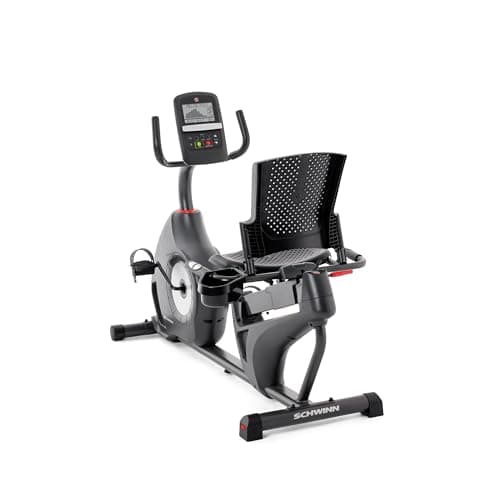
A third frame exists and it beats both for a specific reader: the recumbent. Step-through, seat on a rail, backrest, no weight on the hands and no saddle height to set at all. If you have a bad back, limited mobility or a long way to get onto a bike, start at upright vs recumbent bike instead of here.
And if you are still deciding between a bike and a treadmill rather than between two bikes, treadmill vs exercise bike is the page above this one.
Frequently asked questions
Is a spin bike better than an upright bike?
Which is better for weight loss, a spin bike or an upright bike?
Can you stand up on an upright exercise bike?
Are spin bike seats really that uncomfortable?
Which bike is better for bad knees?
Sources
Read next
Exercise Bikes
Best upright exercise bikes
Smaller than a recumbent, gentler than a spin bike, and the only one that fits in a corner.
Exercise Bikes
Best spin bikes for home
Flywheel, drive, resistance and fit — the four specs that decide how a cycle rides.
Compare
Upright vs recumbent exercise bike
Smaller and harder versus bigger and far more likely to still be used next year.
Exercise Bikes
Best gym-style upright bikes for home
What the gym bike has that a $300 upright does not, and the four home machines that close most of the gap.
Guides
Exercise bike buying guide
Format, then resistance, then fit — the three decisions in the order that matters.