Guides
Treadmill deck cushioning explained
Cushioning genuinely reduces impact against concrete. It cannot make a short deck long or a weak motor strong.
Belt & Bike earns a commission when you buy through our links, at no extra cost to you. Prices come from Amazon and change; the date beside every price is when we last verified it. Full disclosure.
Quick picks
| # | Model | Running surface | Score | Price |
|---|---|---|---|---|
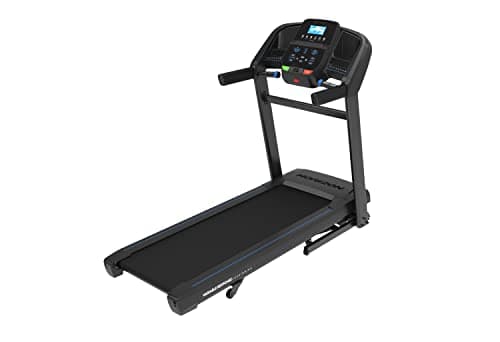
| Rank 1 | Horizon T202 The step up to a 60″ belt | 20″ × 60″ | 8.0 | $799.00Amazon |
| Rank 2 | 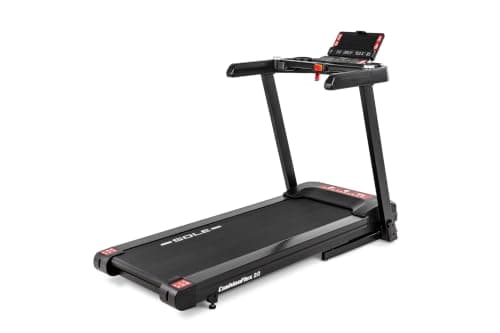 Sole F63 Running on a four-figure budget | 20″ × 60″ | 8.8 | $1,099.99Amazon |
| Rank 3 | 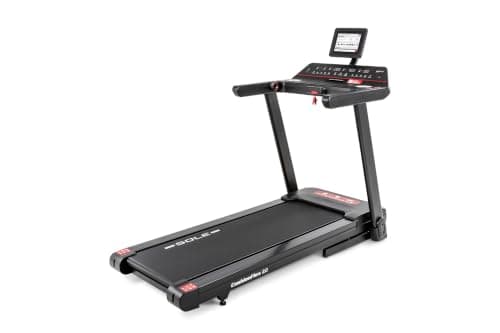 Sole F80 A 22″-wide belt without commercial-gym pricing | 22″ × 60″ | 8.8 | $1,499.99Amazon |
| Rank 4 | 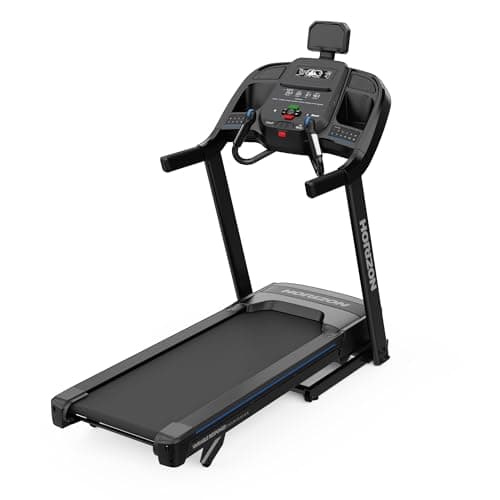 Horizon 7.0 AT Interval runners who want fast incline changes | 20″ × 60″ | 9.0 | $934.99Amazon |
#ad Prices come from Amazon and change. How this site is funded. Scores are our published editorial rubric — see our methodology.
Every treadmill listing mentions cushioning and almost none explain it. The mechanism is simple: the deck board sits on elastomer blocks or a sprung frame rather than directly on the steel, and those elements compress on footstrike to spread the impact over a longer time.
What cushioning genuinely does
- Reduces peak impact force relative to concrete or asphalt. A cushioned treadmill deck is meaningfully kinder than a pavement.
- Spreads the impact over time, which lowers the peak loading rate — the thing that correlates with impact injury.
- Reduces noise transmission into the floor, which matters in apartments.
- Makes long runs more comfortable, which is often the real-world point.
What it does not do
- Make a short deck usable. Deck length is a geometry problem, not a comfort one.
- Compensate for an undersized motor.
- Eliminate impact. Running generates impact. Cushioning reduces it.
- Prevent injury on its own. Training load, progression and footwear matter more.
Variable-zone cushioning: the design that is actually right
The better systems vary stiffness along the deck. Softer at the rear, where your foot lands, and firmer toward the front, where you push off. That is the correct way round: you want absorption at impact and a stable platform at toe-off, because a soft push-off wastes energy and feels unpleasantly spongy.
Horizon's three-zone variable-response system on the T202 is the cheapest place to get this, and it is the main reason that machine punches above its price for long runs.
Can cushioning be too soft?
Yes. A uniformly very soft deck feels like running on sand: you lose energy return at push-off, your calves work harder, and your gait subtly changes. Several runners find overly cushioned treadmills produce calf soreness that firmer decks do not. Firm-but-compliant is the target, not maximally soft.
Adjustable cushioning
Some machines let you adjust firmness. In practice people set it once and leave it, so treat it as a nice-to-have rather than a reason to choose a machine. A well-designed fixed variable-zone deck beats an adjustable uniform one.
How cushioning ages
Elastomer blocks harden over years, particularly in cold garages. A ten-year-old treadmill is firmer than it was new. The blocks are usually inexpensive and replaceable on brands with a parts channel — another reason the parts question matters. See how long do treadmills last.
Machines with notable deck cushioning
#1 · The step up to a 60″ belt
Horizon T202
Horizon Fitness2.75 CHP and a full-length 20″ × 60″ deck with three-zone cushioning — the cheapest way onto a 60-inch belt from a brand that services its machines.
| Motor | 2.75 CHP |
|---|---|
| Running surface | 20″ × 60″ |
| Incline | 0–12% |
| Top speed | 12 mph |
| Weight capacity | 325 lb |
| Cushioning | 3-Zone Variable Response |
| Assembled weight | 187 lb |
| Subscription | Subscription optional |
No required plan. Console metrics and incline work standalone.
Specifications per Horizon Fitness published specifications.
What it does well
- 60″ belt at a price most rivals reserve for 55″
- Three-zone cushioning is firmer at push-off and softer at footstrike, which is the right way round
- 187 lb assembled is light for this class — easier to get into a room
Where it falls short
- 12% maximum incline, where the better machines reach 15%
- LCD console with LED windows, not a screen
- 2.75 CHP is fine for mixed use and marginal for daily running
Our rubric
- Motor
- 7.0
- Deck
- 9.0
- Incline
- 7.0
- Build
- 8.0
- Value
- 9.0
#2 · Running on a four-figure budget
#ad How we are funded · Price as of October 5, 2026
Sole F63
Sole FitnessA 3.0 CHP motor and a full 20″ × 60″ deck at a price where most machines give you one or the other — and the console works forever with no account.
| Motor | 3.0 CHP |
|---|---|
| Running surface | 20″ × 60″ |
| Incline | 0–15% |
| Top speed | 12 mph |
| Weight capacity | 325 lb |
| Folds | Yes, hydraulic assist |
| Warranty | Lifetime frame + motor, 3 yr parts, 1 yr labor |
| Subscription | No subscription |
Nothing is gated. The SOLE+ app is free and entirely optional; incline, speed and every console metric work with the machine unplugged from the internet.
Specifications per Sole Fitness published specifications.
What it does well
- 3.0 CHP is genuine running-duty power, not a peak-horsepower marketing number
- Full 60″ belt — long enough for a 6-foot stride at speed
- Lifetime frame and motor warranty at well under the price where that usually starts
- The console is a plain LCD: every readout works with no app, no login, no fee
Where it falls short
- 253 lb assembled — a two-person move, and it does not go upstairs easily
- The 6.5″ LCD is basic next to touchscreen rivals at the same money
- 82″ × 35″ footprint unfolded is a real chunk of a spare room
Our rubric
- Motor
- 9.0
- Deck
- 9.0
- Incline
- 8.0
- Build
- 9.0
- Value
- 9.0
#3 · A 22″-wide belt without commercial-gym pricing
Sole F80
Sole Fitness3.5 CHP behind a 22″ × 60″ deck — the widest belt on this site under two thousand dollars, and the one that stops feeling narrow at pace.
| Motor | 3.5 CHP |
|---|---|
| Running surface | 22″ × 60″ |
| Incline | 0–15% |
| Top speed | 12 mph |
| Weight capacity | 350 lb |
| Unfolded footprint | 82″ L × 38″ W × 66″ H |
| Folds | Yes |
| Subscription | No subscription |
Console functions are not gated; the SOLE+ app is free.
Specifications per Sole Fitness published specifications.
What it does well
- 22″ belt width is a genuine comfort difference for anyone who drifts under fatigue
- 3.5 CHP has headroom for daily running at the top of the capacity rating
- Touchscreen console, but the machine still runs without a signed-in account
Where it falls short
- 38″ wide unfolded — measure your doorway and your room before ordering
- Among the heaviest machines here to move into position
- The price step over the F65 buys width, not power you will notice at 7 mph
Our rubric
- Motor
- 10.0
- Deck
- 10.0
- Incline
- 8.0
- Build
- 9.0
- Value
- 7.0
#4 · Interval runners who want fast incline changes
Horizon 7.0 AT
Horizon Fitness3.0 CHP, a 20″ × 60″ deck and QuickDial controls that change speed and incline in one motion — the best machine here for anyone whose workout changes every 60 seconds.
| Motor | 3.0 CHP |
|---|---|
| Running surface | 20″ × 60″ |
| Incline | 0–15% |
| Top speed | 12 mph |
| Weight capacity | 325 lb |
| Console | 7.25″ high-contrast LCD, 8 preset programs |
| Warranty | Lifetime frame + motor, 3 yr parts, 1 yr labor |
| Subscription | No subscription |
Horizon sells no subscription for this machine. The Bluetooth broadcast works with whatever third-party app you already use, and the console is fully functional with none.
Specifications per Horizon Fitness published specifications.
What it does well
- QuickDial rollers are the single best interval-training control on a sub-$1,000 treadmill
- Streams to Zwift, Peloton and Nike Run Club over Bluetooth — apps you choose, not one you are forced into
- Lifetime frame and motor cover with three years of parts
Where it falls short
- No touchscreen at a price where iFIT machines ship one
- Folding mechanism is stiffer than Sole's hydraulic assist
- Deck cushioning is firmer than the T202's three-zone system
Our rubric
- Motor
- 9.0
- Deck
- 9.0
- Incline
- 9.0
- Build
- 9.0
- Value
- 9.0
Frequently asked questions
Does treadmill cushioning actually reduce joint impact?
Is a softer treadmill deck better?
Is running on a treadmill easier on the knees than running outside?
Does treadmill cushioning wear out?
Sources
Read next
Treadmills
Best home treadmills for running
Continuous horsepower, 60-inch decks and frame mass — the three specs running actually tests.
Guides
Treadmill deck and belt size guide
The stride-length chart by height and pace, and why 60 inches is where the home market stops.
Guides
How long do treadmills last?
What fails, in what order, and the four things that genuinely change the odds.
Treadmills
Best home treadmills under $1,000
3.0 CHP, a 60-inch deck and a lifetime frame warranty — all available under four figures.
Guides
Treadmill maintenance
Four tasks, a realistic schedule, and the lubrication mistake that kills motors.