Treadmills
Best treadmills for bad knees
How you walk on it matters more than which one you buy. Here is both, in the right order — including when the honest answer is a bike.
Belt & Bike earns a commission when you buy through our links, at no extra cost to you. Prices come from Amazon and change; the date beside every price is when we last verified it. Full disclosure.
Quick picks
| # | Model | Incline | Score | Price |
|---|---|---|---|---|
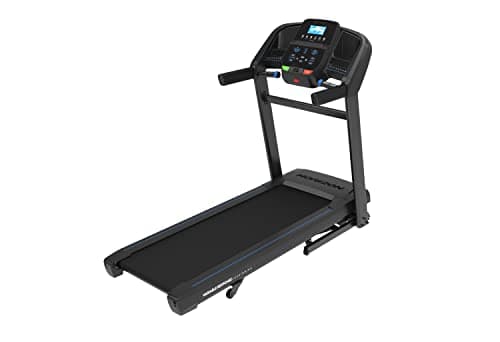
| Rank 1 | Horizon T202 The step up to a 60″ belt | 0–12% | 8.0 | $799.00Amazon |
| Rank 2 | 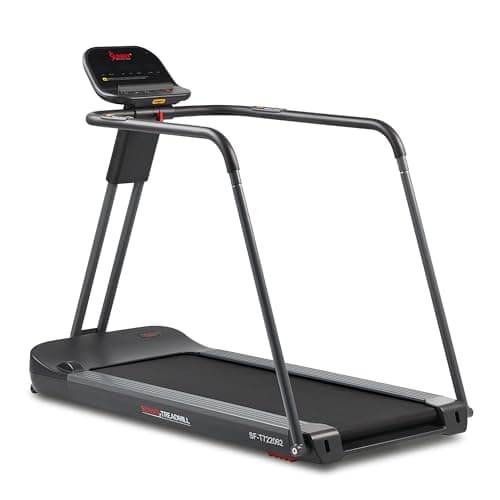 Sunny Health & Fitness Treadmill with Extended Safety Handrails Balance support and a low step-up height | Not published | 6.0 | $799.96Amazon |
| Rank 3 | 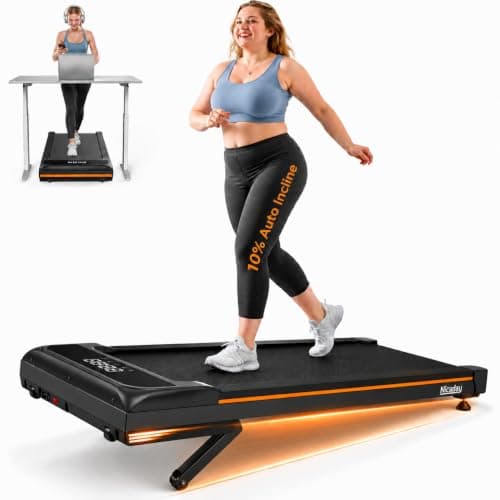 Niceday Walking Pad (10% auto incline, 400 lb) Incline plus capacity under $300 | 10% auto incline | 6.6 | $259.99Amazon |
| Rank 4 | 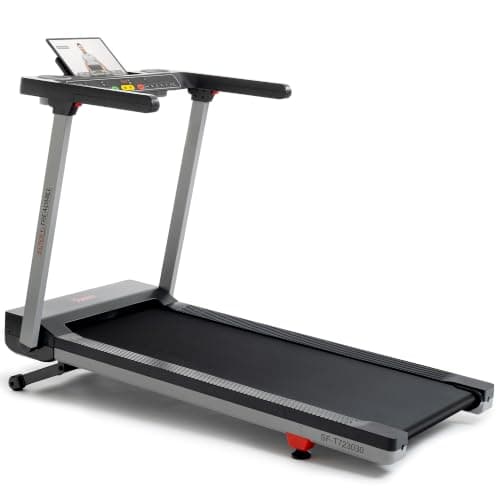 Sunny Health & Fitness Auto-Incline Treadmill (fully assembled) Arriving assembled | Automatic, powered | 6.4 | $569.86Amazon |
| Rank 5 | 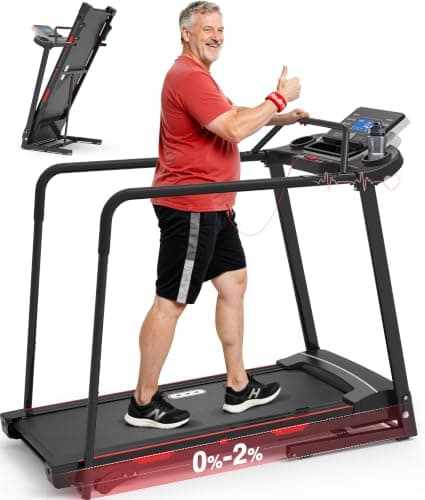 Redliro Walking Treadmill for Seniors (400 lb) Low speeds and a high capacity rating | Not published | 5.4 | $382.49Amazon |
| Rank 6 | 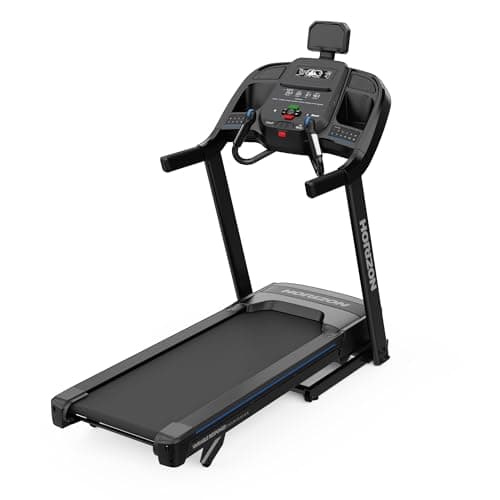 Horizon 7.0 AT Interval runners who want fast incline changes | 0–15% | 9.0 | $934.99Amazon |
#ad Prices come from Amazon and change. How this site is funded. Scores are our published editorial rubric — see our methodology.
Let us start with the thing a page funded by affiliate links is not supposed to say: if your knees are the problem, a stationary bike is the lower-risk machine. Cycling is non-impact, the joint moves through a controlled arc, and that is why rehabilitation programs lean on bikes so heavily. Best exercise bikes for bad knees is the page to read if you are open to one.
There are still good reasons to want a treadmill. Walking is weight-bearing, which cycling is not, and the federal physical activity guidelines are built around accumulated moderate activity of exactly that kind. Walking is also the activity most people will actually keep doing, and a machine you use beats a machine that is theoretically gentler and sits unused. So: if a treadmill is what you want, this page is about buying and using one in the way that puts the least load through a sore knee.
The criteria, in order of how much they matter
Almost every "best treadmill for knees" list ranks on cushioning alone. Cushioning matters, but it is third on the list, behind two things nobody puts in a spec table.
- Can you walk uphill on it? Powered incline is the single most useful feature on a treadmill for a sore knee, because it lets you raise the intensity of a session by making it steeper rather than faster. Speed is what adds impact; gradient mostly does not. A machine with 10-15% incline gives you a genuinely hard workout at a walking pace.
- Can you get on and off it safely? Step-up height and handrail length decide this. A high deck and a stub handrail turn a treadmill into something that is mildly frightening to mount, and that is how machines end up unused.
- How is the deck cushioned? Zoned decks — firmer where you push off, softer where your foot lands — are the right design. A deck that is soft everywhere absorbs the energy you are putting into the belt and makes walking feel like wading.
- Is the belt long enough for your natural stride? A short belt makes you shorten your stride, and a shortened, choppy gait is worse for a knee than a relaxed one. This is the quiet reason cheap treadmills aggravate joints.
- Is the lowest speed genuinely low? Some machines start at 1 mph, some at 0.5. If you are rehabilitating, the difference matters, and the slower floor is the one you want.
Price is not on that list. The cheapest machine here is an inclining walking pad and it scores well on criteria one, three and five — it is a legitimate answer, not a consolation prize.
Incline is the whole argument
This is the part worth understanding before you spend anything. Running at 6 mph puts repeated impact through the knee at roughly two to three times bodyweight per footstrike. Walking at 3 mph on a 10% gradient raises your heart rate into a comparable training zone with none of that impact, because both feet stay in contact with the belt and nothing is landing hard.
That is why every machine on this page is ranked first on what it can do uphill. It is also why the cheapest pick here — an inclining walking pad at a fraction of the price of a running treadmill — is on the list at all. If you take one thing away: buy incline, not speed. Treadmill incline explained covers the gradient-versus-pace trade properly, and treadmills with incline ranks the whole category on that spec.
What each tier buys a sore knee
- Under $300An inclining walking pad. Uphill walking, no handrail, nothing else. See the picks
- $300-$600Handrails and a low step-up height. The first point this is comfortable to mount. See the picks
- $600-$900A full 60″ belt and a zoned, cushioned deck. Natural stride, softer landing. See the picks
- $900+15% incline and running-duty hardware, if you intend to run again. See the picks
The ranking
Ranked on incline range, mounting safety and deck cushioning — in that order — not on top speed or motor size.
#1 · The step up to a 60″ belt
Horizon T202
Horizon Fitness2.75 CHP and a full-length 20″ × 60″ deck with three-zone cushioning — the cheapest way onto a 60-inch belt from a brand that services its machines.
| Motor | 2.75 CHP |
|---|---|
| Running surface | 20″ × 60″ |
| Incline | 0–12% |
| Top speed | 12 mph |
| Weight capacity | 325 lb |
| Cushioning | 3-Zone Variable Response |
| Assembled weight | 187 lb |
| Subscription | Subscription optional |
No required plan. Console metrics and incline work standalone.
Specifications per Horizon Fitness published specifications.
What it does well
- 60″ belt at a price most rivals reserve for 55″
- Three-zone cushioning is firmer at push-off and softer at footstrike, which is the right way round
- 187 lb assembled is light for this class — easier to get into a room
Where it falls short
- 12% maximum incline, where the better machines reach 15%
- LCD console with LED windows, not a screen
- 2.75 CHP is fine for mixed use and marginal for daily running
Our rubric
- Motor
- 7.0
- Deck
- 9.0
- Incline
- 7.0
- Build
- 8.0
- Value
- 9.0
#2 · Balance support and a low step-up height
#ad How we are funded · Price as of October 7, 2026
Sunny Health & Fitness Treadmill with Extended Safety Handrails
Sunny Health & FitnessLong handrails down both sides and a low deck — the specific combination that makes a treadmill usable for someone who needs something to hold.
| Handrails | Extended, full-length both sides |
|---|---|
| Deck height | Low step-up |
| Motor | Not published by manufacturer |
| Running surface | Not published by manufacturer |
| Weight capacity | Not published by manufacturer |
| Subscription | No subscription |
No app required for any function.
Specifications per Manufacturer figures as published on the Amazon product listing.
What it does well
- Full-length handrails are the right design for unsteady users, not a stub to grab at
- Low deck height reduces the step-up that stops people using a treadmill at all
- Powered and self-contained — no phone required
Where it falls short
- Sunny does not publish motor or deck figures on this listing
- Handrails make the footprint wider than the deck suggests
- Walking speeds only
Our rubric
- Motor
- 5.0
- Deck
- 6.0
- Incline
- 5.0
- Build
- 7.0
- Value
- 7.0
#3 · Incline plus capacity under $300
#ad How we are funded · Price as of October 7, 2026
Niceday Walking Pad (10% auto incline, 400 lb)
NicedayPowered incline and a 400 lb stated rating in a pad that still slides under a desk — the best spec-per-dollar in the walking-pad category.
| Incline | 10% auto incline |
|---|---|
| Weight capacity | 400 lb (manufacturer figure) |
| Form factor | Under-desk walking pad |
| Motor | Not published by manufacturer |
| Running surface | Not published by manufacturer |
| Subscription | Subscription optional |
Remote-operated; the app is optional.
Specifications per Manufacturer figures as published on the Amazon product listing.
What it does well
- Powered incline, which transforms what a walking pad can do for fitness
- High stated capacity for the category
- Fits under a standing desk
Where it falls short
- No handrail on the flat configuration
- No published CHP or deck dimensions
- Walking speeds only
Our rubric
- Motor
- 5.0
- Deck
- 5.0
- Incline
- 8.0
- Build
- 6.0
- Value
- 9.0
#4 · Arriving assembled
Sunny Health & Fitness Auto-Incline Treadmill (fully assembled)
Sunny Health & FitnessA powered-incline walking machine that ships fully assembled, which removes the single most common reason cheap treadmills get returned.
| Incline | Automatic, powered |
|---|---|
| Assembly | Fully assembled out of the box |
| Motor | Not published by manufacturer |
| Running surface | Not published by manufacturer |
| Weight capacity | Not published by manufacturer |
| Subscription | Subscription optional |
The console works standalone; the Sunny app is optional.
Specifications per Manufacturer figures as published on the Amazon product listing.
What it does well
- No assembly — unbox, unfold, plug in
- Powered incline at a walking-pad price
- Sunny supports its own parts, unlike most sub-$600 imports
Where it falls short
- Sunny does not publish CHP or deck size on this listing
- Walking-speed machine; not for running
- Assembled shipping means a heavy, bulky box
Our rubric
- Motor
- 5.0
- Deck
- 5.0
- Incline
- 8.0
- Build
- 6.0
- Value
- 8.0
#5 · Low speeds and a high capacity rating
Redliro Walking Treadmill for Seniors (400 lb)
RedliroBuilt deliberately slow — a walking-speed machine with a 400 lb rating and long handrails, which is the right specification for its buyer.
| Weight capacity | 400 lb (manufacturer figure) |
|---|---|
| Intended use | Walking speeds |
| Handrails | Extended |
| Motor | Not published by manufacturer |
| Running surface | Not published by manufacturer |
| Subscription | No subscription |
No subscription on any function.
Specifications per Manufacturer figures as published on the Amazon product listing.
What it does well
- Designed around walking rather than detuned from a running machine
- High capacity rating with support rails to match
- Simple console with large controls
Where it falls short
- Genuinely cannot run — the speed ceiling is low by design
- No published motor or deck figures
- Small brand with limited parts availability
Our rubric
- Motor
- 5.0
- Deck
- 5.0
- Incline
- 4.0
- Build
- 6.0
- Value
- 7.0
#6 · Interval runners who want fast incline changes
Horizon 7.0 AT
Horizon Fitness3.0 CHP, a 20″ × 60″ deck and QuickDial controls that change speed and incline in one motion — the best machine here for anyone whose workout changes every 60 seconds.
| Motor | 3.0 CHP |
|---|---|
| Running surface | 20″ × 60″ |
| Incline | 0–15% |
| Top speed | 12 mph |
| Weight capacity | 325 lb |
| Console | 7.25″ high-contrast LCD, 8 preset programs |
| Warranty | Lifetime frame + motor, 3 yr parts, 1 yr labor |
| Subscription | No subscription |
Horizon sells no subscription for this machine. The Bluetooth broadcast works with whatever third-party app you already use, and the console is fully functional with none.
Specifications per Horizon Fitness published specifications.
What it does well
- QuickDial rollers are the single best interval-training control on a sub-$1,000 treadmill
- Streams to Zwift, Peloton and Nike Run Club over Bluetooth — apps you choose, not one you are forced into
- Lifetime frame and motor cover with three years of parts
Where it falls short
- No touchscreen at a price where iFIT machines ship one
- Folding mechanism is stiffer than Sole's hydraulic assist
- Deck cushioning is firmer than the T202's three-zone system
Our rubric
- Motor
- 9.0
- Deck
- 9.0
- Incline
- 9.0
- Build
- 9.0
- Value
- 9.0
Why the Horizon T202 leads
It is the only machine here that gets all three of the top criteria right at once: 3-Zone Variable Response cushioning that is softer at footstrike and firmer at push-off, a full 20″ × 60″ belt so your stride does not have to shorten, and 12% powered incline so you can make a walk hard without making it fast. Horizon publishes a 325 lb capacity and lifetime frame and motor cover.
Its honest limits: 12% incline is two to three points short of the best machines, parts coverage is one year where the running tier gives three, and at 76 inches long it needs a real room. The full Horizon T202 review goes through all of that in detail.
Why two of these picks have blank spec cells
The Sunny extended-handrail machine and the Redliro walking treadmill are both built specifically around the mounting problem — long handrails down both sides and a low deck, which is the right design for anyone who needs something to hold. Neither manufacturer publishes continuous horsepower or deck dimensions on the listing, so our tables say "not published" rather than carrying a plausible-looking estimate.
We would rather print the gap than fill it. The trade you are making with these machines is real: you get the stability design and you give up the ability to verify the hardware. That is an acceptable trade at walking speeds and a bad one if you intend to run, which neither machine can do anyway.
How to use it without making the knee worse
The machine matters less than this section. Most treadmill knee pain comes from how the session is structured, not from which treadmill it happened on.
- Warm up at the lowest speed and zero gradient for five minutes. Every session. A cold joint under load is the most avoidable way to aggravate a knee.
- Raise the gradient before you raise the pace. Always, and one variable at a time. If 3 mph at 6% is comfortable, the next step is 3 mph at 8% — not 3.5 mph at 6%.
- Avoid walking downhill on a machine that offers decline. Eccentric loading going downhill is harder on the patellofemoral joint than going uphill, and on a treadmill there is no reason to do it.
- Do not hold the handrails to keep up. Hold them for balance, not for support. Gripping hard to stay on means the belt is faster than you should be walking, and it changes your gait for the worse.
- Shorter, more frequent sessions beat long ones. Three 20-minute walks are easier on a joint than one 60-minute walk, and the guidelines count them identically.
- Stop for sharp or localized pain. Dull fatigue afterwards is normal. Sharp pain during is a signal, not something to work through.
A mat, and the surface under it
A dense rubber equipment mat is worth buying with any of these machines. It is not a cushioning upgrade — the deck does that — but it stabilizes the frame on carpet, stops the machine walking across the floor, and takes a surprising amount of structure-borne noise out of the room if you are above someone. Treadmill and exercise bike noise in apartments covers that specifically.
When to buy the bike instead
We said it at the top and it is worth repeating with the specifics attached. Choose a bike over a treadmill if any of these is true:
- Standing for 30 minutes is itself uncomfortable. A recumbent takes your bodyweight off the joint entirely.
- You have been told to avoid impact loading. Walking is low-impact, not no-impact. Cycling is genuinely no-impact.
- Balance is a concern. A seated machine removes the fall risk, which on a moving belt is not theoretical.
- You want to do long, steady sessions. An hour is far easier to accumulate seated than standing.
Best exercise bikes for bad knees and recumbent bikes for bad knees carry the picks, and treadmill vs exercise bike settles the broader question on six axes rather than on preference. If you want the weight-bearing benefit of walking without a machine at all, walking outdoors on a flat, even surface does the same job for free — the machine's advantage is that weather, darkness and traffic stop being reasons not to.
What we are not claiming
- We have not tested these machines. Belt & Bike does not operate a test lab and does not own them. Our methodology says so plainly, and the scores on the cards are our published rubric applied to published specifications.
- No treadmill treats a knee condition. Cushioning reduces impact; it does not fix a joint. Anyone promising otherwise is selling something.
- We do not print estimated specs. Where a manufacturer does not publish continuous horsepower or deck size, our tables say so.
Frequently asked questions
Are treadmills bad for your knees?
Is incline walking better for bad knees than running?
What treadmill cushioning is best for knees?
Should I get a treadmill or an exercise bike for bad knees?
Is walking on a treadmill every day bad for your knees?
What speed should I walk on a treadmill with bad knees?
Sources
Read next
Exercise Bikes
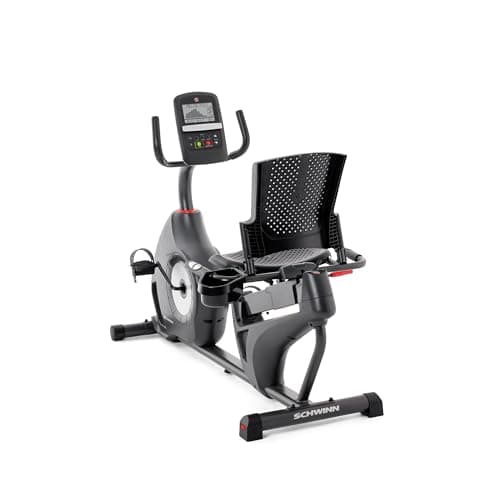
Best exercise bikes for bad knees
Seat height matters more than machine choice, and most people have theirs too low.
Treadmills
Best home treadmills with incline
Gradient range, change speed, and what each percentage actually feels like.
Treadmills
Best treadmills for seniors
Handrails, step-up height and minimum speed — and when a bike is the better answer.
Guides
Treadmill deck cushioning explained
How cushioning works, why variable-zone is the right design, and why softer is not better.
Treadmills
Horizon T202 review
The cheapest honest route to a full 60-inch belt from a serviceable brand — with a one-year parts term that tells you its tier.