Guides
Spin shoes and pedals, explained
You do not need clip-in shoes to ride a spin bike at home. Here is what they change, and how to tell which cleat your bike takes.
Belt & Bike earns a commission when you buy through our links, at no extra cost to you. Prices come from Amazon and change; the date beside every price is when we last verified it. Full disclosure.
Quick picks
| # | Model | Resistance | Score | Price |
|---|---|---|---|---|
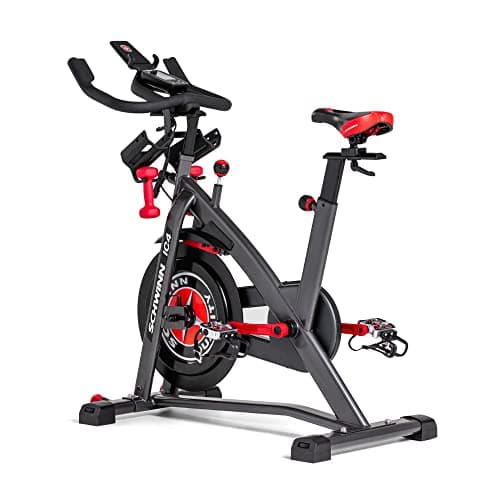
| Rank 1 | Schwinn IC4 A Peloton ride feel with no Peloton bill | 100-level magnetic | 9.0 | $795.99Amazon |
| Rank 2 | 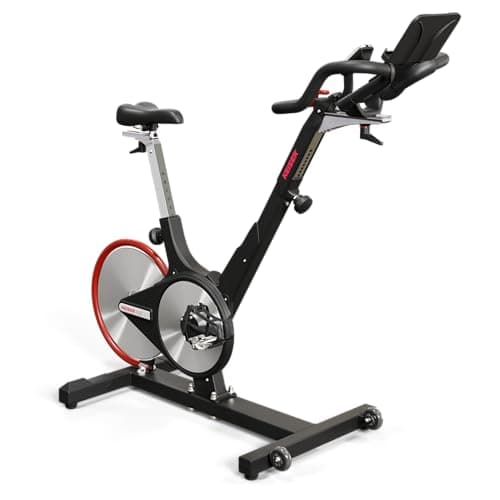 Keiser M3i The bike commercial studios actually buy | 24-gear magnetic | 8.6 | $2,985.00Amazon |
| Rank 3 | 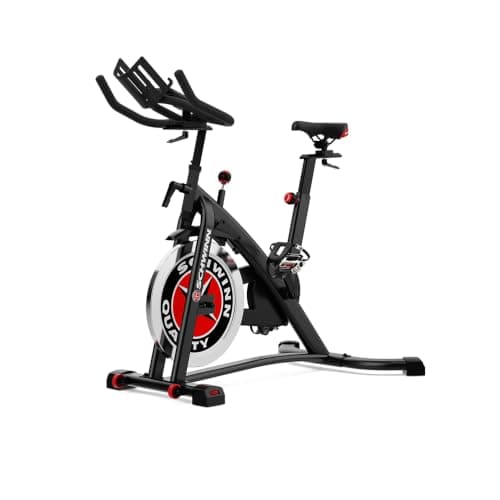 Schwinn IC3 The same flywheel, two hundred dollars cheaper | Infinite-variable friction (felt pad) | 7.8 | $599.00Amazon |
| Rank 4 | 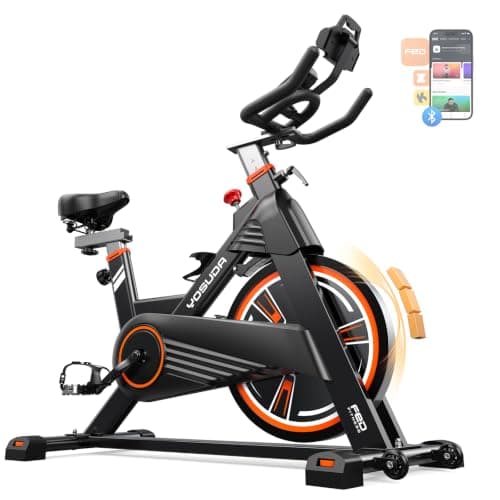 YOSUDA PRO Magnetic Exercise Bike A 350 lb rating under $350 | Magnetic | 7.8 | $329.99Amazon |
#ad Prices come from Amazon and change. How this site is funded. Scores are our published editorial rubric — see our methodology.
No, you do not need spin shoes. A pair of stiff-soled trainers in a properly tightened toe cage will get you through every workout you are likely to do at home. What clipping in adds is a firmer connection that stops your foot moving on the pedal, which matters most at high cadence and during out-of-the-saddle efforts. If you want the option without committing, buy a bike with dual-sided pedals — the Schwinn IC4 publishes exactly that: a toe cage on one face and SPD clips on the other.
The pedal question is genuinely worth understanding before you buy, because changing pedals later is easy and cheap, and buying the wrong shoes is neither.
The three systems you will meet
| System | What it is | Who it suits |
|---|---|---|
| Toe cage | A strap-and-cage over a flat pedal | Everyone starting out; no special shoes |
| SPD (two-bolt) | A small recessed metal cleat | Home riders who want to clip in and still walk |
| Delta / LOOK (three-bolt) | A large plastic cleat on the sole | Studio class riders; the Peloton standard |
The practical difference between SPD and Delta is walking. An SPD cleat is small and sits recessed into the sole, so you can walk across a room normally. A Delta cleat is large and protrudes, so you clack and slide on hard floors. For a bike in a spare bedroom, SPD is the sensible standard.
What clipping in actually changes
- Your foot stops moving. This is the real benefit. A foot that slides forward on the pedal effectively lengthens your leg mid-stroke, which is both less efficient and harder on the knee.
- Out-of-the-saddle efforts get more secure. Standing up with your feet loose in flat pedals is the one genuinely unpleasant part of riding without a connection.
- You can pull as well as push, slightly. The much-repeated claim about pulling up through the back of the stroke is real but small — most riders generate almost all their power on the downstroke regardless.
- Nothing about resistance or fitness changes. Clipping in does not make you fitter or the workout harder. It makes the connection firmer.
- You gain a thing to forget. Cycling shoes live by the bike or they do not get used. For some people this is the difference between riding and not.
Four bikes, and what each one takes
#1 · A Peloton ride feel with no Peloton bill
#ad How we are funded · Price as of October 17, 2026
Schwinn IC4
Schwinn FitnessA 40 lb flywheel with 100 levels of magnetic resistance and open Bluetooth — it rides like the subscription bikes and connects to whichever app you choose, including none.
| Flywheel | 40 lb |
|---|---|
| Resistance | 100-level magnetic |
| Weight capacity | 330 lb |
| Console | Backlit color LCD: HR, speed, time, distance, calories, RPM |
| App support | JRNY, Peloton, Zwift via Bluetooth |
| Pedals | Dual-sided: toe cage and SPD |
| Subscription | No subscription |
Nothing is gated. JRNY is optional, and the bike's Bluetooth broadcast works with Peloton, Zwift or no app at all — every console metric is on the bike itself.
Specifications per Schwinn Fitness published specifications.
What it does well
- 100 discrete magnetic levels mean you can repeat a workout exactly — friction bikes cannot
- Broadcasts cadence and speed over Bluetooth to any app, so you are not locked to one ecosystem
- Dual-sided pedals work with trainers or cycling shoes out of the box
- 330 lb capacity is above the class norm
Where it falls short
- No screen — you supply a tablet, which the included holder expects
- Resistance is a knob, not an app-controlled servo, so classes cannot auto-adjust it
- The most expensive bike here that is not a studio machine
Our rubric
- Ride
- 9.0
- Fit
- 9.0
- Resistance
- 10.0
- Build
- 9.0
- Value
- 8.0
#2 · The bike commercial studios actually buy
#ad How we are funded · Price as of October 17, 2026
Keiser M3i
KeiserThe rear-flywheel magnetic cycle that fills real studios — a different class of machine, priced accordingly, and included here as the ceiling the budget bikes are measured against.
| Resistance | 24-gear magnetic |
|---|---|
| Flywheel | Rear-mounted, out of the sweat zone |
| Drive | Self-tensioning Poly-V belt |
| Weight capacity | 350 lb |
| Rider height range | 4′10″ to 7′0″ |
| Footprint | 51″ L × 26″ W × 49″ H |
| Machine weight | 92 lb |
| Console | M Connect: rpm, watts, kcal, time, distance |
| Warranty | 3 yr all-inclusive (excl. labor), 90 days wear items |
| Subscription | No subscription |
Keiser sells no subscription. The bike broadcasts open Bluetooth data to any app you choose.
Specifications per Keiser published M3i specifications.
What it does well
- Rear flywheel keeps sweat off the moving parts — the single biggest reason studio bikes outlast home bikes
- Magnetic resistance with nothing in contact, so there is no pad to wear out
- Bluetooth power and cadence output that apps can actually read
- 92 lb and a 51″ × 26″ footprint — far easier to live with than its price suggests
Where it falls short
- Costs several times any other bike here
- No screen; you supply the device
- Keiser does not publish a flywheel mass, so you cannot spec-compare it to a 40 lb home bike
- Overkill for anyone riding three times a week
Our rubric
- Ride
- 10.0
- Fit
- 9.0
- Resistance
- 10.0
- Build
- 10.0
- Value
- 4.0
#3 · The same flywheel, two hundred dollars cheaper
Schwinn IC3
Schwinn FitnessThe IC4's 40 lb flywheel on a friction brake instead of magnets — same ride weight, less repeatability, noticeably less money.
| Flywheel | 40 lb |
|---|---|
| Resistance | Infinite-variable friction (felt pad) |
| Weight capacity | 300 lb |
| Drive | Belt |
| Console | LCD |
| Subscription | No subscription |
There is nothing to subscribe to. The console is self-contained.
Specifications per Schwinn Fitness published specifications.
What it does well
- Identical 40 lb flywheel to the IC4 — the ride momentum is the same
- Belt drive is quiet despite the friction brake
- Significantly cheaper than the IC4
Where it falls short
- Friction pads wear and need replacing; magnets never touch anything
- No numbered levels, so you cannot repeat a workout precisely
- No Bluetooth broadcast — your app cannot see your cadence
Our rubric
- Ride
- 8.0
- Fit
- 8.0
- Resistance
- 6.0
- Build
- 8.0
- Value
- 9.0
#4 · A 350 lb rating under $350
#ad How we are funded · Price as of October 17, 2026
YOSUDA PRO Magnetic Exercise Bike
YOSUDAMagnetic resistance and a 350 lb stated capacity for around a third of the IC4's price — the value benchmark the whole budget spin category is measured against.
| Resistance | Magnetic |
|---|---|
| Weight capacity | 350 lb (manufacturer figure) |
| Flywheel | Not published by manufacturer |
| Drive | Belt |
| Console | LCD with tablet holder |
| Subscription | Subscription optional |
The YOSUDA app is free and optional; the bike needs no account to work.
Specifications per Manufacturer figures as published on the Amazon product listing.
What it does well
- 350 lb stated capacity beats bikes costing twice as much
- Magnetic resistance means no pad to wear out
- Fully adjustable four-way seat and handlebars
Where it falls short
- YOSUDA does not publish a flywheel weight for this model on the listing
- Resistance is a knob with no numbered levels
- No Bluetooth cadence broadcast, so apps cannot read the bike
Our rubric
- Ride
- 7.0
- Fit
- 8.0
- Resistance
- 7.0
- Build
- 7.0
- Value
- 10.0
What the picks publish
| Bike | Pedals | Resistance |
|---|---|---|
| Schwinn IC4 | Dual-sided: toe cage and SPD | 100-level magnetic |
| Keiser M3i | Not published by manufacturer | 24-gear magnetic |
| Schwinn IC3 | Not published by manufacturer | Infinite-variable friction (felt pad) |
| YOSUDA PRO | Not published by manufacturer | Magnetic |
Three of the four do not publish a pedal specification, which is normal and less of a problem than it looks: pedals are a standard-threaded consumable and the cheapest part of any bike to change. If a bike you otherwise want ships with cage-only pedals, a pair of dual-sided replacements is a small outlay and a fifteen-minute job.
How to tell what your bike takes
- Look at the pedal, not the bike. The cleat standard is a property of the pedal, and the pedal unscrews.
- Count the bolt holes on a shoe you are considering. Two holes is SPD, three is Delta or LOOK. Some shoes drill both.
- Check the pedal thread size before buying replacements. Most indoor cycles use a 9/16″ thread; some budget bikes use 1/2″. The listing or the manual will say.
- Remember the left pedal is reverse-threaded. It tightens counter-clockwise. This catches almost everybody once.
- Tighten pedals properly and re-check after the first few rides. A loose pedal thread strips the crank, and that is a crank replacement rather than a pedal one.
Should you buy shoes at all?
Pick by what you actually do
- Steady seated riding, two or three times a weekStiff-soled trainers and a tightened toe cage. Buy nothing. See the picks
- Following classes, lots of standing effortsSPD shoes and dual-sided pedals. Worth it. See the picks
- An outdoor cyclist training indoorsWhatever cleat your road shoes already have. See the picks
- A shared bike, several ridersToe cages. Clipping in badly suits a bike other people use. See the picks
The pattern: clipping in rewards a specific kind of riding and adds friction to every other kind. If you are buying your first bike and are not sure which rider you will be, buy a bike with dual-sided pedals and decide later — that is what they are for.
Foot pain, and what it usually is
Hot spots under the ball of the foot and numb toes are the two common complaints, and neither is usually solved by shoes. The most frequent causes are a toe strap cranked too tight, a saddle too high — which forces you to point your toes to reach the bottom of the stroke — and a soft running-shoe sole compressing under load.
Check the saddle height first, every time. Exercise bike setup and seat height has the measuring method, and if the discomfort is in the saddle rather than the feet, exercise bike seat comfort covers that separately.
Frequently asked questions
Do you need special shoes for a spin bike?
What is the difference between SPD and Delta cleats?
Can you use running shoes on a spin bike?
Can you change the pedals on an exercise bike?
Why do my feet go numb on an exercise bike?
Sources
Read next
Guides
How to set up an exercise bike properly
Hip-bone height, knee over pedal axle, bars for comfort — and the three mistakes everyone makes.
Exercise Bikes
Best spin bikes for home
Flywheel, drive, resistance and fit — the four specs that decide how a cycle rides.
Guides
Why your exercise bike seat hurts
Sit bones, not padding - the three free adjustments that fix most saddle pain, and when it really is the seat.
Exercise Bikes
Best belt-drive spin bikes
Belt is the transmission, magnetic is the resistance - five belt-drive cycles ranked on published specs.
Exercise Bikes
Schwinn IC4 review
40 lb flywheel, 100 magnetic levels, open Bluetooth and no membership. The benchmark.