Guides
How much electricity does a treadmill use?
Cents an hour, not dollars. Here is the arithmetic, the one number you need from your own machine, and the running cost that actually matters.
Belt & Bike earns a commission when you buy through our links — from Amazon and from brand partner programs — at no extra cost to you. Prices change; the date beside every price is when we last verified it. Full disclosure.
Top pick
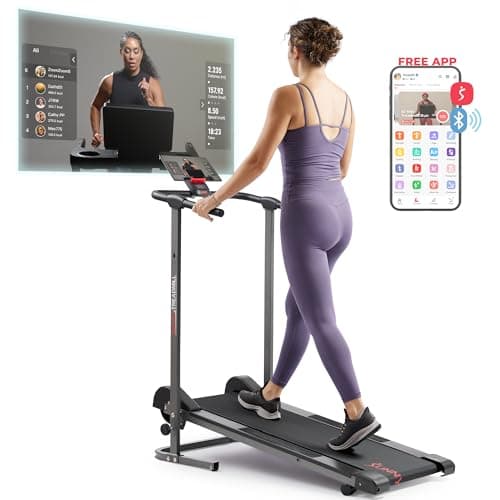
Sunny Health & Fitness Foldable Manual Treadmill
A manual walker with a fixed 14% climb and a 300 lb rating: you drive the belt with your feet, so there is no motor to burn out and nothing to plug in — and the incline does the work the motor would have done.
#ad How we are funded · Price as of November 18, 2026
Quick picks
| # | Model | Motor | Score | Price |
|---|---|---|---|---|
| Rank 1 | Sunny Health & Fitness Foldable Manual Treadmill No motor, no electricity, no fee | None — manual belt | 8.6 | $199.99Amazon |
| Rank 2 | 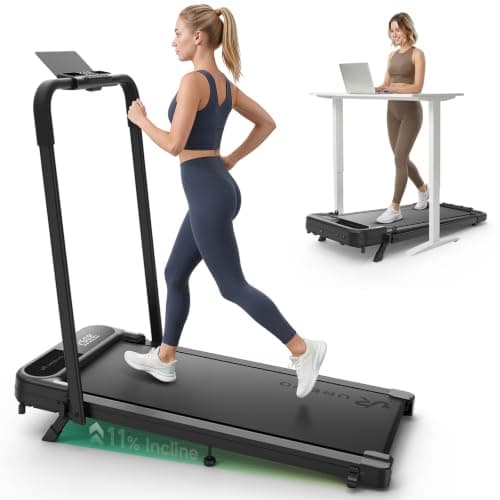 UREVO Strol 2E Pro The lightest machine here with a real safety handle | Not published | 8.7 | $219.99Amazon |
| Rank 3 | 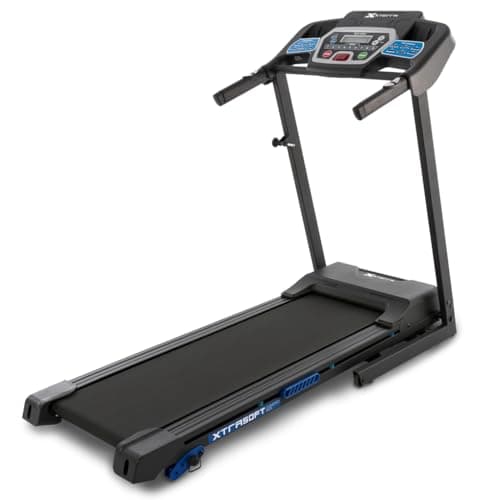 XTERRA Fitness TRX1000 A compact branded treadmill in the $400s | 2.25 HP | 8.5 | $445.99Amazon |
| Rank 4 | 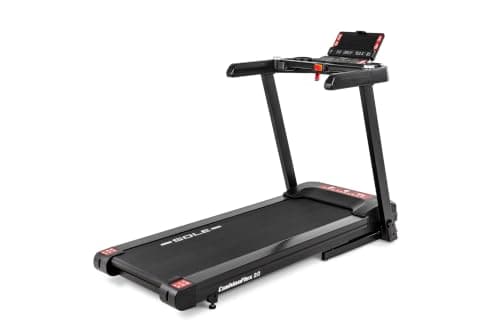 Sole F63 Running on a four-figure budget | 3.0 CHP | 9.7 | $1,099.99Amazon |
#ad Prices come from Amazon and change. How this site is funded. Scores are our published editorial rubric — see our methodology.
A home treadmill costs between about three and eighteen cents an hour to run, which works out to roughly $0.50 to $5.50 a month for most people's actual usage. That is the whole answer. If you came here worried that a treadmill would move your power bill, it will not — and the monthly fee attached to many of these machines costs between ten and eighty times more than the electricity does.
What follows is the arithmetic rather than a claim, because you can run it on your own machine and your own tariff and get a number you can trust.
The formula
Two steps, and nothing else:
- Kilowatt-hours used = the machine's watts ÷ 1,000 × hours you ran it.
- Cost = kilowatt-hours × your price per kilowatt-hour.
For the price, the US Energy Information Administration publishes the average retail price of electricity to residential customers every month. In its Electric Power Monthly release of October 23, 2026 — data through August 2026 — the residential average was 18.16 cents per kilowatthour for the month, 18.19 cents year-to-date for 2026, and 18.04 cents across the rolling twelve months ending in August. We use 18.04 cents below because a twelve-month average smooths out the summer peak, and because your own bill is the figure that actually applies.
Cost per hour, by wattage
| Machine draw | kWh per hour | Cost per hour | Cost for 20 h/month | Cost for 30 h/month |
|---|---|---|---|---|
| 150 W | 0.15 | $0.027 | $0.54 | $0.81 |
| 300 W | 0.30 | $0.054 | $1.08 | $1.62 |
| 500 W | 0.50 | $0.090 | $1.80 | $2.71 |
| 750 W | 0.75 | $0.135 | $2.71 | $4.06 |
| 1,000 W | 1.00 | $0.180 | $3.61 | $5.41 |
| 1,500 W | 1.50 | $0.271 | $5.41 | $8.12 |
Those are wattage bands, not machine ratings. We have deliberately not attached a band to a specific model, because almost no manufacturer publishes the figure you would need to do it — see the next section.
Finding your own machine's wattage, and why it is harder than it should be
The number you want is average draw while you are walking or running on it, and essentially nobody publishes that. Here is what you will actually find, in descending order of usefulness:
- The nameplate sticker. Look on the underside of the deck, the back of the motor cowl or the frame near the power inlet. It will state a rated or nominal power in watts, or a current in amps. UREVO, one of the walking-pad brands we cover, tells buyers to do exactly this, and notes that pads typically carry motors rated between 400 and 800 watts.
- Amps on the nameplate. Multiply by 120 to get watts. A machine marked 10 A is a 1,200 W machine at full load.
- A plug-in energy meter. Fifteen dollars, sits between the plug and the outlet, and tells you actual kilowatt-hours after a week of real sessions. This is the only method that gives you a true average rather than a ceiling, and it is the one we would use.
- The manual's specification page, which sometimes states input power even when the listing does not.
Why the rated figure overstates your bill
A nameplate rating is a maximum, reached at full load. Your actual draw is lower almost all of the time, for four reasons:
- You are not the design load. Rated power assumes the heaviest permitted user at the highest speed. A 160 lb person walking at 3 mph is nowhere near it.
- Walking draws far less than running. Belt speed and the work of lifting your mass both scale with pace.
- Incline draws more, but only while the deck is moving. The lift motor runs for a few seconds per adjustment, not continuously.
- A well-lubricated belt draws less than a dry one. This is the one you can control, and it is a genuine reason to keep up with treadmill maintenance beyond motor life.
The hard ceiling, if you want one: a treadmill on a 15 A, 120 V circuit cannot draw more than 1,800 W, because the breaker would trip. At that draw — which no home treadmill sustains — an hour a day for a month would cost $9.74. That is your worst case, and it is not a real case.
Four machines across the whole power range
From a treadmill that uses no electricity at all to a full-size 3.0 CHP runner.
#1 · No motor, no electricity, no fee
$259.99 23% off
#ad How we are funded · Price as of November 18, 2026
Sunny Health & Fitness Foldable Manual Treadmill
Sunny Health & FitnessA manual walker with a fixed 14% climb and a 300 lb rating: you drive the belt with your feet, so there is no motor to burn out and nothing to plug in — and the incline does the work the motor would have done.
| Motor | None — manual belt |
|---|---|
| Incline | 14% (fixed) |
| Weight capacity | 300 lb (manufacturer figure) |
| Power | No mains power required |
| Deck | Strengthened, folding |
| Display | LCD monitor with Bluetooth |
| Running surface | Not published by manufacturer |
| Subscription | No subscription |
No electronics beyond a battery LCD. Nothing to subscribe to.
Specifications per Manufacturer figures as published on the Amazon product listing.
Why we picked it
- No motor means the single most expensive failure point does not exist
- A fixed 14% incline is what makes a manual belt genuinely hard work
- A 300 lb rating on a strengthened folding deck, both published
- Uses no electricity and makes almost no noise
Good to know
You push the belt, so the first few minutes feel harder than a motorized machine at the same speed — that is the point of it, not a fault.
Our rubric
- Motor
- 7.5
- Deck
- 7.9
- Incline
- 9.3
- Build
- 8.9
- Value
- 9.3
#2 · The lightest machine here with a real safety handle
#ad How we are funded · Price as of November 18, 2026
UREVO Strol 2E Pro
UREVOForty-four pounds, a fold-up safety handle and a 12% incline for under two hundred dollars — the easiest machine on this site to move, store and therefore actually keep using.
| Form factor | Compact under-desk pad with a safety handle |
|---|---|
| Incline | 12% |
| Machine weight | 44 lb |
| Assembly | Plug and play, no assembly |
| Motor | Not published by manufacturer |
| Running surface | Not published by manufacturer |
| Subscription | Subscription optional |
Remote-controlled with no account; the UREVO app adds optional tracking.
Specifications per Manufacturer figures as published on the Amazon product listing.
Why we picked it
- 44 lb — one person can lift it, which is the difference between a machine you use and one you store
- A 12% incline at a price where most pads are flat
- The fold-up handle makes it usable for anyone who wants something to hold
- Arrives assembled and runs from the remote with no setup
Good to know
At 44 lb it is the most portable machine on this site, and the trade-off for that is a lighter frame — this is a walking machine, not a running one.
Our rubric
- Motor
- 7.9
- Deck
- 7.9
- Incline
- 9.8
- Build
- 8.4
- Value
- 9.3
#3 · A compact branded treadmill in the $400s
#ad How we are funded · Price as of November 18, 2026
XTERRA Fitness TRX1000
XTERRA FitnessA compact-series folding treadmill from a brand that services what it sells — and the only compact machine on our lists with a 50-inch belt.
| Motor | 2.25 HP |
|---|---|
| Running surface | 50″ × 16″ |
| Incline | Manual, 3 levels |
| Top speed | 10 mph |
| Folds | Yes, with lift assist |
| Warranty | Lifetime frame / 1 yr motor / 90 days deck, parts, labor |
| Weight capacity | Not published by manufacturer |
| Subscription | No subscription |
No app, no account, no fee. The console is self-contained.
Specifications per XTERRA Fitness published TRX1000 specifications.
Why we picked it
- A published 50″ belt — long enough for a full walking stride at any height
- An actual fitness brand with US parts support at a sub-$500 price
- Manual incline means one less motor to fail
Good to know
The incline is manual: you stop and move the frame to change it.
Our rubric
- Motor
- 7.9
- Deck
- 8.9
- Incline
- 7.5
- Build
- 8.9
- Value
- 9.3
#4 · Running on a four-figure budget
#ad How we are funded · Price as of November 18, 2026
Sole F63
Sole FitnessA 3.0 CHP motor and a full 20″ × 60″ deck at a price where most machines give you one or the other — and the console works forever with no account.
| Motor | 3.0 CHP |
|---|---|
| Running surface | 20″ × 60″ |
| Incline | 0–15% |
| Top speed | 12 mph |
| Weight capacity | 325 lb |
| Folds | Yes, hydraulic assist |
| Warranty | Lifetime frame + motor, 3 yr parts, 1 yr labor |
| Subscription | No subscription |
Nothing is gated. The SOLE+ app is free and entirely optional; incline, speed and every console metric work with the machine unplugged from the internet.
Specifications per Sole Fitness published specifications.
Why we picked it
- 3.0 CHP is genuine running-duty power, not a peak-horsepower marketing number
- Full 60″ belt — long enough for a 6-foot stride at speed
- Lifetime frame and motor warranty at well under the price where that usually starts
- The console is a plain LCD: every readout works with no app, no login, no fee
Good to know
At 253 lb assembled this is a two-person move, and it does not go upstairs easily.
Our rubric
- Motor
- 9.8
- Deck
- 9.8
- Incline
- 9.3
- Build
- 9.8
- Value
- 9.8
The comparison that actually matters
Electricity is not the running cost of a home treadmill. The subscription is. Connected-fitness tiers in the US commonly sit between about $13 and $44 a month, and on several popular machines the incline and speed controls, the programs or the screen itself stop working without one.
| Running cost | Per month | Per year | Over five years |
|---|---|---|---|
| Electricity, 20 h/month at 500 W | $1.80 | $21.65 | $108.24 |
| Electricity, 30 h/month at 1,000 W | $5.41 | $64.94 | $324.72 |
| A $13/month subscription | $13.00 | $156.00 | $780.00 |
| A $39/month subscription | $39.00 | $468.00 | $2,340.00 |
A $39 monthly plan costs more over five years than most of the treadmills on this site cost to buy. The electricity, across the same five years, is a rounding error. That asymmetry is the reason this site is organized around machines that work without a subscription — the full cost arithmetic is here, and the calculator will do it for your machine.
Standby draw, and whether to unplug it
A treadmill with its power switch on and the console asleep draws a small standby current — the display, the Bluetooth radio and the controller board's own logic. It is a few watts, which at 18.04 cents a kilowatthour is a few dollars a year at most.
Unplug it anyway, but for a better reason than money: a treadmill is one of the most common home sources of a serious injury to a child, and a machine that cannot start is a machine that cannot start unexpectedly. The US Consumer Product Safety Commission's standing advice is to unplug a treadmill when it is not in use and keep children away from it. The couple of dollars a year is a side benefit.
The zero-electricity option
A manual treadmill has no motor, no controller board and no plug. You drive the belt with your feet, so the running cost is exactly nothing and there is no circuit to find. The honest trade is that a flat-belt manual is hard work to start and fights you at low speed, and it is not a substitute for a motorized machine — manual and non-motorized treadmills covers the category without overselling it.
Six ways to spend less running it, in order of effect
- Lubricate the deck on schedule. A dry deck makes the motor work measurably harder, and it shortens the motor's life at the same time. The highest-return item on this list by a distance.
- Use incline instead of speed. Walking at 3 mph on a 10% grade is harder work for you and a lighter load for the motor than running at 6 mph on the flat.
- Keep the belt tension and tracking correct. A belt dragging on one side is a continuous parasitic load — see treadmill troubleshooting.
- Run it on a dedicated circuit with no extension cord. A cord drops voltage, and a motor fed low voltage draws more current to do the same work. Treadmill power and circuit requirements explains why this is a warranty condition on many machines.
- Switch it off at the machine after each session, which removes the standby draw and the safety risk together.
- Move sessions off-peak if you are on a time-of-use tariff. This is the only item here that can halve the number.
And the one that is not on the list: do not buy a smaller motor to save electricity. The difference between a walking pad and a 3.0 CHP treadmill over a year is a few dollars, while the difference in whether the machine survives your actual use is the entire purchase price. Buy the machine for the job — what you give up at each price sets out what that costs.
Frequently asked questions
How much electricity does a treadmill use per hour?
How much does it cost to run a treadmill per month?
Does a treadmill raise your electric bill?
How many watts does a treadmill use?
Is it cheaper to run a treadmill or go to the gym?
Should I unplug my treadmill when not in use?
Do manual treadmills use electricity?
Our recommendation
If you read nothing else on this page: this is the machine to buy, and this is the one to buy instead if it does not fit your space or your budget.
Buy this one
Sunny Health & Fitness Foldable Manual Treadmill
No motor, no electricity, no fee
#ad How we are funded · Price as of November 18, 2026
Or this one
UREVO Strol 2E Pro
The lightest machine here with a real safety handle
#ad How we are funded · Price as of November 18, 2026
Sources
Read next
Guides
Treadmill power and circuit requirements
Dedicated 15-20 A grounded circuit, no extension cords, and the five checks to run before delivery.
Guides
Fitness equipment subscription costs explained
The three tiers, the TCO formula, and the four questions to ask before any connected purchase.
Guides
Treadmill maintenance
Four tasks, a realistic schedule, and the lubrication mistake that kills motors.
Treadmills
Best manual and non-motorized treadmills
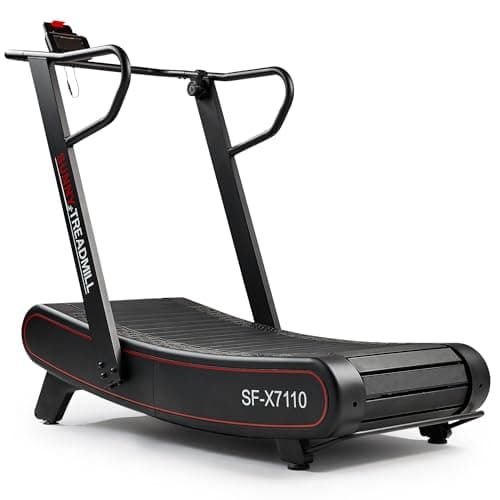
Flat manual belts and curved decks share a name and nothing else. Which is which.
Compare
Home treadmill vs gym membership
Break-even inside two years on the numbers — but the real question is behavioral.
Treadmills
Best mini treadmills
Ranked on published walking-area length - the one spec that decides this, and the one most of the category will not print.