Rowers
Best rowing machines under $500
Under five hundred dollars the resistance type is already decided for you. What is still open is whether your legs fit the rail.
Belt & Bike earns a commission when you buy through our links — from Amazon and from brand partner programs — at no extra cost to you. Prices change; the date beside every price is when we last verified it. Full disclosure.
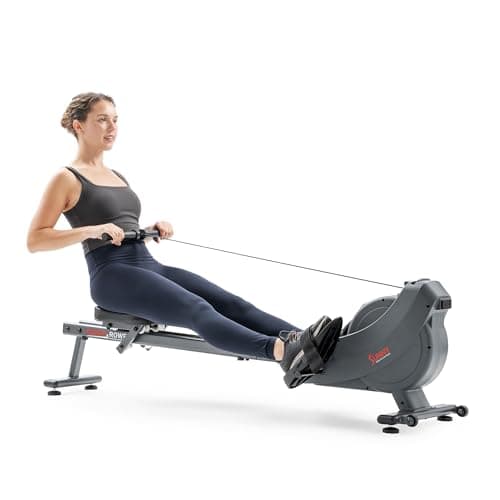
Best rower under $500
Sunny Health & Fitness Smart Dual-Rail Rower
Sixteen magnetic levels on a published 45.7-inch dual rail with a 300 lb capacity — the budget rower that tells you the one figure that decides whether your stroke fits.
#ad How we are funded · Price as of November 18, 2026
Quick picks
| # | Model | Resistance | Score | Price |
|---|---|---|---|---|
| Rank 1 | Sunny Health & Fitness Smart Dual-Rail Rower A published rail length under $200 | 16-level magnetic | 9.1 | $199.00Amazon |
| Rank 2 | 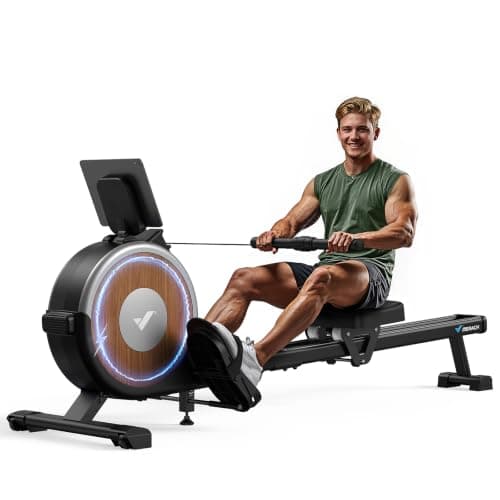 MERACH Q1S Self-Powered Rower Rowing anywhere, with no power outlet | 16-level auto electromagnetic | 9.1 | $269.99Amazon |
| Rank 3 | 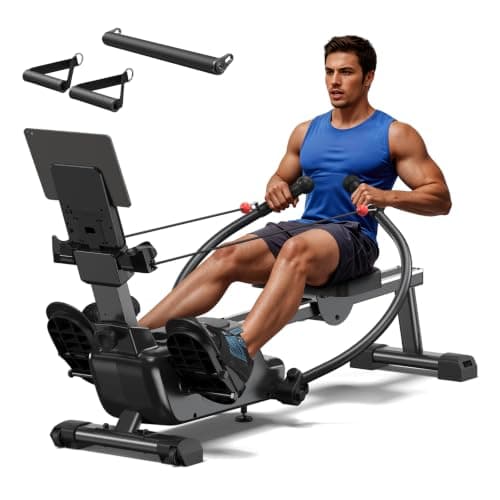 MERACH NovaRow RS3 Scull Rower Independent arms, for a stroke that matches real sculling | 16-level magnetic, up to 88 lb | 9.0 | $359.99Amazon |
| Rank 4 | 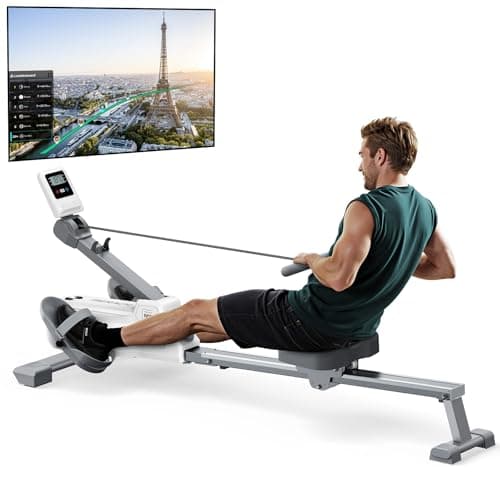 MERACH R25 Foldable Rower The cheapest rower that folds and still states a real capacity | 16-level magnetic | 8.8 | $169.99Amazon |
| Rank 5 | 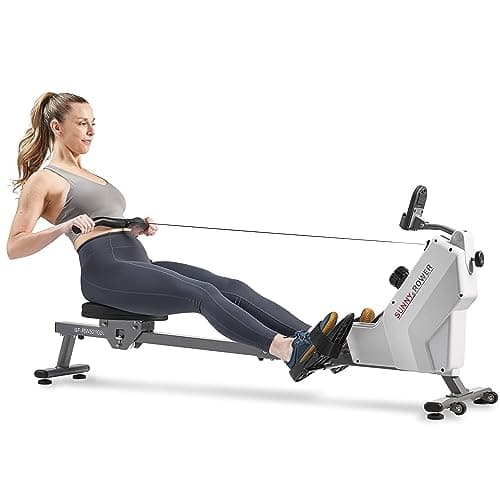 Sunny Health & Fitness Smart Compact Rower The smallest footprint from a brand that sells parts | 8-level magnetic | 8.7 | $239.99Amazon |
#ad Prices come from Amazon and change. How this site is funded. Scores are our published editorial rubric — see our methodology.
Five hundred dollars is not a compromise bracket for a rowing machine — it is most of the market. Rowers have no motor, no deck taking three times your bodyweight on every stride and no console doing anything a calculator could not, so the parts that make cheap treadmills a bad idea are simply absent. What you are buying is a rail, a seat, a handle and a resistance unit, and all four can be built adequately for this money.
What changes above this bracket is not whether the machine works. It is the resistance mechanism, the rail length and the service network behind it. Under $500 the mechanism is effectively decided for you — magnetic or electromagnetic, because air and water units cost more to build — so this page ranks on the specifications that are still genuinely open: published rail length, resistance range and stored footprint, in that order.
The four criteria, in the order they should decide your purchase
- Published rail length. This is the figure that decides whether you get a full leg drive or a cramped half-stroke, and it is the one most budget brands leave off the listing. Roughly 44 to 50 inches covers most adults; above about six foot two you want 48 inches or more. A manufacturer that publishes it has told you something real about the machine; one that does not has told you something too.
- Resistance type and whether the levels are numbered. Sixteen numbered magnetic levels means level nine next March is the same workload as level nine today, which is the difference between training and guessing. Electromagnetic units adjust automatically and need the stroke itself to generate resistance, so the first pull of a set is lighter. Resistance types explained covers the mechanisms properly.
- Stored footprint, not footprint in use. A rower is the home machine most often bought and then put away, so the number that decides whether it keeps getting used is how much floor it takes standing on its end. Published stored dimensions are rare and worth paying attention to when they appear.
- Capacity read against frame weight. A 350 lb rating on a frame that ships at well under a hundred pounds is an optimistic pairing. The useful habit is to read the two figures together rather than taking the capacity claim on its own, which is also how exercise bikes for heavy riders is ranked.
Notice what is not on that list. Flywheel mass is barely ever published in this bracket, so it cannot break a tie. Level counts are a weak signal, because a brand can divide the same resistance range into eight levels or sixteen. And a built-in screen is not a criterion at all: under $500 the console is an LCD showing stroke rate, time, distance and an estimated calorie figure, and the sensible way to get anything richer is the phone you already own.
The ranking
Ranked on published rail length first, then resistance range and stored size — the three figures still genuinely open at this price.
#1 · A published rail length under $200
#ad How we are funded · Price as of November 18, 2026
Sunny Health & Fitness Smart Dual-Rail Rower
Sunny Health & FitnessSixteen magnetic levels on a published 45.7-inch dual rail with a 300 lb capacity — the budget rower that tells you the one figure that decides whether your stroke fits.
| Resistance | 16-level magnetic |
|---|---|
| Rail length | 45.7″, dual rail |
| Weight capacity | 300 lb |
| Storage | Stores vertically |
| App | SunnyFit, free and optional |
| Subscription | Subscription optional |
The monitor is standalone; the SunnyFit app is free and optional.
Specifications per Manufacturer figures as published on the Amazon product listing.
Why we picked it
- Publishes a rail length — the figure most budget rowers leave out
- A dual rail is steadier at the catch than a single center beam
- Sixteen numbered levels and a 300 lb capacity
- An established brand with a parts channel behind it
Good to know
A 45.7″ rail fits most adults comfortably; over about six foot two, measure your leg drive against it before ordering.
Our rubric
- Stroke
- 8.9
- Rail
- 8.9
- Resistance
- 9.3
- Build
- 8.9
- Value
- 9.8
#2 · Rowing anywhere, with no power outlet
$299.99 10% off
#ad How we are funded · Price as of November 18, 2026
MERACH Q1S Self-Powered Rower
MERACHA self-powered electromagnetic flywheel: sixteen levels of automatic resistance with no cord to reach an outlet, and a published storage footprint of 1.6 by 2.1 feet stood on end.
| Resistance | 16-level auto electromagnetic |
|---|---|
| Power | Self-powered — no mains cord |
| Weight capacity | 350 lb (manufacturer figure) |
| Space in use | 1.6 × 5.7 ft |
| Space stored | 1.6 × 2.1 ft, upright |
| Assembly | About 30 minutes |
| Subscription | Subscription optional |
Rows with no account; the MERACH app and KINOMAP support are optional.
Specifications per MERACH published specifications.
Why we picked it
- Self-powered, so the only constraint on where it lives is floor space
- Resistance changes automatically through the app as well as by knob
- Publishes both an in-use and a stored footprint, which is the figure that decides a small room
- Stores upright on built-in transport wheels
Good to know
Stored upright it takes about 1.6 by 2.1 feet — check that against the wall you have in mind, because that is the number that decides whether it stays out.
Our rubric
- Stroke
- 8.9
- Rail
- 8.4
- Resistance
- 9.3
- Build
- 8.9
- Value
- 9.8
#3 · Independent arms, for a stroke that matches real sculling
#ad How we are funded · Price as of November 18, 2026
MERACH NovaRow RS3 Scull Rower
MERACHTwo independent handles through a 120° arc instead of one bar — it rows like a scull, it trains each side separately, and it publishes 88 lb of magnetic resistance to do it with.
| Resistance | 16-level magnetic, up to 88 lb |
|---|---|
| Handles | Dual, independent, 120° outward arc |
| Modes | One-arm, alternating, synchronized |
| Connectivity | Bluetooth, 1,000+ app workouts |
| Rail length | Not published by manufacturer |
| Weight capacity | Not published by manufacturer |
| Subscription | Subscription optional |
Rows with no account; app workouts are free and optional.
Specifications per MERACH published specifications.
Why we picked it
- Independent handles train each side separately — the reason to choose this over a bar rower
- A published 88 lb maximum resistance, which is a real number rather than a level count
- Three stroke modes, including single-arm work a bar rower cannot do
- Magnetic and quiet enough for an apartment
Good to know
The dual-handle action is genuinely different from a bar rower — worth it if you want the sculling motion, unnecessary if you just want steady cardio.
Our rubric
- Stroke
- 9.3
- Rail
- 8.4
- Resistance
- 9.3
- Build
- 8.9
- Value
- 8.9
#4 · The cheapest rower that folds and still states a real capacity
#ad How we are funded · Price as of November 18, 2026
MERACH R25 Foldable Rower
MERACHSixteen magnetic levels, a 350 lb capacity and a frame that folds to save a fifth of its footprint, for under two hundred dollars — the entry point to rowing that does not feel like a toy.
| Resistance | 16-level magnetic |
|---|---|
| Weight capacity | 350 lb (manufacturer figure) |
| Storage | Folds — saves 20% of its footprint |
| App | MERACH app, optional |
| Rail length | Not published by manufacturer |
| Subscription | Subscription optional |
The monitor works standalone; the MERACH app is free and optional.
Specifications per Manufacturer figures as published on the Amazon product listing.
Why we picked it
- Sixteen numbered magnetic levels, so a session is repeatable to the level
- A 350 lb stated capacity at a price where 250 lb is common
- Folds for storage rather than needing a dedicated corner
- Magnetic resistance has nothing in contact to wear out
Good to know
Rail length decides whether a tall rower gets a full stroke and MERACH does not publish it here — measure your own leg drive against the listing photos before ordering.
Our rubric
- Stroke
- 8.4
- Rail
- 7.9
- Resistance
- 9.3
- Build
- 8.4
- Value
- 9.8
#5 · The smallest footprint from a brand that sells parts
$329.99 27% off
#ad How we are funded · Price as of November 18, 2026
Sunny Health & Fitness Smart Compact Rower
Sunny Health & FitnessBuilt around the storage problem rather than the spec sheet: a compact frame that stands on end, a 285 lb capacity and eight magnetic levels, from a brand with a service channel.
| Resistance | 8-level magnetic |
|---|---|
| Weight capacity | 285 lb |
| Storage | Vertical, compact frame |
| Seat | Cushioned |
| App | SunnyFit, free and optional |
| Rail length | Not published by manufacturer |
| Subscription | Subscription optional |
The monitor is standalone; the SunnyFit app is free and optional.
Specifications per Manufacturer figures as published on the Amazon product listing.
Why we picked it
- Designed around a compact footprint and vertical storage
- An established brand that actually sells replacement parts
- Magnetic resistance, quiet enough for a shared wall
- Cushioned seat, which matters more on a rower than the spec sheet suggests
Good to know
Eight resistance levels is the trade for the footprint — fine for steady cardio, limiting if you want to push hard against the top of the range.
Our rubric
- Stroke
- 8.4
- Rail
- 7.9
- Resistance
- 8.9
- Build
- 8.9
- Value
- 9.3
Rail length, and why it is first
The rowing stroke is roughly 60% legs, and the leg drive is the part the rail has to accommodate. If the rail is short for your height, you end up starting the drive with your shins past vertical and your knees crowding your chest, which is uncomfortable, inefficient and the single most common reason a budget rower gets listed for resale three months later.
Only one machine in this ranking publishes the figure. Sunny lists 45.7 inches for the dual-rail model, which suits most adults comfortably and is tight for the tallest; everything else here is sold without the number, which is why the cards say so plainly rather than leaving a blank. If you are over about six foot two, that absence is the thing to resolve before ordering — measure your own leg drive seated on the floor, heels against a wall, and compare it against the listing photographs and any dimension the seller will confirm.
A dual rail also behaves differently from a single center beam: it is steadier at the catch, where the load spikes and a light frame flexes most. That is a build characteristic rather than a number, and at this price it is one of the few places a brand can spend money you will actually feel.
Magnetic, electromagnetic and what each one feels like
Magnetic resistance moves a magnet nearer to or further from a flywheel. Nothing touches, so nothing wears out, and the noise is almost entirely the chain or belt and the seat rolling on the rail — quiet enough for a shared wall, which makes a rower one of the few machines genuinely suited to an apartment. You set a level and it stays there regardless of how hard you pull, which is what makes a session repeatable.
Electromagnetic resistance, like the self-powered MERACH Q1S here, generates its own electricity from the stroke and adjusts automatically. The advantage is real: no mains cord at all, so the only constraint on where the machine lives is floor space. The trade-off is equally real — the resistance builds with the stroke, so the first pull of a set is lighter than the fifth, and that takes a session or two to get used to.
Neither feels like the air rower in a commercial gym. Air resistance scales continuously with how hard you pull, which is why competitive rowers train on it, and it is loud. If that specific feel is what you are after, it is worth knowing that it is not available at this price in a machine we would recommend, and air bike vs rowing machine covers the fan-driven alternative if the roar is part of the appeal.
The storage problem, which is the real one
Almost every magnetic rower here stands on its end, so the honest question is not whether your room fits a rower but whether it fits one stored. In use, these machines are roughly five and a half to six and a half feet long and under two feet wide. Upright, the better ones take a little over three square feet of floor, and MERACH publishes exactly that for the Q1S — 1.6 by 2.1 feet stood up, against 1.6 by 5.7 feet in use.
That published pair is unusual and genuinely useful, because it is the figure that decides whether the machine lives out where you will use it. Space planning and folded footprint covers how to measure the clearance you actually need, which is always more than the stored dimension suggests — you need room to tip the frame up, and about a foot of swing space behind the handle while you row. Our compact rower ranking sorts the same field on stored size first if space is the binding constraint rather than price.
Capacity claims, read against the frame
Two machines here state 350 lb and one states 300 lb, with Sunny's compact model at 285 lb — the lowest in the group and the one to check first if you are near it. These are manufacturer figures and they are static ratings, which matters less on a rower than on a treadmill because rowing has no impact phase: your weight is carried by a seat on a rail rather than landing on a deck.
What the rating really tells you is how much frame the brand thinks it has built. A folding rower is less rigid than a fixed-rail one at hard effort, which is the trade you accept for storing it in a fifth less space, and a light frame on a hard floor will move slightly under a strong drive. An equipment mat fixes the second problem for a small fraction of the machine's price and is the best accessory purchase in this bracket.
Consoles and apps at this price
Expect an LCD showing time, stroke count, stroke rate, distance and an estimated calorie figure, all computed by the machine itself and all working with no account. Treat the calorie number as a consistency measure rather than a measurement — the same figure at the same effort means you did the same work, which is all it needs to tell you.
Every brand here ships a free companion app, and on all of them it is optional rather than required: MERACH's app adds guided workouts and can drive the resistance on the Q1S, and Sunny's adds structured sessions and keeps a history the console cannot. That is the right arrangement, and it is worth confirming on any rower you consider that the console is complete without the app — the subscription cost calculator exists because machines further up the price range increasingly are not.
Technique matters more than the machine
A rower is the one home cardio machine where the specification sheet is not the main variable. The stroke is legs, then back, then arms on the drive, and the exact reverse on the recovery, and doing it in that order is the difference between a full-body session and a sore lower back. The U.S. physical activity guidelines put the target at 150 minutes of moderate activity a week, which is five half-hour sessions — a pace any machine here will sustain indefinitely, provided the stroke is right.
If you have never rowed, start at a lower resistance than feels impressive and twenty to twenty-four strokes a minute with a long controlled recovery. Rowing machine for beginners walks the four-part stroke through in order, and rowing machine for bad knees covers the catch position specifically, which is where knee and back complaints almost always originate.
When to spend more than $500
Three reasons, and only three. If you want air resistance that scales with effort — the commercial-gym feel — that starts well above this bracket. If you are taller than about six foot four, you want a rail length that budget brands rarely publish, let alone build. And if you intend to row competitively against published split times, you want the machine the sport actually standardizes on, which is not a $300 purchase.
Everyone else is better served by spending less and buying a mat, because the determining factor in whether a rower is worth owning is how often it gets used. If you are still deciding between formats rather than models, exercise bike vs rowing machine and treadmill vs rowing machine work the comparison through on the specifications rather than on calorie claims, and home cardio under $500 ranks every machine type in this price bracket against each other.
One comparison runs underneath every page in this category whether it is named or not, and it is worth making explicit. Concept2 alternatives sets these same machines against Concept2's own published RowErg specifications — the 54-inch monorail, the 500 lb tested capacity, the comparable PM5 monitor — and is honest about which of those things cannot be bought for less at any price.
Frequently asked questions
Are rowing machines under $500 any good?
What is the most important spec on a budget rowing machine?
Magnetic or air resistance for a home rower?
How much space does a rowing machine need?
Do cheap rowing machines need a subscription?
Is a folding rower worth it?
Our recommendation
If you read nothing else on this page: this is the machine to buy, and this is the one to buy instead if it does not fit your space or your budget.
Buy this one
Sunny Health & Fitness Smart Dual-Rail Rower
A published rail length under $200
#ad How we are funded · Price as of November 18, 2026
Or this one
MERACH Q1S Self-Powered Rower
Rowing anywhere, with no power outlet
#ad How we are funded · Price as of November 18, 2026
Brands: want your product tested? For Brands.
Sources
Read next
Rowers
Concept2 alternatives: what gets closest, and what you give up
What the RowErg's price actually buys, which parts of it are not purchasable for less, and the five budget rowers that come closest on the rest.
Rowers
Best budget rowing machines for small spaces
Compact rowers ranked on stored footprint and rail length rather than level counts, with the figures each brand publishes and the ones it does not.
Rowers
Best rowing machine for beginners
The four-part stroke in order, then the three specs a first rower should be bought on — rail length before anything else.
Rowers
Best rowing machine for bad knees
Rowing is non-impact but not low-flexion — when a rower helps a sore knee, when a recumbent is the better buy, and what to look for.
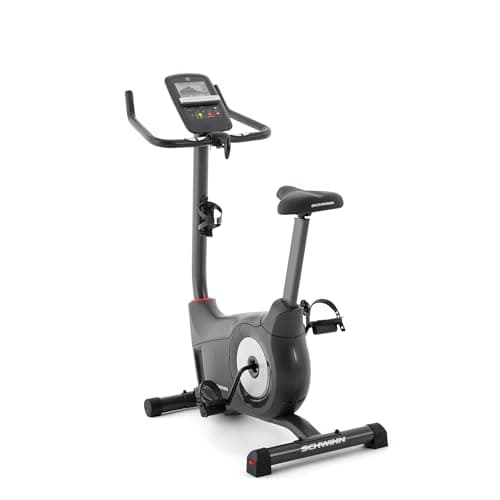
By Price
Best home cardio under $500
At $500 a bike reaches most of its category's ceiling and a treadmill reaches a quarter of its own.
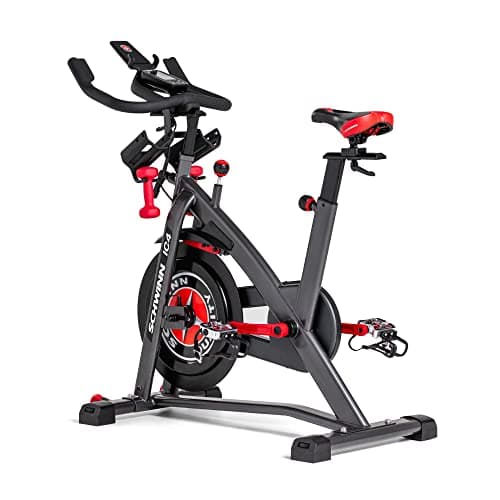
Compare
Exercise bike vs rowing machine
More muscle recruited, at the price of a technique most people never learn.
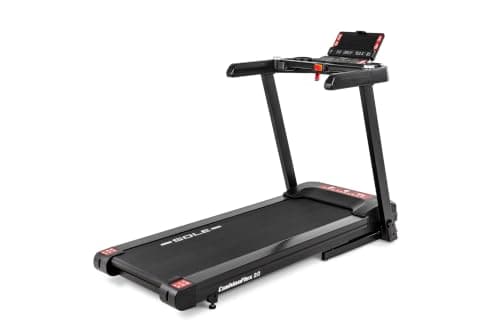
Compare
Treadmill vs rowing machine
Impact, muscle recruited, footprint and technique — the four differences that decide it, with ranked picks on both sides.