Exercise Bikes
Best exercise bikes for arthritis
Three joints decide this machine, and only one of them is the knee.
Belt & Bike earns a commission when you buy through our links — from Amazon and from brand partner programs — at no extra cost to you. Prices change; the date beside every price is when we last verified it. Full disclosure.
Best bikes for arthritis
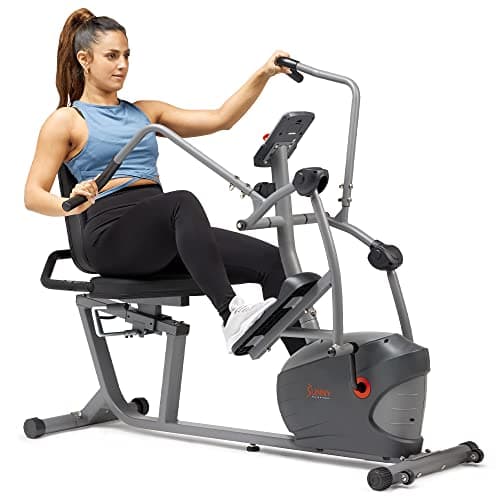
Sunny Health & Fitness Smart Recumbent Cross Trainer
A recumbent with moving arm levers — the closest thing to a full-body cardio machine you can use sitting down.
#ad How we are funded · Price as of November 18, 2026
Quick picks
| # | Model | Frame | Score | Price |
|---|---|---|---|---|
| Rank 1 | Sunny Health & Fitness Smart Recumbent Cross Trainer Seated legs-and-arms motion together | Step-through recumbent | 9.1 | $449.99Amazon |
| Rank 2 | 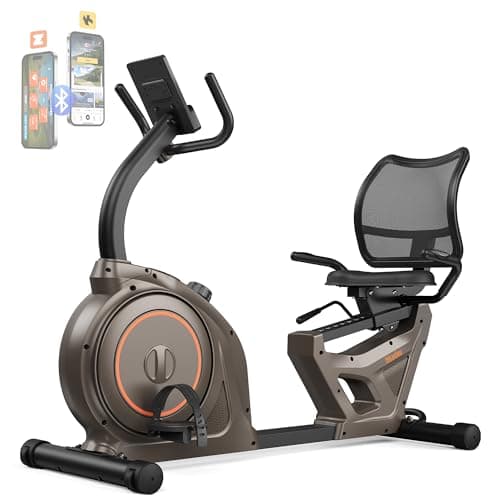 Niceday Recumbent Exercise Bike A well-padded recumbent with app training | Step-through recumbent | 9.1 | $399.99Amazon |
| Rank 3 | 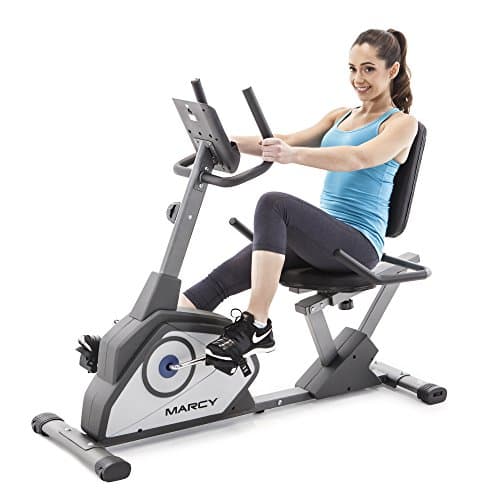 Marcy Magnetic Recumbent NS-40502R Eight simple levels and nothing to learn | Step-through recumbent | 8.7 | $259.99Amazon |
| Rank 4 | 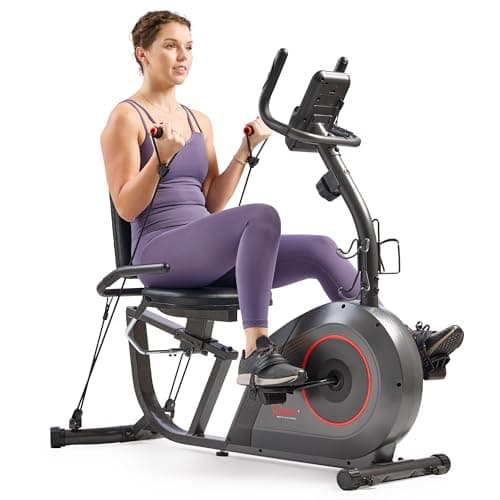 Sunny Health & Fitness Smart Recumbent Bike with Resistance Bands Adding upper-body work to a seated session | Step-through recumbent | 9.1 | $369.99Amazon |
| Rank 5 | 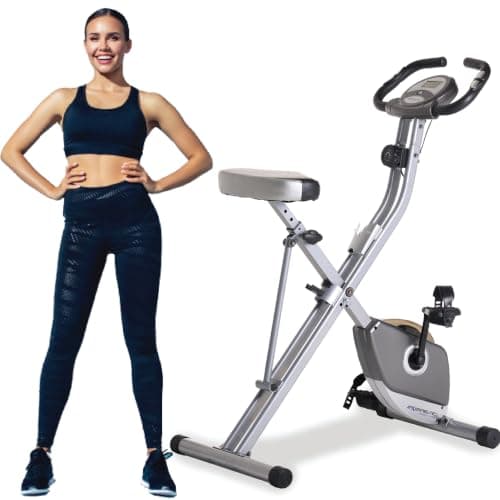 Exerpeutic Foldable Exercise Bike A folding bike with a regular-size seat | Folding upright | 8.7 | $219.00Amazon |
| Rank 6 | 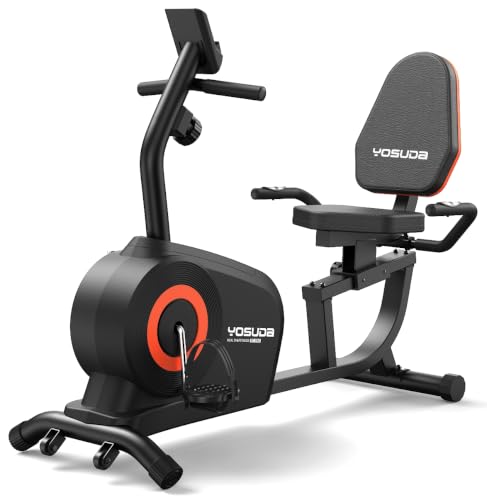 YOSUDA Recumbent Exercise Bike The cheapest recumbent we would recommend | Step-through recumbent | 8.7 | $179.99Amazon |
#ad Prices come from Amazon and change. How this site is funded. Scores are our published editorial rubric — see our methodology.
Most "best bike for arthritis" advice is knee advice with the word changed. Arthritis is not usually confined to one joint, and the three that decide whether you will use a home bike are the hip you have to swing over the frame, the hands you change the resistance with, and the knee that bends under load — in that order, because the first two decide whether you get on the machine at all.
Why cycling, specifically
Three reasons, and they are different from the reasons cycling suits a bad knee. It is non-impact, so there is no loading spike at footstrike. It is cyclical through a fixed arc, which means the joint gets repeated, predictable compression and decompression — the mechanical stimulus cartilage depends on. And it is continuously adjustable downward, so on a stiff morning you can do fifteen easy minutes instead of nothing, which is the difference that actually accumulates.
US physical activity guidance for adults with arthritis is the same 150 minutes a week of moderate activity as for everyone else, reached in whatever pieces you can manage, plus strengthening work twice a week. The guidance that is specific to arthritis is about *how* you get there: start lower than you think, build duration before load, and expect the first two weeks to feel like warming up rather than training.
The three joints, and what each one asks of the machine
The hip: can you get on it?
This is the question that returns the most bikes, and almost nobody asks it before ordering. An upright or spin bike requires you to lift a leg over a top tube and find a pedal while balancing on the other leg. With an arthritic hip that movement is the hardest thing in the session, and it comes before you have warmed up.
- A step-through recumbent frame has no bar to cross. You sit down into it the way you sit into a chair, then put your feet on the pedals in front of you.
- A folding upright with a low, open frame is the middle ground: less to climb than a spin bike, more than a recumbent.
- A spin bike is the worst case — high frame, forward lean, and a saddle you mount rather than sit into.
- Check the seat's own height off the floor too. Getting *out* of a recumbent means standing up from a low seat, which is its own deep-knee-and-hip movement.
The hands: can you change the resistance?
The joint most overlooked in bike recommendations. Arthritis in the hands, wrists and thumbs is extremely common, and it collides with exercise bikes in three specific places:
- The resistance control. A friction bike uses a twist knob that needs a sustained grip-and-rotate — exactly the movement an arthritic thumb base dislikes. A magnetic bike with console buttons needs one fingertip.
- The handlebar diameter. A thin, hard bar forces a tight grip. A thick, padded bar or a recumbent's side handles let the hand rest open.
- The seat adjustment. Most bikes adjust with a pull-pin or a twist collar. If you cannot work it, you will not re-set the fit when someone else uses the bike — and wrong fit is what hurts knees.
This is the strongest argument in this whole page for magnetic resistance over friction, and it has nothing to do with ride feel. Resistance types, explained covers the mechanical difference; the arthritis-specific point is that one of them asks your hands for a strong twisting grip and the other does not.
The knee: how far does it bend under load?
Covered in depth on exercise bikes for bad knees and recumbent bikes for bad knees, and the short version holds here: a recumbent's forward pedal path uses a smaller flexion range under less load than an upright's pedal path below you, and seat distance set too close is the most common self-inflicted cause of pain. Set the seat so the leg is almost straight, never locked, at the furthest pedal position.
The criterion nobody prints: how easy is level one?
Every magnetic bike advertises its number of levels. Almost none publish what level one feels like, and for an arthritic rider that is the single most important number on the machine. A bike whose easiest setting is already a moderate effort has no useful bottom end, and the bottom end is where arthritis rehabilitation lives.
We cannot measure it from a spec sheet, so we do not pretend to. What we can do is rank on the two proxies that correlate with it: more levels across the same resistance span means finer steps and a lower floor, and a heavier flywheel smooths the dead spot at the top of the pedal stroke so that a slow cadence does not become a series of lurches. Flywheel weight, explained covers the second one.
How we ranked these
- Step-through access, because it decides whether the machine gets used on a bad day.
- Magnetic resistance with console or lever control, not a twist knob, for the hands.
- Seat and backrest comfort, because an arthritic rider sits for longer at lower intensity than a fit one, and a hard saddle ends sessions early.
- Fine, repeatable resistance steps with numbered levels you can return to exactly.
- Nothing that requires an app or an account to work. Pairing a phone is one more fine-motor task between you and a twenty-minute ride.
The machines, on their published figures
| Bike | Frame | Resistance | Notable for |
|---|---|---|---|
| Sunny recumbent cross trainer | Step-through recumbent | Magnetic | Moving arm levers — seated upper-body range of motion |
| Niceday recumbent | Step-through recumbent | Magnetic | Among the better-padded seats in the budget class |
| Marcy NS-40502R | Step-through recumbent | 8-level magnetic | Numbered levels, no app anywhere near it |
| Sunny recumbent with bands | Step-through recumbent | Magnetic | Band anchors for seated range-of-motion work |
| Exerpeutic foldable | Folding upright | Magnetic | A full-size seat rather than a wedge |
| YOSUDA recumbent | Step-through recumbent | Magnetic | The cheapest step-through frame we would recommend |
The ranking
#1 · Seated legs-and-arms motion together
#ad How we are funded · Price as of November 18, 2026
Sunny Health & Fitness Smart Recumbent Cross Trainer
Sunny Health & FitnessA recumbent with moving arm levers — the closest thing to a full-body cardio machine you can use sitting down.
| Resistance | Magnetic |
|---|---|
| Motion | Seated pedals plus moving arm levers |
| Frame | Step-through recumbent |
| Weight capacity | Not published by manufacturer |
| Subscription | Subscription optional |
No required plan.
Specifications per Manufacturer figures as published on the Amazon product listing.
Why we picked it
- Arm levers recruit the upper body without standing
- Low-impact and fully supported
- Magnetic resistance
Good to know
The arm motion adds width to the footprint.
Our rubric
- Ride
- 9.3
- Fit
- 9.3
- Resistance
- 8.9
- Build
- 8.9
- Value
- 9.3
#2 · A well-padded recumbent with app training
#ad How we are funded · Price as of November 18, 2026
Niceday Recumbent Exercise Bike
NicedayA comfortable, quiet recumbent with optional app workouts — strong on the two things that actually get used: seat and silence.
| Resistance | Magnetic |
|---|---|
| Frame | Step-through recumbent |
| Weight capacity | Not published by manufacturer |
| Console | LCD with app training |
| Subscription | Subscription optional |
Free optional app; nothing gated.
Specifications per Manufacturer figures as published on the Amazon product listing.
Why we picked it
- Among the better-padded seats in the budget recumbent class
- Very quiet magnetic drive
- App is free and optional
Good to know
A long footprint — measure the wall you plan to put it against.
Our rubric
- Ride
- 8.9
- Fit
- 9.3
- Resistance
- 8.9
- Build
- 8.9
- Value
- 9.3
#3 · Eight simple levels and nothing to learn
#ad How we are funded · Price as of November 18, 2026
Marcy Magnetic Recumbent NS-40502R
MarcyEight numbered magnetic levels, a step-through frame and no app anywhere near it — a deliberately simple recumbent.
| Resistance | 8-level magnetic |
|---|---|
| Frame | Step-through recumbent |
| Weight capacity | Not published by manufacturer |
| Console | Basic LCD |
| Subscription | No subscription |
Nothing connected. Nothing to subscribe to.
Specifications per Manufacturer figures as published on the Amazon product listing.
Why we picked it
- Numbered levels, so sessions repeat exactly
- No app, no pairing, no account — it just works
- Established budget brand
Good to know
Eight levels is a narrow range for a fit rider.
Our rubric
- Ride
- 8.4
- Fit
- 8.9
- Resistance
- 8.4
- Build
- 8.4
- Value
- 9.3
#4 · Adding upper-body work to a seated session
$459.99 20% off
#ad How we are funded · Price as of November 18, 2026
Sunny Health & Fitness Smart Recumbent Bike with Resistance Bands
Sunny Health & FitnessA magnetic recumbent with resistance-band anchors, which is a genuinely sensible way to get arms into a seated workout.
| Resistance | Magnetic |
|---|---|
| Extras | Integrated resistance-band anchors |
| Frame | Step-through recumbent |
| Weight capacity | Not published by manufacturer |
| Subscription | Subscription optional |
SunnyFit optional; the console is self-sufficient.
Specifications per Manufacturer figures as published on the Amazon product listing.
Why we picked it
- Bands turn a legs-only machine into a full-body session
- Magnetic resistance, quiet operation
- Sunny parts support
Good to know
The bands are a useful extra rather than a strength-training system.
Our rubric
- Ride
- 8.9
- Fit
- 9.3
- Resistance
- 8.9
- Build
- 8.9
- Value
- 9.3
#5 · A folding bike with a regular-size seat
#ad How we are funded · Price as of November 18, 2026
Exerpeutic Foldable Exercise Bike
ExerpeuticA folding upright that keeps a full-size seat instead of the usual hard wedge — the detail that decides whether you keep using it.
| Frame | Folding upright |
|---|---|
| Seat | Full-size padded |
| Resistance | Magnetic |
| Weight capacity | Not published by manufacturer |
| Subscription | No subscription |
Mechanical with a battery LCD.
Specifications per Manufacturer figures as published on the Amazon product listing.
Why we picked it
- A seat you can actually sit on for 40 minutes
- Folds to a narrow upright profile
- Long-running model with easy spares
Good to know
A limited resistance ceiling and a minimal console — this is a steady-pedaling bike.
Our rubric
- Ride
- 8.4
- Fit
- 8.9
- Resistance
- 8.4
- Build
- 8.4
- Value
- 9.3
#6 · The cheapest recumbent we would recommend
#ad How we are funded · Price as of November 18, 2026
YOSUDA Recumbent Exercise Bike
YOSUDAA magnetic recumbent under $200 with a step-through frame — thin on published specs, but the geometry and resistance type are right.
| Resistance | Magnetic |
|---|---|
| Frame | Step-through recumbent |
| Weight capacity | Not published by manufacturer |
| Console | LCD |
| Subscription | Subscription optional |
Free optional app; nothing gated.
Specifications per Manufacturer figures as published on the Amazon product listing.
Why we picked it
- Magnetic resistance at a price where friction is normal
- Low step-through entry
- Light enough to move alone
Good to know
A light frame that flexes under hard effort — best for steady seated riding.
Our rubric
- Ride
- 8.4
- Fit
- 8.9
- Resistance
- 8.4
- Build
- 7.9
- Value
- 9.8
Range of motion is half the point, and a bike only gives you half of it
Arthritis exercise programs are not only cardio. Range-of-motion work — moving a joint deliberately through its available arc, without load — is a standing component, and it is the part a bike cannot do for your shoulders, elbows, wrists and spine. The pedals handle hips, knees and ankles and nothing above the waist.
That is the reason the two Sunny machines rank where they do. A recumbent with moving arm levers puts shoulders and elbows through a supported arc while you ride, and a recumbent with band anchors lets you add light pulling and pressing between intervals. Neither is strength training. Both turn a legs-only machine into something that touches the joints a bike otherwise ignores, without asking you to stand up.
Morning stiffness changes how you use the machine
If your joints are stiffest in the first hour of the day, the standard advice to "warm up for five minutes" is wrong by an order of magnitude. A useful pattern, and one worth checking against your own clinician:
- Ride at the lowest resistance for ten to fifteen minutes before deciding whether this is a training session or a mobility session. Some days the answer is mobility, and that still counts.
- Keep cadence high and resistance low. Spinning easily at 70 to 85 rpm puts far less peak force through a joint than grinding slowly against heavy resistance.
- Split the session. Two fifteen-minute rides are easier on a stiff joint than one thirty-minute ride, and the weekly total is identical.
- Ride on the bad days, shorter. Consistency is what reduces stiffness over weeks; a skipped day is harder to restart than a short one.
- Stop for sharp or localized pain. Dull, diffuse fatigue is the signal you want. A sharp pain in one spot is not something to push through.
What to look for on the listing, in order
- Step-through frame stated explicitly, with a photo that shows no top tube.
- Magnetic resistance with the levels changed on the console, not by a knob on the frame.
- A seat rail or slider with many positions, not three holes. Coarse adjustment means you can get near correct fit but never on it.
- A backrest that supports the lower back, so you are not bracing with your legs.
- Pedal straps you can work one-handed, or none at all — a strap you cannot adjust is worse than no strap.
- No mandatory app. Everything on this list works unsubscribed; see bikes that work with no subscription.
Where a treadmill would be better, and where it would not
Walking is weight-bearing, which has real benefits for bone density and balance that a bike does not deliver, and most programs reintroduce it as tolerance improves. The trade is impact: every footstrike loads the joint, and on a hip or knee in a flare that is the thing you are avoiding. If you would rather walk, treadmills for bad knees leads on incline rather than speed and exercise bike vs walking sets the two side by side honestly.
The practical answer for most people with arthritis in more than one joint is both: a bike for the days a joint is angry, walking for the days it is not. If the budget only stretches to one machine, the bike is the one you can still use on a bad morning.
Frequently asked questions
Is an exercise bike good for arthritis?
Recumbent or upright bike for arthritis?
Does cycling help arthritic knees and hips?
What resistance should I use with arthritis?
What if I have arthritis in my hands?
How much should I ride if I have arthritis?
Our recommendation
If you read nothing else on this page: this is the machine to buy, and this is the one to buy instead if it does not fit your space or your budget.
Buy this one
Sunny Health & Fitness Smart Recumbent Cross Trainer
Seated legs-and-arms motion together
#ad How we are funded · Price as of November 18, 2026
Or this one
Niceday Recumbent Exercise Bike
A well-padded recumbent with app training
#ad How we are funded · Price as of November 18, 2026
Brands: want your product tested? For Brands.
Sources
- American Academy of Orthopaedic Surgeons — exercise and joint health resources
- Johns Hopkins Arthritis Center — role of exercise in arthritis management
- American College of Sports Medicine — physical activity guidelines
- U.S. Department of Health and Human Services — Physical Activity Guidelines for Americans
Read next
Exercise Bikes
Best exercise bikes for bad knees
Seat height matters more than machine choice, and most people have theirs too low.
Exercise Bikes
Best recumbent bikes for bad knees
The geometry that makes recumbents gentler, and the seat-rail setup that makes it true.
Exercise Bikes
Best exercise bikes for seniors
A bike is a chair your legs move — which is why it is the default for an older rider.
Guides
Recumbent bike buying guide
Seat rail, step-over height and footprint — the three specs that decide a recumbent, in order.
Guides
Exercise bike resistance types explained
Magnetic, friction and air — three mechanisms and three completely different ownership experiences.
Compare
Exercise bike vs walking
Walking is free and loads bone; a bike buys controllability and weather independence. Do both.