Exercise Bikes
Schwinn 130 upright bike review
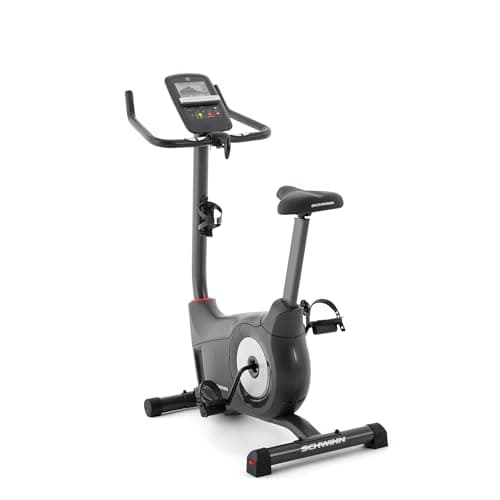
The cheapest bike Schwinn makes, and the only one on this site whose main specification is how little floor it needs.
Belt & Bike earns a commission when you buy through our links — from Amazon and from brand partner programs — at no extra cost to you. Prices change; the date beside every price is when we last verified it. Full disclosure.
Top pick
Schwinn 130 Upright Bike
16 magnetic levels in a 41″ × 21″ footprint — the upright to buy when the recumbent simply will not fit.
#ad How we are funded · Price as of November 18, 2026
Quick picks
| # | Model | Resistance | Score | Price |
|---|---|---|---|---|
| Rank 1 | Schwinn 130 Upright Bike A compact upright from a real brand | 16-level magnetic | 9.1 | $399.99Amazon |
#ad Prices come from Amazon and change. How this site is funded. Scores are our published editorial rubric — see our methodology.
Schwinn calls the 130 its most affordable upright bike, which is accurate and also the least interesting thing about it. The specification that decides whether you should buy this bike is 21.4 inches. That is how wide it is. A Schwinn 230 recumbent is 27.7 inches wide and 64 inches long; the 130 is 41.3 inches long. In floor-area terms the upright takes a little over a third of the recumbent's footprint, and it is the cheapest machine on this site that will fit between a bed and a wall without a tape-measure argument.
Everything below is Schwinn's own published specification, read off the manufacturer's product page on 4 November 2026 and cited at the foot of this review, with the live Amazon price on the card. Our methodology sets out exactly how a published specification becomes a score.
The published specification
Schwinn publishes 16 magnetic resistance levels, 13 workout programs, a streamlined LCD console, assembled dimensions of 41.3″ L × 21.4″ W × 54.5″ H (104.9 × 54.4 × 138.4 cm), an assembled weight of 58.4 lb (26.5 kg), a 300 lb (136 kg) maximum user weight, a minimum ceiling height of user height plus 17.9″, a padded contoured seat, oversized pedals with toe straps, ergonomically positioned padded handlebars, partial FTMS Bluetooth named for Explore the World and Zwift, Bluetooth heart rate tracking with no strap included, no USB charging port, and a media shelf. It plugs into a standard 110V–120V wall outlet with the cord included. The warranty is 10 years frame, 2 years mechanical parts, 1 year electronics, 90 days labor — the same terms Schwinn publishes on bikes costing three times as much.
- 41.3″ × 21.4″ is the whole argument for this bike. Under two feet wide is unusual even among uprights, and it is the reason the 130 appears on more lists on this site than any other bike except the IC4.
- 58.4 lb means one adult of ordinary strength can reposition it alone. That sounds minor until you have tried to move a 107 lb recumbent through a doorway.
- 16 numbered magnetic levels at this price is the genuinely good news. Magnetic resistance is non-contact, so there is no pad to wear out, and numbered levels are repeatable — level 9 in March is the same workload as level 9 today. Resistance types explained covers why that beats an unmarked friction knob on any bike you intend to keep.
- 300 lb capacity on a 58.4 lb frame is the one place the specification is stretched. The rating is credible for seated pedaling and we would not want to be at the top of it standing on the pedals. More on that below.
- Minimum ceiling height: user height + 17.9″ is a published figure almost no manufacturer gives you, and it matters in a basement. A six-foot rider needs about 7 ft 6 in of clearance.
- Schwinn does not publish a flywheel weight, a display size, or a rider height range for the 130. The registry entry on this site used to carry a console size; Schwinn does not publish one, so we removed it rather than keep a figure we cannot cite.
What 58 pounds costs you
Light frames rock. This is not a defect in the 130 specifically, it is physics applied to a 58 lb machine, and it is the honest trade for the footprint. Seated, at any sensible resistance, it is a non-issue — the bike is stable and quiet and the magnetic unit is smooth. Stand up on the pedals and push hard and you will feel the frame move under you in a way a 110 lb machine does not.
The practical reading: the 130 is a bike for seated riding, which is what an upright with fixed handlebars is for anyway. If your plan involves getting out of the saddle, you want a spin bike with frame mass, and our spin bikes and belt-drive spin bikes pages rank that field on exactly that. If your plan is thirty to forty-five minutes of steady seated pedaling several times a week — which is what the federal physical activity guidelines actually reward — the frame mass never becomes your problem.
Fit: the one specification Schwinn does not publish
The 130's handlebars are described as ergonomically positioned and padded. They are not described as adjustable, and on Schwinn's own comparison the 190 above it is the model that gets 4-way adjustable bars. Treat the 130's cockpit as fixed. The seat adjusts, the bars do not, and that narrows the range of bodies the bike fits comfortably.
Schwinn publishes no rider height or inseam range for it either, which is the figure we would most like to have on a compact frame. If you are over about six feet or under about five foot two, read the seat post travel on the listing in front of you before committing — exercise bikes for tall riders and for short riders rank the field on published fit range, and exercise bike setup and seat height explains how to find the right position once the bike arrives. Fit is the most common reason a cheap bike stops being used, ahead of resistance range and well ahead of console features.
The verdict
#1 · A compact upright from a real brand
$499.00 20% off
#ad How we are funded · Price as of November 18, 2026
Schwinn 130 Upright Bike
Schwinn Fitness16 magnetic levels in a 41″ × 21″ footprint — the upright to buy when the recumbent simply will not fit.
| Resistance | 16-level magnetic |
|---|---|
| Weight capacity | 300 lb |
| Footprint | 41.3″ L × 21.4″ W × 54.5″ H |
| Machine weight | 58.4 lb |
| Console | Streamlined LCD, partial FTMS |
| Subscription | No subscription |
Self-contained console; no plan to buy.
Specifications per Schwinn Fitness published specifications.
Why we picked it
- A genuinely small footprint — under two feet wide
- 58 lb means one person can move it
- Numbered magnetic resistance at an entry price
Good to know
Upright seating is less comfortable than recumbent for long sessions.
Our rubric
- Ride
- 8.9
- Fit
- 8.9
- Resistance
- 9.3
- Build
- 8.9
- Value
- 9.3
What the Bluetooth actually does
Schwinn describes the 130's Bluetooth as partial FTMS and names Explore the World and Zwift. FTMS is the standard Bluetooth fitness-machine profile; partial means some of the standard data, on some apps. The 190 and 290 above it get full FTMS, which is the one meaningful connectivity difference in the line.
The practical reading is the same as for every Schwinn bike: treat the console as the machine and app support as a bonus. Every one of the 16 levels, all 13 programs and every readout works with the bike offline and no account anywhere. There is no Schwinn membership for this bike, which puts it on the machines that work offline list permanently rather than conditionally, and makes it a different proposition from a bike whose resistance is set by a paid app. Subscription costs explained does the three-year arithmetic on the alternative.
Two smaller notes from the same specification. The heart rate strap is not included, so the advertised Bluetooth heart rate is a feature you have to go and buy a strap for; the contact grips work out of the box and are approximate, as contact grips always are. And there is a media shelf but no USB charging port, so the tablet you park on the shelf runs on its own battery for the whole session.
Where it sits in Schwinn's own lineup
| Schwinn 130 | Schwinn 190 | Schwinn 230 (recumbent) | |
|---|---|---|---|
| Format | Upright | Upright | Recumbent |
| Resistance levels | 16 magnetic | 25 magnetic | 16 magnetic |
| Workout programs | 13 | 13 | 13 |
| Max user weight | 300 lb | 330 lb | 300 lb |
| Assembled weight | 58.4 lb | 80.7 lb | 81.6 lb |
| Length × width | 41.3″ × 21.4″ | 47″ × 32.3″ | 64″ × 27.7″ |
| Handlebars | Fixed, padded | 4-way adjustable | Stationary grips |
| Bluetooth standard | Partial FTMS | Full FTMS | Partial FTMS |
| USB charging port | No | Yes | No |
| Min. ceiling height | User + 17.9″ | User + 19″ | Not published |
| Frame / parts / labor | 10 yr / 2 yr / 90 days | 10 yr / 2 yr / 90 days | 10 yr / 2 yr / 90 days |
| Flywheel weight | Not published | Not published | Not published |
The table makes the decision unusually clean. The warranty is identical across all three, the program count is identical, and none of them publishes a flywheel weight — so you are choosing between footprint, resistance range and body position, and nothing else. The 130 wins the footprint by a wide margin and loses the range. The 190 adds nine levels, 30 lb of capacity, adjustable bars, full FTMS and a USB port, and gives back 11 inches of width, which is the 130's entire reason to exist. The 230 is the one to buy if sitting in a chair with a backrest is what will actually get you on the bike. The full Schwinn lineup is ranked here, and our Schwinn 290 review covers the top of the recumbent line.
What is wrong with it
- Fixed handlebars. The seat adjusts; the cockpit does not. In a household where two people of different heights share the bike, this is the spec that will annoy one of them.
- A light frame. 58.4 lb is the footprint's price. Fine seated, noticeably flexible standing.
- 300 lb on 58 lb. The most optimistic number in the specification. Credible for seated pedaling, and we would leave margin — exercise bikes for heavy riders ranks the field on published capacity against published frame weight, which is the pairing that tells you whether a rating was written by an engineer.
- A segmented LCD, not a screen. It reports time, distance, cadence and heart rate and nothing else, and Schwinn does not publish its size. For most buyers this is a feature, not a fault — there is nothing in it to go obsolete.
- No USB port. A media shelf with nothing to charge from.
- Partial FTMS. The bike will talk to the apps Schwinn names and may not talk to the one you pick in 2030.
- No flywheel weight published. On a seated upright this changes less than it would on a spin bike, but we would still rather know. Flywheel weight explained covers how much it actually matters.
Who should buy it, and who should not
- Buy it if floor space is the binding constraint and you want a real brand behind the machine. Under two feet wide, 58 lb, a published warranty breakdown and a company that still sells spares is a combination nothing in the no-name bracket matches. Exercise bikes for small spaces ranks the rest of that field on published footprint.
- Buy it if you are starting out. Sixteen numbered levels is more range than a beginner will use in the first year, and the console asks nothing of you — exercise bikes for beginners and your first home cardio machine cover the wider decision.
- Buy something cheaper instead if the budget is genuinely tight. Upright exercise bikes under $500 ranks the whole bracket, including the sub-$250 machines that do the same exercise with less adjustment and no published warranty.
- Buy the Schwinn 190 instead if you will top out 16 levels or you need 330 lb, and you can give up 11 inches of width. Same warranty, more bike.
- Buy a recumbent instead if a bad back is why you are shopping. The 130's seat is a saddle, not a chair, and no amount of padding changes that — upright vs recumbent works the decision through, and exercise bike seat comfort explains what you can and cannot fix after the fact.
- Buy a spin bike instead if your plan involves standing intervals. Spin bike vs upright bike sets out why the formats are not interchangeable.
Frequently asked questions
Does the Schwinn 130 need a subscription?
How much space does the Schwinn 130 need?
What is the Schwinn 130 weight limit?
Is the Schwinn 130 resistance magnetic or friction?
Does the Schwinn 130 have adjustable handlebars?
What is the Schwinn 130 warranty?
Schwinn 130 or Schwinn 190?
Does the Schwinn 130 come with a heart rate strap?
Our recommendation
If you read nothing else on this page: this is the machine to buy, and this is the one to buy instead if it does not fit your space or your budget.
Buy this one
Schwinn 130 Upright Bike
A compact upright from a real brand
#ad How we are funded · Price as of November 18, 2026
Brands: want your product tested? For Brands.
Sources
- Schwinn Fitness — 130 Upright Bike published specifications, comparison table and warranty
- Schwinn Fitness — 190 Upright Bike published specifications
- Schwinn Fitness — published bike specifications
- U.S. Department of Health and Human Services — Physical Activity Guidelines for Americans
- American College of Sports Medicine — physical activity guidelines
Read next
Exercise Bikes
Best upright exercise bikes
Smaller than a recumbent, gentler than a spin bike, and the only one that fits in a corner.
Exercise Bikes
Best upright exercise bikes under $500
Ranked on published footprint first — the specification that is usually why an upright is on your list at all.
Exercise Bikes
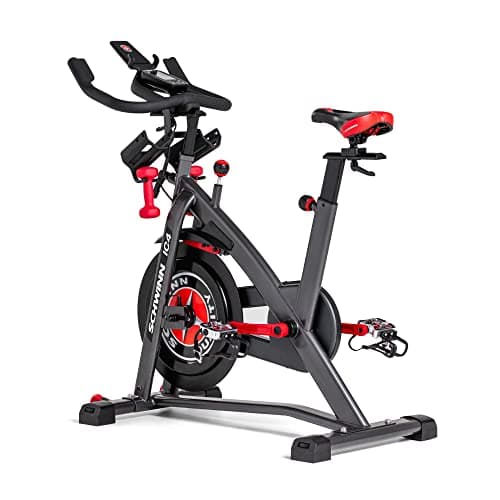
Schwinn exercise bikes, ranked
Six machines, four body positions, one genuinely great bike — and the two places a cheaper brand matches it.
Exercise Bikes
Best exercise bike for small spaces
Published footprints, the two different small-space problems, and when folding is the wrong answer.
Compare
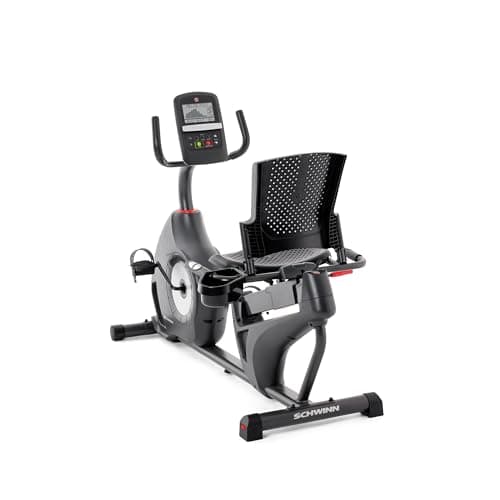
Upright vs recumbent exercise bike
Smaller and harder versus bigger and far more likely to still be used next year.
Exercise Bikes
Exercise bike reviews
Model-by-model write-ups, with an explicit statement of what we verified and what we did not.