Exercise Bikes
Schwinn 290 recumbent bike review
Schwinn's current top recumbent, and the only one of the two worth the money for a specific kind of rider.
Belt & Bike earns a commission when you buy through our links — from Amazon and from brand partner programs — at no extra cost to you. Prices change; the date beside every price is when we last verified it. Full disclosure.
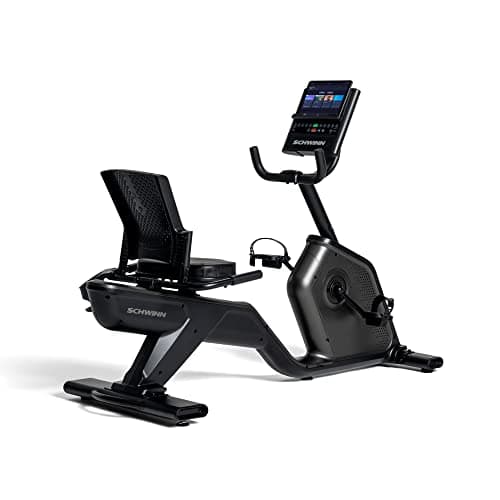
Top pick
Schwinn 290 Recumbent Bike
25 magnetic levels, a 330 lb rating and full FTMS Bluetooth — the recumbent to buy if you will genuinely outgrow sixteen levels and you have 66 inches of floor.
#ad How we are funded · Price as of November 18, 2026
Quick picks
| # | Model | Resistance | Score | Price |
|---|---|---|---|---|
| Rank 1 | Schwinn 290 Recumbent Bike The widest resistance range in a step-through frame | 25-level magnetic | 9.3 | $799.00Amazon |
#ad Prices come from Amazon and change. How this site is funded. Scores are our published editorial rubric — see our methodology.
Schwinn now sells exactly two recumbent bikes: the 230 and the 290. That is the first thing worth knowing, because the 280 that used to sit between them has gone from the lineup, and a lot of the comparison writing still online sets the 290 against a bike you can no longer read specifications for. The real question is narrower than it looks. The 290 costs meaningfully more than the 230, and what it buys you is nine more resistance levels, 30 lb more capacity, a better Bluetooth standard, a USB socket and a bigger screen. Whether that is worth the difference depends entirely on which of those five things you actually need.
Everything below is Schwinn's own published specification, read off the manufacturer's product page on 4 November 2026 and cited at the foot of this review, with the live Amazon price on the card. Our methodology sets out exactly how a published specification becomes a score.
The published specification
Schwinn publishes 25 magnetic resistance levels, 13 workout programs, a 7″ LCD display, assembled dimensions of 66.4″ L × 28″ W × 47″ H (168.7 × 71.1 × 119.4 cm), an assembled weight of 107.6 lb (48.8 kg), a 330 lb (150 kg) maximum user weight, an adjustable padded seat with a large vented back and lumbar support, weighted strapped pedals, stationary handlebars for easy entry and exit, full FTMS Bluetooth, a built-in USB charging port, Bluetooth heart rate tracking with no strap included, a media shelf, a water bottle holder and transport wheels. It runs from a standard 110V–120V wall outlet with the cord included. The warranty is 10 years frame, 2 years mechanical parts, 1 year electronics, 90 days labor.
- 25 magnetic levels is the headline and it is a real one, but read it as range rather than as resolution. Magnetic resistance is non-contact, so nothing in the path wears out, and numbered levels are repeatable — level 18 next spring is the same workload as level 18 today. Resistance types explained covers why that matters more than the count does.
- 330 lb capacity on a 107.6 lb frame is a well-matched pair. The frame is 26 lb heavier than the 230's and the rating is 30 lb higher, which is the direction you want those two numbers to move together. Budget recumbents routinely claim 380 or 400 lb on frames barely half that weight.
- Full FTMS, not partial. This is the most under-rated line in the specification and the one real technical upgrade over the 230 — it is explained below.
- A built-in USB charging port, which the 230 does not have. Trivial on paper; in practice it is the difference between a tablet that lasts the session and one that does not.
- 66.4 inches long is the price of all of it, and it is the figure most buyers measure last.
- Schwinn does not publish a flywheel weight for this bike, or a rider height range, or the seat rail travel. We print the gap rather than borrowing a number from a dealer listing.
Full FTMS versus partial FTMS, which is the actual upgrade
Schwinn's own comparison table puts it bluntly. The 230 is partial FTMS, described as connecting to specific fitness apps. The 290 is full FTMS, described as connecting to a wider variety of apps and Bluetooth devices. FTMS is the standard Bluetooth fitness-machine profile, and the gap between partial and full is the gap between a bike that talks to the two apps the manufacturer happens to name and a bike that talks to whatever you install in four years.
That is worth more than it sounds on a machine you intend to keep for a decade, and it is worth nothing at all if your plan is to read a book while you pedal. Be honest about which of those you are. If you are the second kind of buyer, the 230's partial FTMS is not a limit you will ever reach, and the money is better left in your pocket. Our Schwinn 230 review has that bike's figures in the same detail.
The JRNY question, answered precisely
The 290 is sold with a two-month JRNY trial and Schwinn's published membership price of $11.99 a month or $99 a year after it. It would be easy to read that as a subscription bike. It is not. Schwinn's own site says so directly — connect to your favorite apps, or get a full workout experience with zero subscriptions required — and the specification backs it up: all 25 resistance levels, all 13 programs and every readout on the 7″ LCD work with the bike offline and no account anywhere.
What JRNY adds is guided, adaptive content. Nothing else. That puts the 290 on the machines that work offline list permanently rather than conditionally, and it is a materially different proposition from a bike whose resistance is set by an app. At $99 a year, three years of JRNY costs a real fraction of the bike — the subscription cost calculator does that arithmetic against any membership price you put in, and subscription costs explained covers how these plans are structured and where the renewals hide.
The verdict
#1 · The widest resistance range in a step-through frame
$899.99 11% off
#ad How we are funded · Price as of November 18, 2026
Schwinn 290 Recumbent Bike
Schwinn Fitness25 magnetic levels, a 330 lb rating and full FTMS Bluetooth — the recumbent to buy if you will genuinely outgrow sixteen levels and you have 66 inches of floor.
| Resistance | 25-level magnetic |
|---|---|
| Weight capacity | 330 lb |
| Footprint | 66.4″ L × 28″ W × 47″ H |
| Machine weight | 107.6 lb |
| Console | 7″ LCD, full FTMS, USB charging |
| Subscription | No subscription |
All 25 levels and 13 programs run with no account. JRNY adds guided content only, at Schwinn's published $11.99/mo or $99/yr.
Specifications per Schwinn Fitness published specifications.
Why we picked it
- 25 numbered magnetic levels — the widest range Schwinn publishes on a recumbent
- 330 lb capacity on a 107.6 lb frame, and both figures are published
- Full FTMS Bluetooth plus a built-in USB charging port, neither of which the 230 has
Good to know
66.4″ long, 107.6 lb, and it does not fold.
Our rubric
- Ride
- 9.3
- Fit
- 9.3
- Resistance
- 9.8
- Build
- 9.3
- Value
- 8.9
The seat, and why the vent matters more than the padding
Schwinn publishes an adjustable padded seat with a large vented back and lumbar support — word for word the same description as the 230's. Two of those words do real work. Vented matters because a solid-backed recumbent seat traps heat against your spine, and forty minutes in one is genuinely unpleasant in a warm room; it is the detail that decides whether the long, easy sessions a recumbent exists for actually happen. Lumbar support matters because a lower back that will not tolerate a saddle is why a large share of recumbent buyers are shopping at all.
What Schwinn does not publish for the 290 is a rider height or inseam range, and it does not describe the seat rail travel. If you are notably short or notably tall, read the seat adjustment on the listing in front of you before you commit — exercise bikes for short riders and for tall riders rank the field on published fit range, and a recumbent set at the wrong seat distance produces knee pain quickly. The stationary handlebars are a quiet plus: they give you something fixed to push against getting in and out, which is exactly what a step-through frame should do. Exercise bikes for seniors and for arthritis explain why access beats almost every other spec for some buyers.
Space: the 66-inch problem is worse than the 230's
At 66.4 inches long and 28 inches wide, the 290 occupies roughly the floor area of a small sofa, and it does not fold. You also need clearance behind it to step through the frame and sit down, so budget the published length plus about a foot of working room — call it six and a half feet of wall in practice. The transport wheels let you reposition it; they do not let you store it, and at 107.6 lb repositioning is a two-hands job.
For plenty of homes that is fine. A magnetic recumbent is near-silent, which makes it one of the few cardio machines genuinely welcome in a shared living room, and it is the right answer for an upstairs apartment where a treadmill is not. But if the machine has to disappear between sessions, no part of this specification fixes that, and the honest answer is a different format: exercise bikes for small spaces ranks on published footprint, and folding exercise bikes covers the machines that actually stow, with a clear statement of what the folding costs you in ride quality.
The 290 against the 230, which is the only comparison that matters
| Schwinn 290 | Schwinn 230 | Schwinn 190 (upright) | |
|---|---|---|---|
| Resistance levels | 25 magnetic | 16 magnetic | 25 magnetic |
| Workout programs | 13 | 13 | 13 |
| Max user weight | 330 lb | 300 lb | 330 lb |
| Assembled weight | 107.6 lb | 81.6 lb | 80.7 lb |
| Length × width | 66.4″ × 28″ | 64″ × 27.7″ | 47″ × 32.3″ |
| Bluetooth standard | Full FTMS | Partial FTMS | Full FTMS |
| USB charging port | Yes | No | Yes |
| Display | 7″ LCD | Streamlined LCD | Large LCD |
| Named apps | JRNY, Zwift | Explore the World, Zwift | JRNY, Zwift |
| Frame / parts / labor | 10 yr / 2 yr / 90 days | 10 yr / 2 yr / 90 days | 10 yr / 2 yr / 90 days |
| Flywheel weight | Not published | Not published | Not published |
Read the table as one argument. The warranty is identical, the program count is identical, and none of the three publishes a flywheel weight — so the premium over the 230 buys resistance range, capacity, the Bluetooth standard, the USB port and the bigger display, and nothing else. If none of those five is a constraint for you, the 230 does the same exercise for less and we are not going to pretend otherwise. The third column is there because the 190 upright is the other place that extra money can go: same 25 levels, same 330 lb capacity, same warranty, 19 inches shorter and 4.3 inches wider — a differently shaped answer rather than a worse one. Our Schwinn 130 review sets out the upright case properly, and the Schwinn lineup page ranks the whole range against itself.
What is wrong with it
- It is not a cheap bike, and the exercise is not better. The cardiovascular stimulus from level 12 on a 230 and level 12 on a 290 is the same. You are paying for range you may not use and connectivity you may not need. Check the live price on the card against the 230 before you commit.
- 90 days of labor. The same short term as the cheaper bike, on the more expensive machine. Ten years of frame cover reads well and is close to irrelevant, because frames do not break. What breaks on a magnetic recumbent is the console, the resistance servo and the cranks — covered for 1 year, 2 years and 2 years — and from month four the warranty part arrives in a box and fitting it is your problem. How to read a warranty makes the argument in full; the ordering holds for bikes.
- 66.4 inches, no fold, 107.6 lb. The single biggest reason to buy something else. The transport wheels move it; nothing stores it.
- No flywheel weight published. It matters less on a recumbent than on a spin bike, because you are never out of the saddle, but we would still rather know. Flywheel weight explained covers how much it actually changes.
- No strap in the box. Bluetooth heart rate is advertised and then sold to you in two parts. The contact grips work out of the box and are approximate, as contact grips always are.
- Backrest angle is not adjustable. The seat adjusts fore and aft; the recline does not. If the fixed back angle does not suit your spine there is no adjustment to make.
- Marketed around a membership it does not need. A two-month trial and a $99-a-year price on a bike whose console is complete without either is a presentation choice, not a feature, and it actively confuses the buyers who are shopping specifically to avoid a subscription.
Who should buy it, and who should not
- Buy it if you are a heavier or stronger rider than the 230 suits. The 330 lb rating and the 25-level ceiling are the two specs that genuinely run out on the cheaper bike, and this is the Schwinn recumbent where they do not. Exercise bikes for heavy riders ranks the wider field on published capacity.
- Buy it if you intend to ride into third-party apps and keep the bike for years. Full FTMS is the upgrade that will still matter in 2031, when whatever app you use today has been replaced by something else.
- Buy the Schwinn 230 instead if you want a comfortable, quiet, supported recumbent for steady sessions and you do not need 330 lb or full FTMS. It is the better value — the 230 review has the figures, and recumbent bikes under $500 covers the tier below it.
- Buy the Schwinn 190 upright instead if floor space is the binding constraint. Same 25 levels, same 330 lb, same warranty, 19 inches shorter. You give up the backrest, which for some buyers is the entire point and for others is what lets them pedal gently for an hour. Upright vs recumbent works that decision through on its merits.
- Buy the Schwinn IC4 instead if your plan involves hard intervals. A recumbent is the wrong chair for an all-out effort and the 290 will quietly let you off — our IC4 review has that specification.
- Buy a cheaper recumbent instead if the budget is genuinely tight. The exercise is substantially the same, and recumbent bikes under $500 ranks that end honestly, including what the missing warranty terms actually mean.
Frequently asked questions
Does the Schwinn 290 require a subscription?
What is the difference between the Schwinn 290 and the Schwinn 230?
What is the Schwinn 290 weight limit?
How much space does the Schwinn 290 need?
Does the Schwinn 290 work with Zwift?
Is the Schwinn 290 worth it over the 230?
What is the Schwinn 290 warranty?
Does the Schwinn 290 come with a heart rate strap?
Our recommendation
If you read nothing else on this page: this is the machine to buy, and this is the one to buy instead if it does not fit your space or your budget.
Buy this one
Schwinn 290 Recumbent Bike
The widest resistance range in a step-through frame
#ad How we are funded · Price as of November 18, 2026
Brands: want your product tested? For Brands.
Sources
- Schwinn Fitness — 290 Recumbent Bike published specifications, comparison table and warranty
- Schwinn Fitness — 190 Upright Bike published specifications
- Schwinn Fitness — published bike specifications
- American Academy of Orthopaedic Surgeons — exercise and joint health resources
- American College of Sports Medicine — physical activity guidelines
Read next
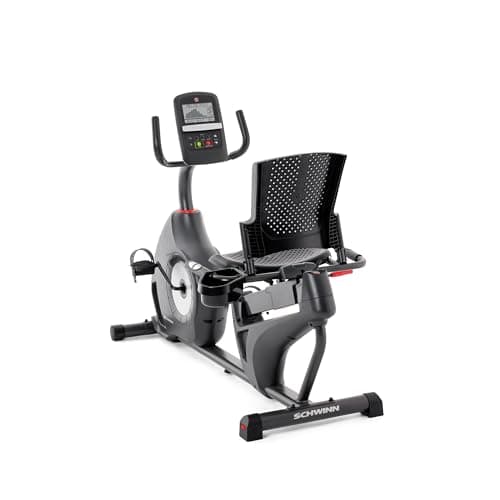
Exercise Bikes
Schwinn 230 recumbent bike review
The budget recumbent from a brand that still sells parts — 16 magnetic levels, a published warranty breakdown, and 64 inches of floor.
Exercise Bikes
Best recumbent exercise bikes
The most comfortable cardio machine made, and the one most likely to still be used in month six.
Exercise Bikes
Best exercise bikes with a screen you are not renting
Three different products are sold as a bike with a screen — this is the ranking whose displays keep working when you stop paying.
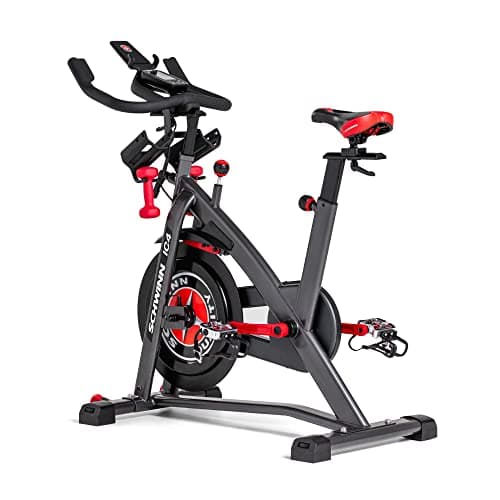
Exercise Bikes
Schwinn exercise bikes, ranked
Six machines, four body positions, one genuinely great bike — and the two places a cheaper brand matches it.
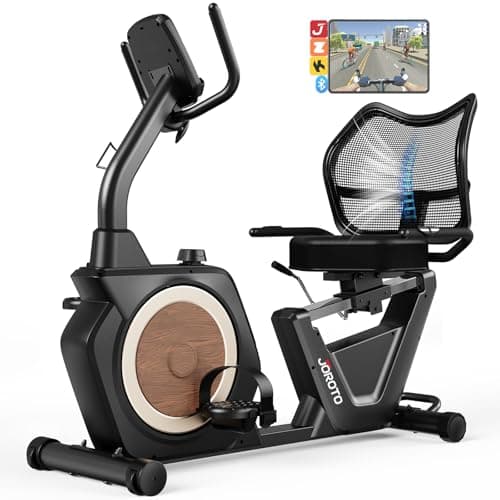
Exercise Bikes
Best exercise bikes for heavy riders
Why bike capacity ratings are more trustworthy, and how much margin to leave anyway.
Guides
Recumbent bike buying guide
Seat rail, step-over height and footprint — the three specs that decide a recumbent, in order.
Exercise Bikes
Exercise bike reviews
Model-by-model write-ups, with an explicit statement of what we verified and what we did not.