Exercise Bikes
Schwinn 230 recumbent bike review
The recumbent most other recumbents get compared against — and the one spec in its favor is the one nobody shops on.
Belt & Bike earns a commission when you buy through our links — from Amazon and from brand partner programs — at no extra cost to you. Prices change; the date beside every price is when we last verified it. Full disclosure.
Top pick
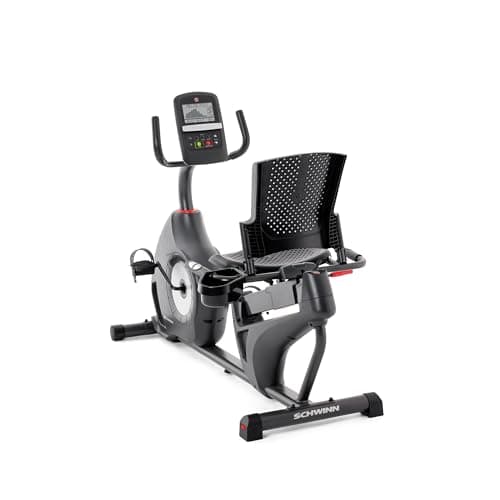
Schwinn 230 Recumbent Bike
16 magnetic resistance levels, a 300 lb rating and a proper step-through frame from a brand that still sells parts — the safe recumbent choice.
#ad How we are funded · Price as of November 18, 2026
Quick picks
| # | Model | Resistance | Score | Price |
|---|---|---|---|---|
| Rank 1 | Schwinn 230 Recumbent Bike A branded recumbent with real parts support | 16-level magnetic | 9.3 | $499.99Amazon |
#ad Prices come from Amazon and change. How this site is funded. Scores are our published editorial rubric — see our methodology.
The Schwinn 230 is the bike this site references more than any other, and it is worth saying why before the specification: it is the cheapest recumbent on our lists made by a company that will still be answering the phone in five years. Everything else in the budget recumbent bracket is a landed-cost import with a warranty you cannot practically claim. That is not a spec you can shop on, and it is the main reason this bike exists on the page.
What follows is Schwinn's own published specification, read off the manufacturer's product page and cited at the foot of this review, plus an honest account of where the bike is beaten and by what. Our methodology sets out exactly how a published specification becomes a score.
The published specification
Schwinn publishes 16 magnetic resistance levels, 13 workout programs, a 300 lb (136 kg) maximum user weight, assembled dimensions of 64″ L × 27.7″ W × 44″ H, an assembled weight of 81.6 lb (37 kg), a seat rail slider system with an easy-adjust lever, an adjustable contoured seat with a large vented back and lumbar support, Bluetooth-enabled heart rate tracking plus contact grips with no strap included, Bluetooth connectivity described as partial FTMS for Explore the World and Zwift, a media shelf, no USB charging port, and a streamlined LCD console. It plugs into a standard 110V–120V wall outlet and the cord is included. The warranty is 10 years frame, 2 years mechanical parts, 1 year electronics, 90 days labor.
- 16 magnetic levels is the figure that matters most here, and not because 16 is a large number. Magnetic resistance is non-contact, so nothing in the resistance path wears out, and numbered levels are repeatable — level 9 next March is the same workload as level 9 today. Resistance types explained covers why that beats a friction knob on any bike you intend to keep.
- 300 lb capacity on an 81.6 lb frame is a sane pairing. Cheaper recumbents routinely claim 350 or 400 lb on frames that weigh less, which is a rating written by a marketing department rather than an engineer.
- 64 inches long is the hidden cost of this bike and the thing buyers measure last. That is longer than most folding treadmills are wide, and the 230 does not fold at all.
- 10 years on the frame against 90 days on labor is the shape of almost every warranty in this category, and the labor line is the one that actually costs you money. More on that below.
- Schwinn does not publish a flywheel weight for this bike, and does not state the console's display size on its current product page. We print that gap rather than filling it with a figure from a dealer listing.
Where a recumbent earns its footprint
A recumbent is not a more comfortable upright bike. It is a different machine with a different failure mode. You sit in a chair with a backrest, your feet are out in front of you rather than below you, and your body weight rests on your backside and lower back instead of on a saddle. That removes the single most common reason a home bike stops being used — the seat hurts — and it replaces it with a different one, which is that a recumbent makes it very easy to pedal gently while reading something.
That trade is the whole purchase. If the obstacle between you and three sessions a week is discomfort, a recumbent fixes it outright. If the obstacle is intensity, a recumbent will quietly let you off. Upright vs recumbent bike works through the decision on its merits, and the recumbent buying guide covers the specs that separate good ones from bad ones.
The seat, which is the part Schwinn got right
Schwinn publishes a seat rail slider with an easy-adjust lever, and a contoured seat with a large vented back and lumbar support. Two of those three words matter in practice. Vented matters because a solid-backed recumbent seat traps heat against your spine, and forty minutes in it is genuinely unpleasant in a warm room. Lumbar support matters because the reason a lot of people are shopping for a recumbent in the first place is a lower back that does not tolerate a saddle.
The slider lever matters for a different reason: it means the fit adjustment is a thing you do in two seconds while seated, not a bolt you undo with a wrench. In a household where two people of different heights share the machine, a lever is the difference between both of them using it and one of them using it. What Schwinn does not publish is a rider height range or an inseam range, which is the figure we would most like to have. If you are notably short or notably tall, read the seat travel on the listing in front of you — exercise bikes for short riders and for tall riders rank the field on published fit range.
What the Bluetooth actually does
This is the part of the specification most likely to be misread, and the phrase to hold on to is Schwinn's own: partial FTMS. FTMS is the standard Bluetooth fitness-machine profile. A machine with full FTMS can hand a third-party app its resistance, cadence and power, and can take instructions back. Partial means some of that, on some apps — in the 230's case, Explore the World and Zwift are the ones Schwinn names.
The practical reading: treat app compatibility as a bonus and the console as the machine. Everything you need is on the LCD, and none of it is gated behind an account, a plan or an internet connection. There is no Schwinn membership for this bike. That puts it permanently on the machines that work offline list rather than conditionally, and it is a meaningfully different proposition from a subscription-first bike — subscription costs explained does the three-year arithmetic.
Two smaller notes from the same specification. The heart rate strap is not included, so the Bluetooth heart rate feature is a feature you have to go and buy a strap for; the contact grips in the handles work out of the box and are less accurate, as contact grips always are. And there is a media shelf but no USB charging port, so the tablet you park on the shelf is running on its own battery.
The verdict
#1 · A branded recumbent with real parts support
$599.00 17% off
#ad How we are funded · Price as of November 18, 2026
Schwinn 230 Recumbent Bike
Schwinn Fitness16 magnetic resistance levels, a 300 lb rating and a proper step-through frame from a brand that still sells parts — the safe recumbent choice.
| Resistance | 16-level magnetic |
|---|---|
| Weight capacity | 300 lb |
| Footprint | 64″ L × 27.7″ W × 44″ H |
| Machine weight | 81.6 lb |
| Console | LCD, Bluetooth (partial FTMS) |
| Subscription | No subscription |
Every console function works with no account. Bluetooth is optional.
Specifications per Schwinn Fitness published specifications.
Why we picked it
- Numbered magnetic levels, so sessions are repeatable
- Step-through frame with a low entry height
- Bluetooth to the Schwinn and third-party apps — no plan required
Good to know
64″ long is a serious footprint for a bike — measure the wall first.
Our rubric
- Ride
- 9.3
- Fit
- 9.3
- Resistance
- 9.3
- Build
- 9.3
- Value
- 9.3
The warranty, read the way you will eventually need it
Ten years on the frame reads impressively and is close to irrelevant. Frames do not break. What breaks on a magnetic recumbent, in rough order of likelihood, is the console, the resistance servo or cable, and the pedal cranks — and those are covered for 1 year, 2 years and 2 years respectively. The term that will cost you real money is the 90 days of labor, because after three months a warranty part arrives in a box and fitting it is your problem.
We would rather have five years of parts and one year of labor than ten years of frame, and so would you the first time a console dies in year two. How to read a treadmill warranty makes the same argument in more detail, and the ordering holds for bikes: parts before frame, labor before everything. Judged against the bracket, though, the 230 is still ahead — most of what it competes with publishes no warranty terms at all, or publishes a single number with no breakdown, which amounts to the same thing.
Space: the 64-inch problem
At 64 inches long and 27.7 inches wide, the 230 occupies about the same floor area as a two-seat sofa and it does not fold. You also need clearance at the back to step through the frame and sit down, so budget the published length plus a foot or so of working room. For a lot of homes that is fine — a recumbent is quiet, unobtrusive and perfectly happy in a living room corner. For an apartment where the machine has to disappear between sessions, it is a non-starter and no amount of specification fixes it.
If that is your constraint, the honest answer is a different format: exercise bikes for small spaces ranks on published footprint, and folding exercise bikes covers the machines that genuinely stow, with a clear statement of what the folding costs you in ride quality.
How it compares to the recumbents around it
| Schwinn 230 | Schwinn 280 | Sunny Recumbent Cross Trainer | VANSWE Recumbent 380 | |
|---|---|---|---|---|
| Resistance | 16-level magnetic | Magnetic, extended range | Magnetic | Magnetic |
| Resistance levels | 16 | Not published | Not published | Not published |
| Capacity | 300 lb | Not published | Not published | 380 lb (listing) |
| Machine weight | 81.6 lb | Not published | Not published | Not published |
| Frame warranty | 10 years | Not published | Not published | Not published |
| Labor warranty | 90 days | Not published | Not published | Not published |
| App standard | Partial FTMS | Bluetooth | None published | None published |
| Price bracket | Upper budget | Mid | Budget | Entry |
Read that table as a single argument. Three of the four bikes do not publish a machine weight, a warranty breakdown or a Bluetooth standard. The VANSWE publishes the highest capacity figure and the least supporting detail, which is the combination you should be most skeptical of. One point against the 230's own sibling, too: the 280 is no longer in Schwinn's current recumbent lineup, so there is no manufacturer page publishing its resistance level count, its capacity or its warranty — which is why every 280 cell above except the Bluetooth one reads "not published". Recumbent bikes ranked covers the whole field, and the Schwinn lineup page sets the 230 against its siblings.
What is wrong with it
- It is no longer a cheap bike. The 230 has drifted up through the budget bracket, and at its current price it is competing with machines that publish more resistance levels and higher capacities. The card above shows the live number; check it against the alternatives before you commit, because the value case here is support and warranty, not specification.
- 90 days of labor. The short term in the warranty, on the bike where you are paying a premium for brand support. Parts cover is reasonable; fitting them is on you from month four.
- No flywheel weight published. On a recumbent this matters less than on a spin bike — you are not standing up out of the saddle — but we would still rather know. Flywheel weight explained covers how much it actually changes.
- No strap in the box. Bluetooth heart rate is advertised and then sold to you in two parts.
- No USB port. There is a media shelf for a tablet and nothing to charge it from.
- 64 inches, no fold. The single biggest reason to buy something else.
- Backrest angle is not adjustable. The seat slides fore and aft; the recline does not change. If the published back angle does not suit your spine there is no adjustment to make.
Who should buy it, and who should not
- Buy it if you want a recumbent you will still be able to get a console or a resistance cable for in three years, you have the floor space, and you value a published warranty breakdown over a bigger number on the box.
- Buy it if a bad back or a bad knee is why you are shopping. The step-through frame, the lumbar-supported seat and the seated position are the right combination, and recumbent bikes for bad knees explains why the pedal path matters more than the resistance range.
- Buy the Schwinn 290 instead if you are confident you will run out of 16 levels, you are near the 300 lb rating, or you want full FTMS Bluetooth and a USB port. It is the current top of Schwinn's recumbent line and every one of its figures is published — our Schwinn 290 review sets the two side by side and is clear that most buyers should stay on the 230. The 280 that used to sit between them is off Schwinn's lineup, so its capacity and warranty terms cannot be read from the manufacturer at all; see all of them in context on the Schwinn lineup page.
- Buy a cheaper recumbent instead if the budget is genuinely tight and you accept the trade. Recumbent bikes under $500 ranks that end of the market honestly, including what the missing warranty terms mean.
- Buy the Schwinn IC4 instead if your plan involves hard intervals. A recumbent is the wrong chair for an all-out effort and the 230 will not stop you taking it easy — our IC4 review has the specification.
- Buy an upright instead if floor space is the binding constraint. Upright bikes do most of the same job in about half the footprint, with a saddle you may or may not get along with.
Frequently asked questions
Does the Schwinn 230 need a subscription?
What is the Schwinn 230 weight limit?
How much space does the Schwinn 230 need?
Is the Schwinn 230 resistance magnetic or friction?
What is the Schwinn 230 warranty?
Does the Schwinn 230 work with Zwift?
Does the Schwinn 230 come with a heart rate strap?
Is the Schwinn 230 or the Schwinn 280 better?
Is there a better recumbent bike under $1,000?
Our recommendation
If you read nothing else on this page: this is the machine to buy, and this is the one to buy instead if it does not fit your space or your budget.
Buy this one
Schwinn 230 Recumbent Bike
A branded recumbent with real parts support
#ad How we are funded · Price as of November 18, 2026
Brands: want your product tested? For Brands.
Sources
Read next
Exercise Bikes
Schwinn 290 recumbent bike review
Schwinn's current top recumbent — 25 levels, 330 lb and full FTMS, with an honest account of when the cheaper 230 is the better buy.
Exercise Bikes
Best recumbent exercise bikes
The most comfortable cardio machine made, and the one most likely to still be used in month six.
Exercise Bikes
Best recumbent bikes under $500
The one category where $500 gets you most of the way to the best available.
Exercise Bikes
Best recumbent exercise bikes under $1,000
The bracket where a recumbent comes with published dimensions, numbered levels, a capacity figure beside a frame weight and a parts channel behind it.
Guides
Recumbent bike buying guide
Seat rail, step-over height and footprint — the three specs that decide a recumbent, in order.
Compare
Upright vs recumbent exercise bike
Smaller and harder versus bigger and far more likely to still be used next year.
Exercise Bikes
Exercise bike reviews
Model-by-model write-ups, with an explicit statement of what we verified and what we did not.